
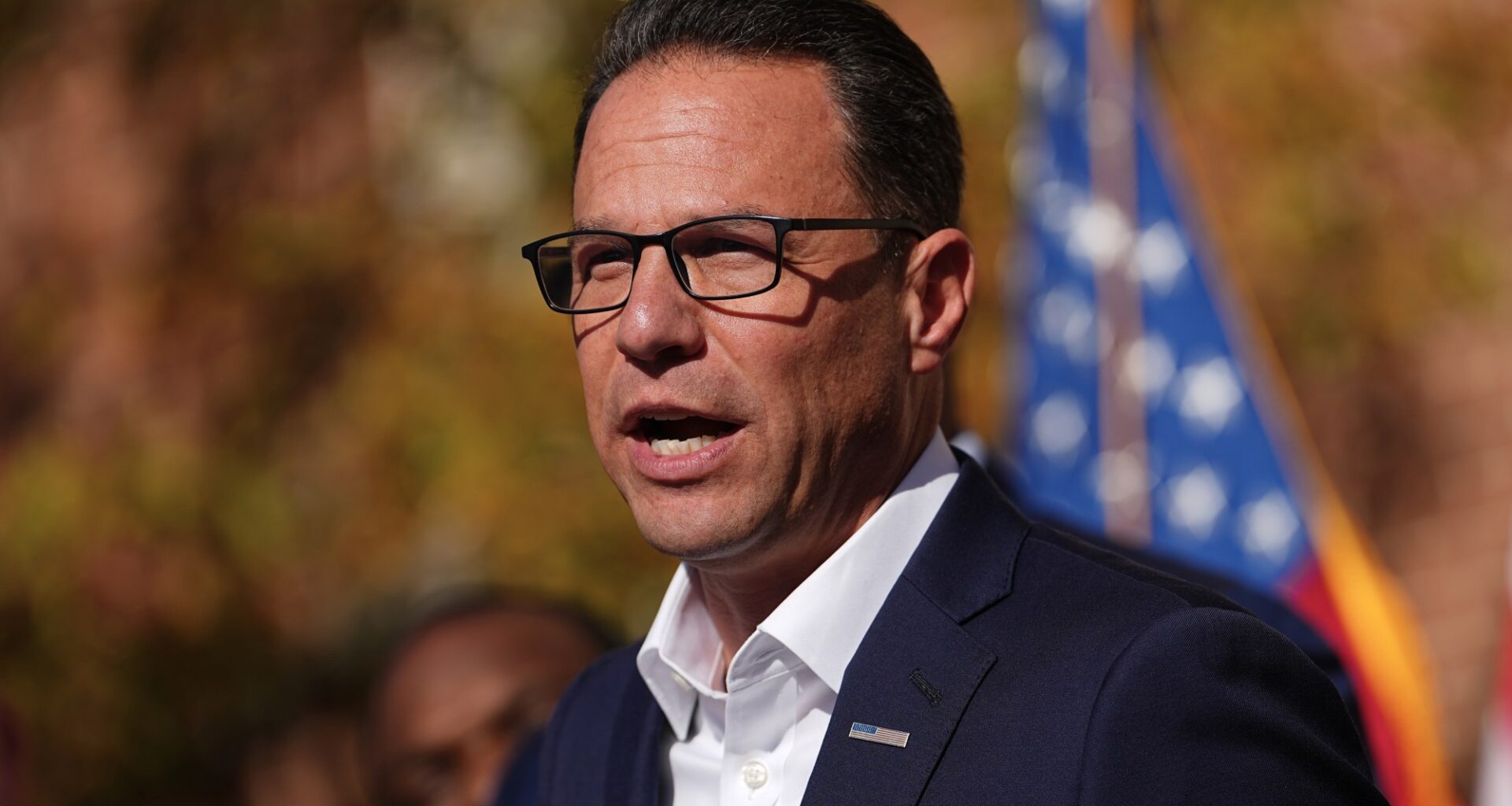
An argument can be made that nobody who ran for elected office Tuesday came out in a better position to flex political muscle than Pennsylvania Gov. Josh Shapiro.
For starters, he topped 3 million votes for the second consecutive election. No other person who has ever run for governor in the commonwealth topped that number even once. In trouncing Republican state Treasurer Stacy Gerrity, he received a whopping 60.4% of the popular vote, the highest proportion any candidate has received since Scranton’s own Bob Casey defeated Republican Barbara Hafer in 1990.
It’s likely the governor would suggest none of that statistical history matters as much the results from other races that will reform the state legislature in January.
When they are sworn in come January, Democrats will hold a true majority in both chambers of the General Assembly for the first time in 49 years after flipping the Senate. They also increased their stronghold on the House.
“I have a mandate to continue to lead our commonwealth forward,” Shapiro said during a press conference in Harrisburg on Wednesday. “Now I’ve got a whole lot more partners in progress… ready to do this work alongside me.”
We can’t argue with that. We also can’t ignore another reality: When there’s no excuse not to get long-stated agenda items passed, you better actually pass them. It would behoove a man considering a run for the presidency in 2028 to get them done quickly.
We encourage members of the new General Assembly — many of whom, including newly elected Brian Wrightson in the local 40th Senate District, benefitted from his personal advocacy during a hard-fought campaign — to work tirelessly alongside the governor to fulfill his biggest goals.
Not because it would advance Shapiro’s ambitions for higher office.
Because some of them have been overdue for passage for a good, long while.
During that press conference on Wednesday, Shapiro promised the Democratic majority will fund mass transit, raise the minimum wage, codify reproductive rights for women in the commonwealth, increase the state’s housing supply and allow abuse survivors to confront their alleged abusers in court within its first 100 days in leadership.
All of those agenda items have two things in common, according to the governor: They shared widespread bipartisan support, but were “inexplicably” blocked from becoming policy by Senate Republicans.
Those top priorities certainly mean a lot to many around Northeast Pennsylvania.
The $7.25 per hour minimum wage hasn’t been raised in 17 years, falls short when it comes to helping area workers keep up with the cost of living and is pathetically behind neighboring states like New York, New Jersey, Maryland and Delaware that have all passed laws raising it to at least $15 per hour. Safeguarding reproductive rights is critical given recent Supreme Court rulings and the Trump administration’s posture. The former makes life better and makes affording necessities less challenging for many who work hard in the commonwealth. The latter would simply reinforce rights women have long had in Pennsylvania.
Home ownership costs have been prohibitive for many Pennsylvania families, especially younger ones. That is why we believe kicking some money into expanding the housing market here is not only a worthwhile investment, but a smart and necessary one. Make Pennsylvania a destination not just for good jobs, but for affordable places to live long-term.
We believe these are all policies that can be enacted and set forth quickly in 2027, with noticeable results. We’d also like to see an aggressive approach to several other long-overdue policies that will provide much-needed sources of income for the commonwealth.
This General Assembly must recognize that there are some other now-or-never policies that Pennsylvanians need.
Compromises must be made to allow local business owners, VFWs and the like who have benefitted from skill games to continue to do so, while also benefitting the state. Comprehensive, statewide policies on data centers that would open the door for their development in specially zoned areas while also providing restrictive environmental protections and the optimum financial benefit for nearby taxpayers are also a necessary venture.
Of course, legalizing the sale of marijuana for adults to use recreationally is long overdue. Continuing to restrict its sale to medical users while just about every state surrounding Pennsylvania allows it recreationally is simply bad business, especially for a state desperately in need of obvious sources of income that can ease the burden on taxpayers and be sustained for generations.
Shapiro continually repeated two themes after the election results rolled in last week — responsible governance and the pursuit of progress. We believe they’ve always gone hand-in-hand, that progress can be paid for through the benefits of a government that implements its agenda responsibly.
Now is the time to set that example.