
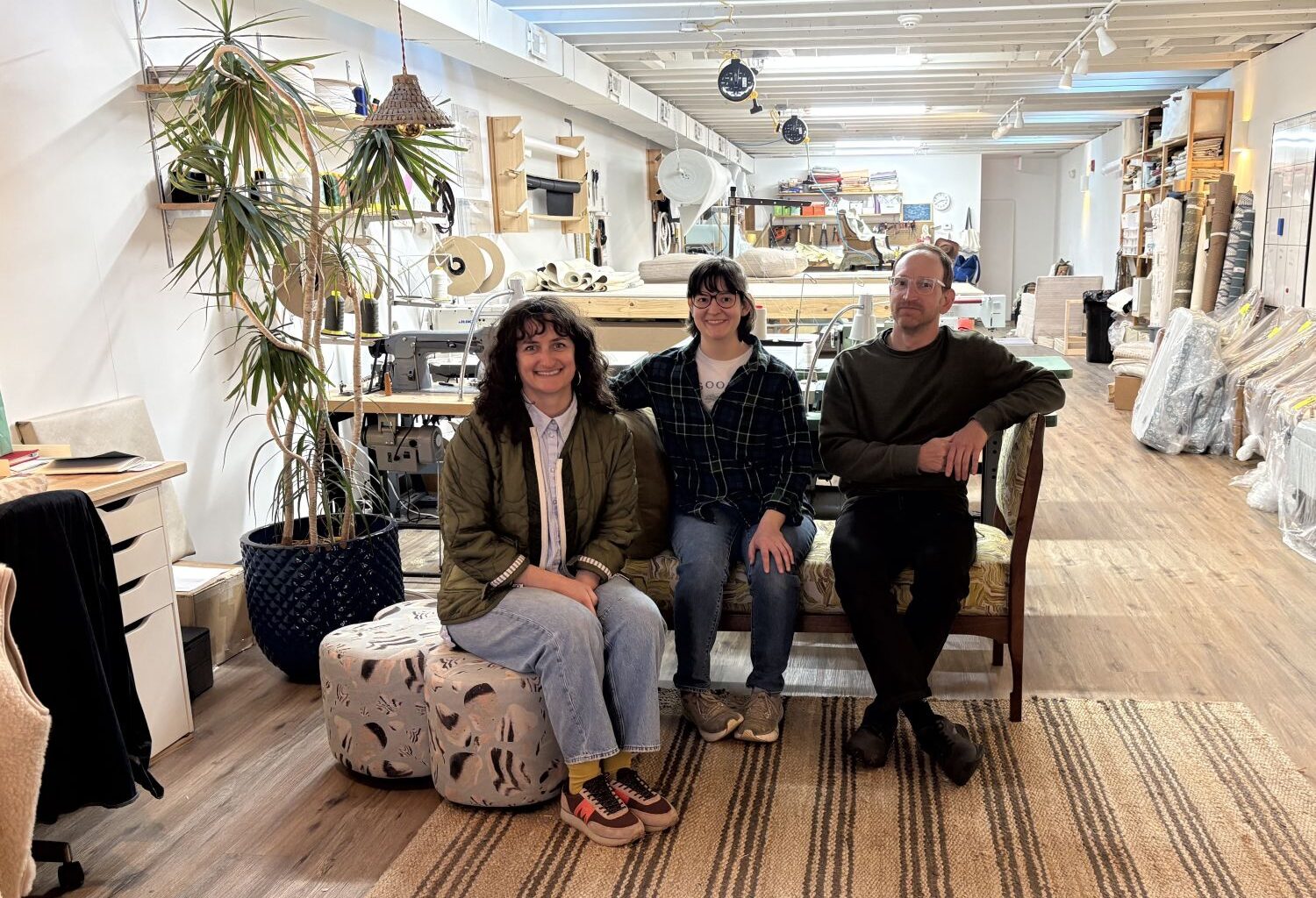
An Old City upholstery shop is making used furniture feel like new — and building a business with a focus on collaboration, not competition.
Tiberi Studios revamps old furniture, designs new pieces and creates fabrics, all with the goal of giving customers a personalized experience. Owner Jen Tiberi runs her business with the mindset that care and attention to detail are critical to the process, she told Technical.ly.
“These items are personal to people, and so we want them to see that we care for it in the same way that we would for our own things,” Tiberi said. “There’s a lot of trust involved.”
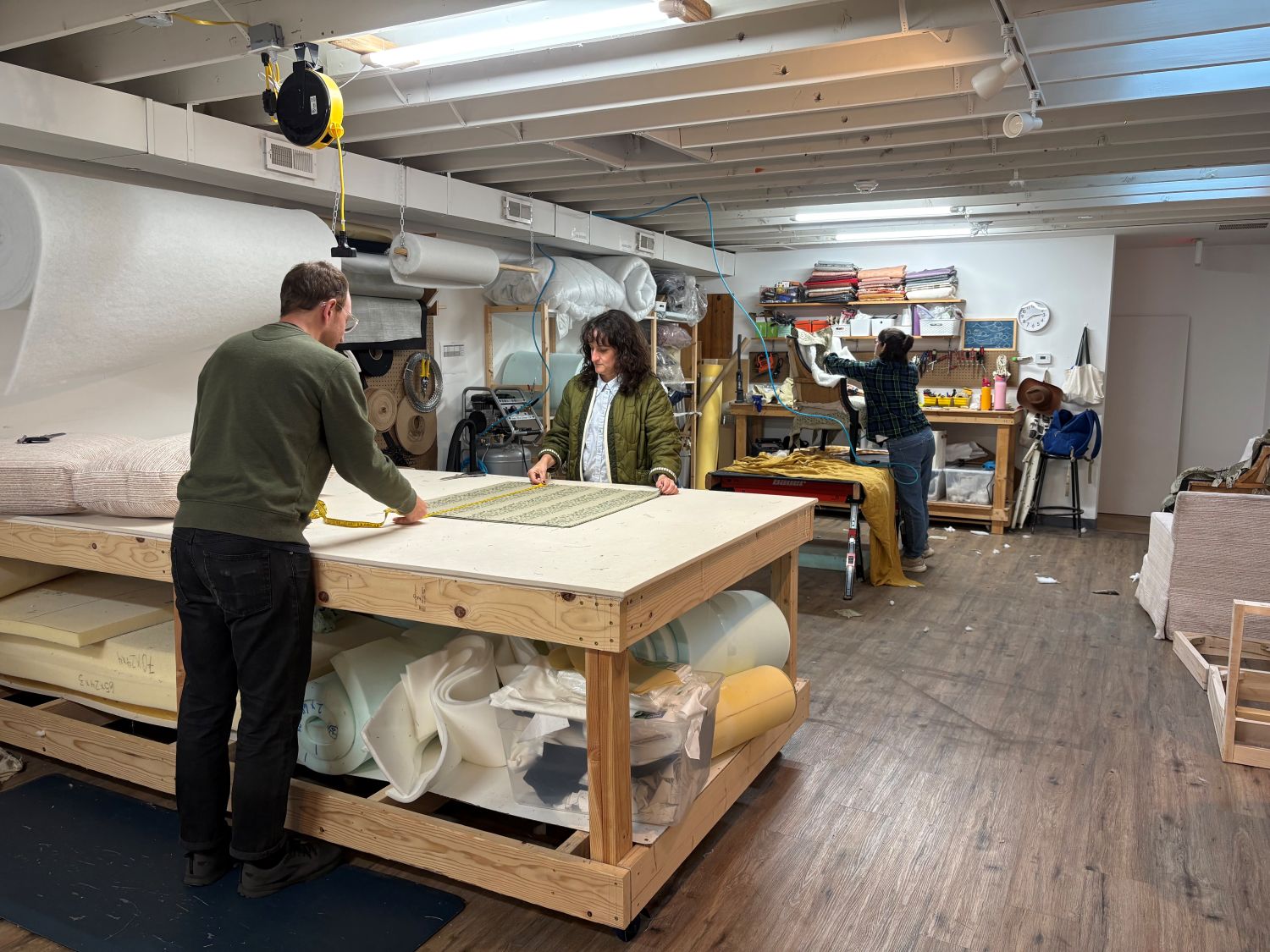 Jen Tiberi and her team working on a furniture piece (Sarah Huffman/Technical.ly)
Since opening her studio four years ago, part of her success has come from leaning on other artists in Philly, she said. Old City has a strong artist network, with new galleries, furniture shops and interior design firms popping up over the last few years.
The community is eager to make connections, and Tiberi often works with furniture frame builders, fabric printers and woodworking studios to help with her process.
Tiberi is interested in passing support forward. This year, the business received a Catalyst grant from the city’s Department of Commerce to collaborate with two artists, a local ceramicist and a local needlepoint artist, and turn their work into fabrics.
“There’s just so much [artist activity] here already that it’s like, of course, I would want to tap into that and establish the relationships with those people,” Tiberi said.
Growing a team, not just a business
Tiberi studied fibers at the Savannah College of Art and Design, where she learned how different fabrics behave in different situations and how to design patterns.
After moving back to the Philly area, she started teaching art and working in Anthropologie’s home department. When the pandemic hit, she decided to leave and start her own business, she said.
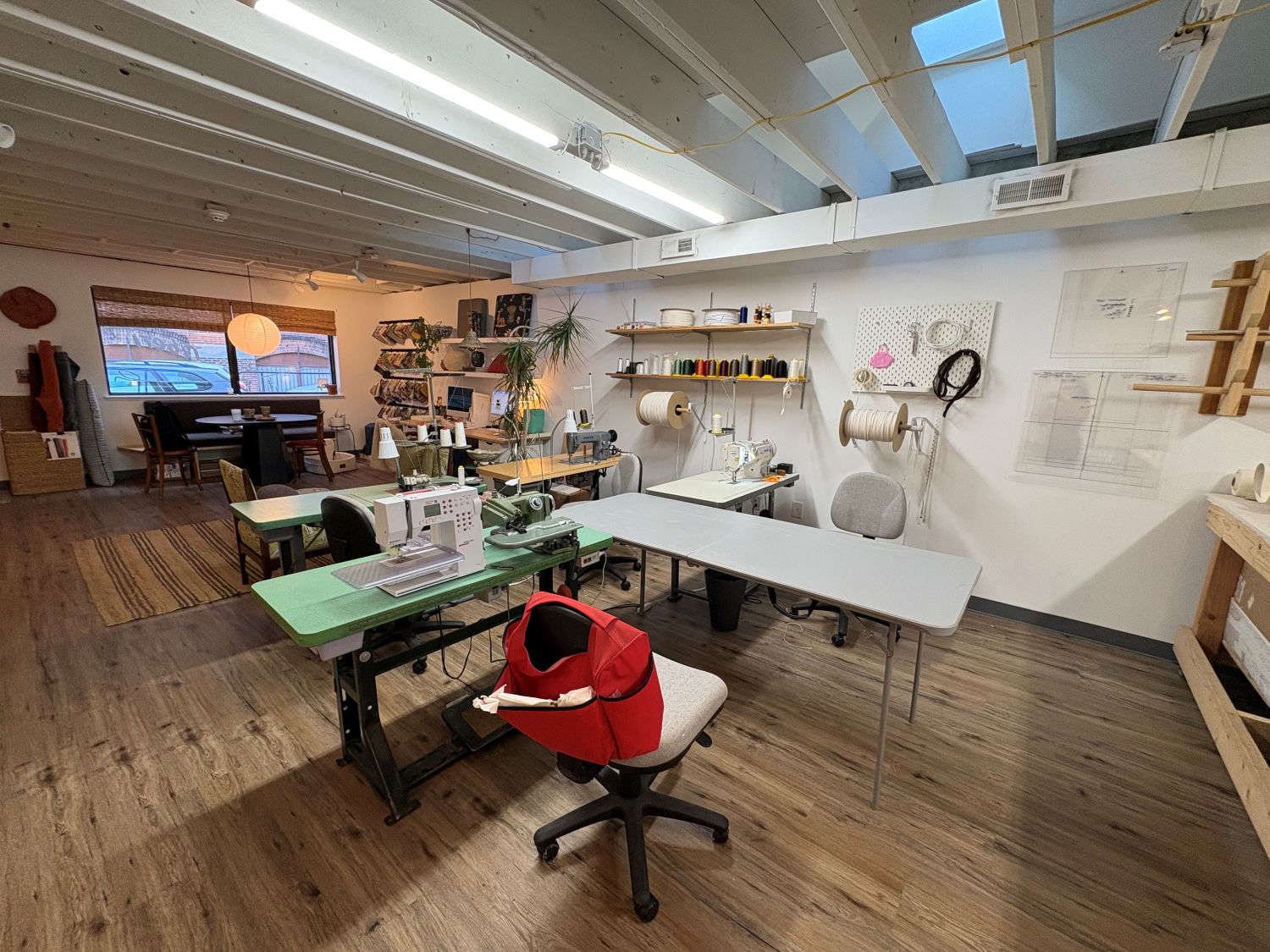 Sewing station at Tiberi Studios (Sarah Huffman/Technical.ly)
“[The studio] is a culmination of a lot of things that I have experience in, which is textiles, working with furniture and then fabrication as well,” she said.
Tiberi Studios’ growth has been steady, and she’s slowly been able to bring on additional employees, according to Tiberi.
Based on her past experiences working for studios, it was important to her that she be able to bring people on for full-time work, rather than hiring contractors or part-time workers.
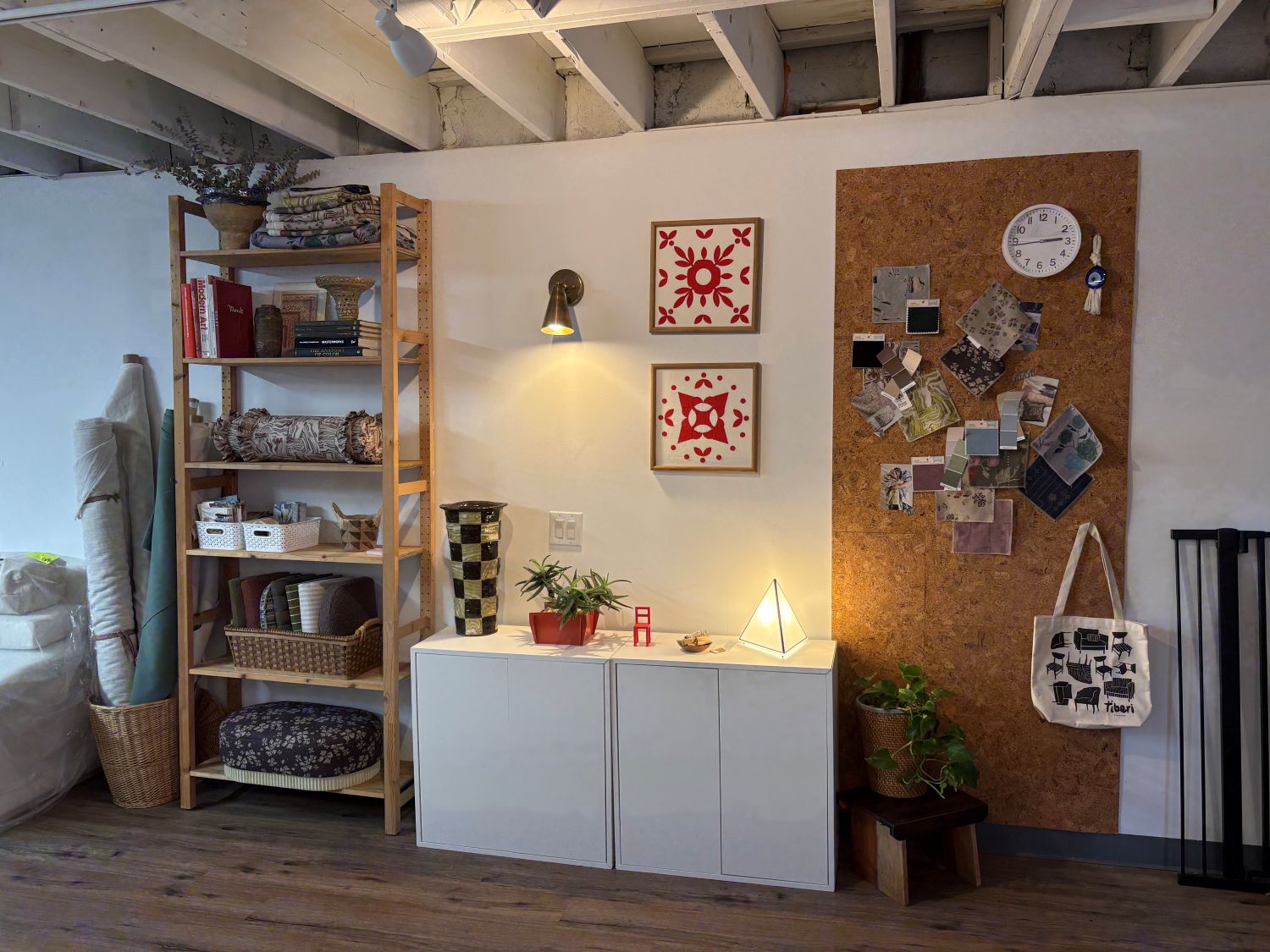 The entryway to Tiberi Studios (Sarah Huffman/Technical.ly)
That support motivates employees to create a polished final product, Tiberi added. Having a smaller staff means that they often have to ask potential customers to wait until they have capacity, but they also usually finish jobs within a few weeks.
“[My employees] are the most valuable thing here,” Tiberi said, “because otherwise, things aren’t getting done.”