
By Jack Tomczuk
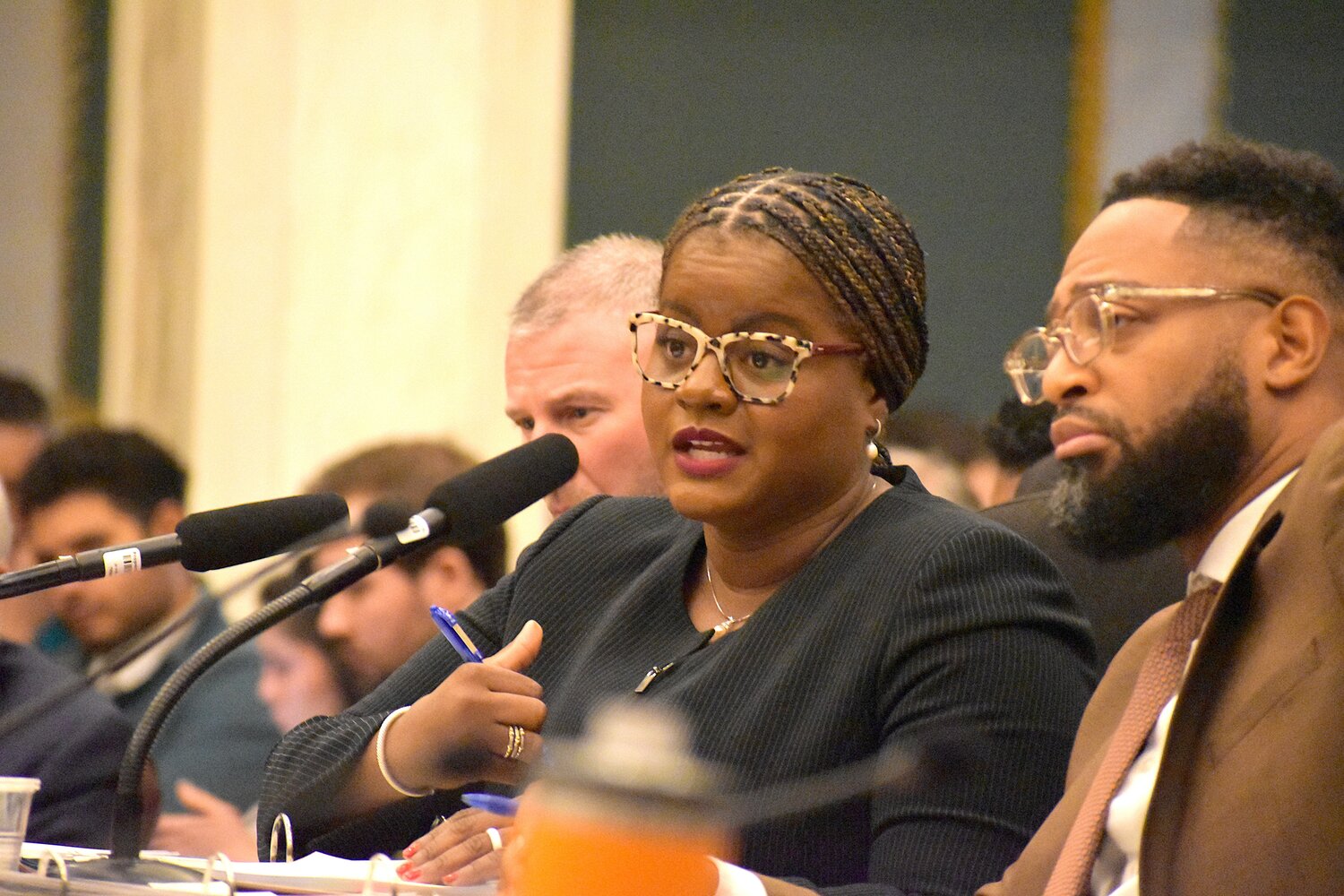
City Council put off a preliminary vote Wednesday on an initial budget for Mayor Cherelle Parker’s $800 million housing plan, amid ongoing concerns about proposed changes to income eligibility guidelines.
Lawmakers approved a measure in June authorizing the Parker administration to issue bonds to pay for the effort, known as the Housing Opportunities Made Easy, or H.O.M.E., initiative, which aims to create or preserve 30,000 units of affordable housing over four years.
However, officials are waiting for Council to pass a first-year budget, expected to be around $200 million, before proceeding with taking out the loan’s initial installment.
Following an hours-long hearing on Wednesday, Council President Kenyatta Johnson ended the meeting, with plans to return to the topic on Monday. He told reporters that the goal is to advance the legislation then, with a possible final vote Thursday, Nov. 20.
Should the spending plan be adopted next week, the city would be able to issue the bonds in December, Parker’s finance director, Rob Dubow, said. Otherwise, the loan would stall until early next year, he added.
“Let me stress how critical it is that we move swiftly on this resolution,” Tiffany Thurman, the mayor’s chief of staff, told lawmakers. “We are running out of time to go to market to borrow funds this calendar year and avoid any program disruption in the coming weeks.”
But Council members continue to have questions about the budget, with a contingent of lawmakers at an apparent impasse with the administration about household income qualifications.
Parker wants to boost income caps for several popular benefits. As an example, her H.O.M.E. initiative would raise the limit on household income for the Basic Systems Repair Program from 60% of area median income to 100%.
AMI is calculated on a regional basis and is significantly higher than the average earnings of a Philadelphia household, due to wealthier families in the suburban counties. For a family of four, the AMI is around $120,000 a year.
Eight City Council members signed a letter to Parker earlier this week asking for an amendment to prioritize those below the city’s median income – about 60% AMI – with a particular emphasis on those under the 30% threshold.
“I’ll be damned if we don’t do everything that we can to make sure that those most at risk are made secure through this very expensive effort,” Councilmember Nicolas O’Rourke said at a news conference shortly before Wednesday’s hearing.
“We’re tired of begging for the basic needs, the things that we deserve,” added Dianna Coleman, a Southwest Philadelphia community leader and member of One Pennsylvania. “It’s time to prioritize low-income people.”
The mayor’s team projects that 41% of the H.O.M.E. initiative’s beneficiaries will be at or below 30% AMI, with 93% under 80% AMI. Thurman and others stressed that they want programs to be open to police officers, teachers, city workers and others who have traditionally been unable to qualify for assistance.
“AMI, while it’s important — it’s very important — it is only one factor and it doesn’t tell the full story of what people are really experiencing,” Thurman said.
Councilmember Jamie Gauthier, chair of the housing committee, suggested a tiered approach prioritizing Philadelphia’s poorest residents. Administration representatives said the city currently does not have the technical infrastructure to support such an application system.
“I also don’t see, in my opinion, it being fiscally responsible to open up programs to the middle class without any prioritization of people who – but for the city’s dollars – are going to be on the street,” Gauthier said.
Thurman and Parker’s other housing officials seemed unwilling to budge. The mayor has long spoken of a need to avoid ‘pitting the have-nots versus those who have just little.’
“When you say, this is our approach, and there’s no other way to address this issue, other than, this is our approach,” Johnson said, trailing off before noting that several lawmakers agreed to cede power over city-owned lots to support Parker’s plan to expedite development.
Not all Council members were opposed to easing the income limits. Curtis Jones, of the 4th District, said nearly three-fourths of the residents he represents are not eligible under the current guidelines.
“There are people that are moving out of this city, packing their bags as we speak, because they can’t (participate) in programs like this” he added.
“If they’re moving, they’re doing alright,” Johnson chimed in.
Lawmakers also interrogated Parker administration leaders on a host of other topics, including the Land Bank, the mechanics of the Turn the Key program, and the use of Black and brown developers for affordable housing. They are scheduled to reconvene on the subject at 10 a.m. Monday, Nov. 17, at City Hall.
Keywords
H.O.M.E. initiative,
Affordable housing,
Mayor Cherelle Parker,
Income eligibility