
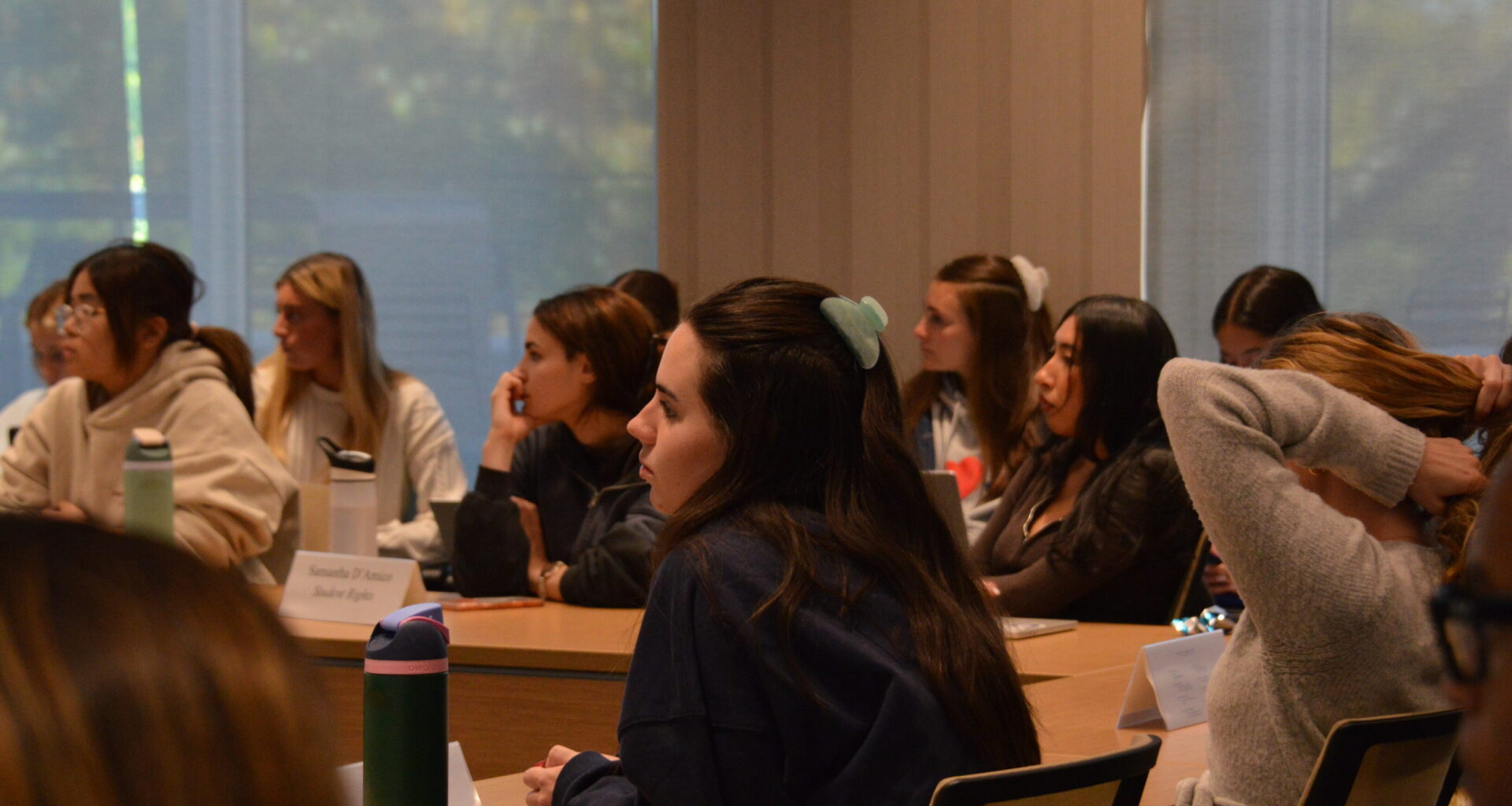
For the spring 2027 semester, Student Senate will have two options available for accredited courses: a political science course and opportunities with Creative Inquiry’s Campus Social Impact Fellowship.
Brian Fife, political science department chair and professor at Lehigh, said he first heard of the initiative to attribute academic credit to student senate work on March 2 in an email from current Senate president and former vice president of internal affairs, Drew Smith, ‘27.
Sara Runyon, Senate advisor and assistant dean and director for student involvement, said this process is happening faster than she originally thought.
Fife said student senators are students first and the course is meant to provide an in-depth experiential learning opportunity of real-life politics.
He said student senators are often exceptionally busy and when juggling credits, it can be difficult to make time for the role of a senator. Smith said some weeks he averages around 30 hours of contribution to Senate work.
Smith said it’s important for senators to prioritize their position, and having Senate stay a club doesn’t fully reflect the weight of the job.
He said academic accreditation can act as a form of accountability.
Runyon said the purpose of this new course is to have a space dedicated for senators to explore what it means to be involved in student government as representative peers, make decisions based on equity and student need and define the role of a partner to the university.
“I think the class really will provide some space to have beautiful conversations and think about what (they are) as an individual senator doing,” she said.
Smith said he’s been polling student senators on their interest in taking the course and he said there’s definitely enough interest to make the course possible.
He referenced Coffee and Cosmetics, a chemical engineering 5×10, for being a successful student created project. He said he didn’t know of a course derived from student-driven creation until now.
“I’m stoked about the opportunity of something so student-centric, to be coming from the students, and students having a shape in their own curriculum and how it pertains to their everyday life,” Smith said.
A new political science course
POLS 295 Lehigh Student Government is a one credit course under the political science department that will meet from 3 p.m. to 4 p.m. on Tuesdays. There are 40 seats available for the 2027 spring semester. The course is open to all students and not required for senators. Smith said the syllabus has yet to be fully solidified.
The course also provides a chance to discuss democracy and leadership through a student lens.
Fife said they’re aware logistics like credit overloads and schedules can halt senators from being able to take the course.
“Folks have a lot going on,” Fife said. “I would not expect all student senators to participate in the class.”
The course description reads: “This course is designed to enhance the undergraduate educational experience for students serving in representative bodies such as the Lehigh student governance structure. Topics that will be discussed and debated include shared governance; democratic accountability; political power; equity; budgeting; and shared responsibility.”
Student Senate bylaws and allocating funds to sponsored organizations and student clubs remain entirely responsibilities of the Senate. Fife said it will be up to the students to decide how this course integrates with the Senate.
At this time, it isn’t clear who will teach POLS 295.
“My colleagues in this department are strong advocates of democracy, regardless of background, regardless of subfield within the discipline,” Fife said.
Fife said debating democracy in a university setting is an essential part of the undergraduate experience.
Smith said the course will address real-life problems that student senators face and are encouraged to take the course.
Senate joins creative inquiry impact fellowship
Student Senate also applied for a Campus Social Impact Fellowship with Creative Inquiry, where Senate would be a campus project and senators could take a CINQ course for either two or three credits.
He said the deliverables would be the work senators already do, including resolutions and bills. This academic component is optional and only available for student senators.
“Creative inquiry seems pretty enthusiastic to take us on and help support us,” Smith said.
Each creative inquiry project has members and fellows. Another option for students is to apply to be a fellow with an additional one credit course. If a student works on a project, they can choose to apply to be one of a maximum of six fellows. Smith said fellows have a larger workload and more deliverables.
Runyon said a Tuesday night lecture is part of the fellowship, led by political science professor Dean Caivano.
As someone who pushed for its implementation, Smith said he’ll almost certainly take POLS 295. He said he may also be a project member for the fellowship.
Smith said the Senate works best when it follows its bylaws and Robert’s Rules of Order. He said in recent years, the Senate has failed to do so, and he attributes those shortcomings to their failure to adhere to their rules.
“I’ve said very frequently that there’s no greater critic of Student Senate than myself,” Smith said. “And by the same token, there’s no one who believes in it more. I really do feel that student involvement in representation can be remarkably impactful to this community. I spend that many hours (doing the work) because I believe the success of the Student Senate is the success of the community.”