
In 1909, an illuminated sign read “Watch Scranton Grow.” It towered on top of Scranton’s first skyscraper on Linden Street.
Today — 116 years later — the sign’s changed, and Fidelity Bank is restoring the iconic Scranton Electric Building to become part of the city’s current growth.
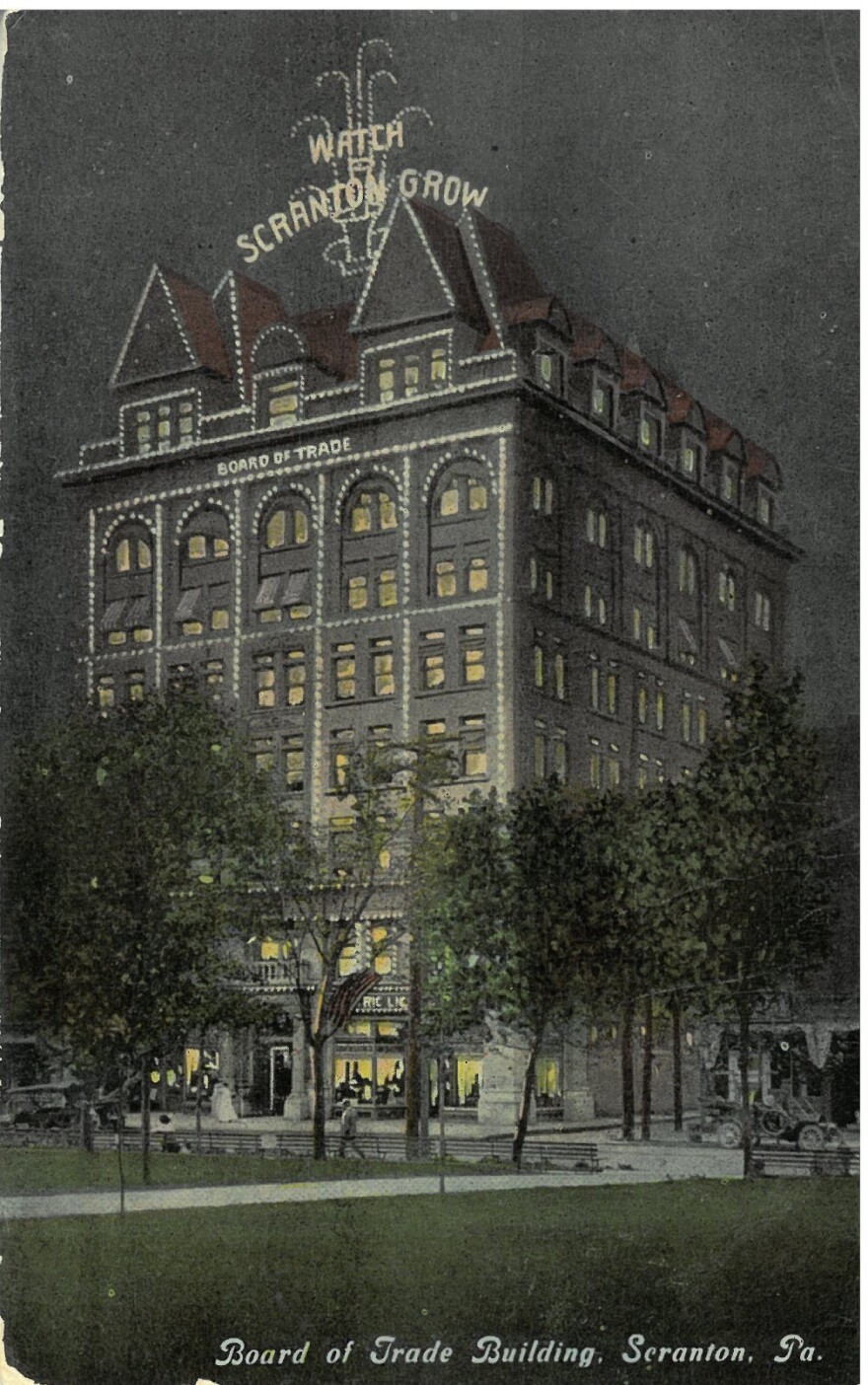
From the Collection of the Lackawanna Historical Society
A rendering of the Board of Trade Building in Scranton with its first electric sign.
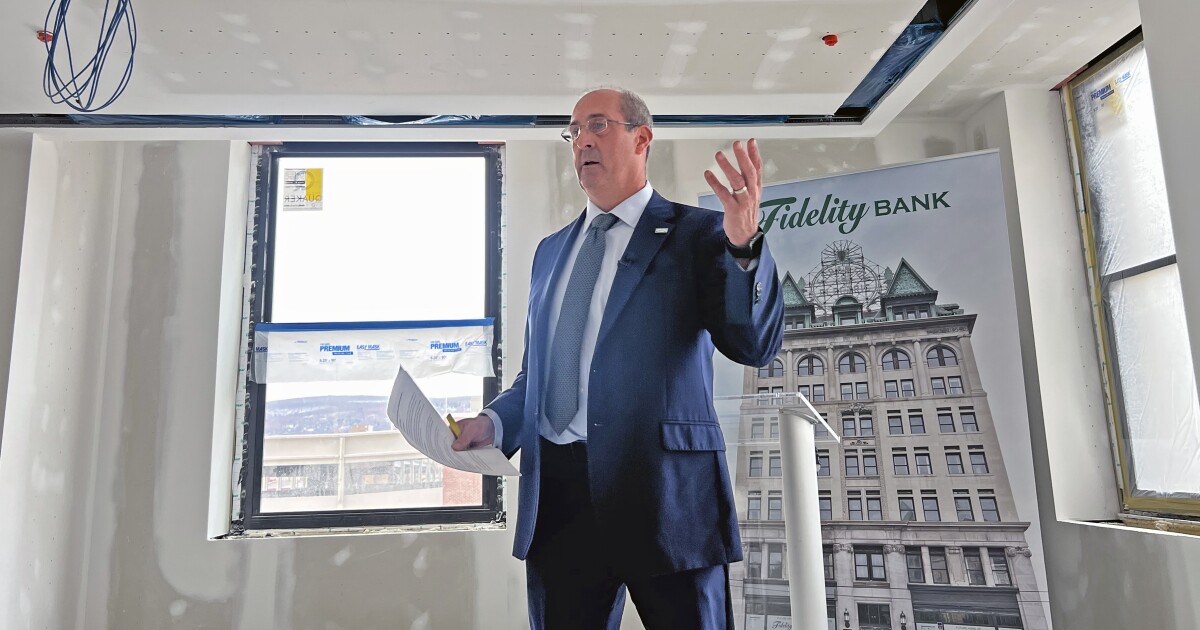
“This opportunity was presented to us to restore the Scranton Electric Building, and we decided this is in the best interest of the city, or really the region,” Fidelity CEO Daniel Santaniello said.
The $26 million project is expected to be completed by April. On Wednesday, Fidelity and L.R. Constanzo Construction Services, the company behind the renovation, gave tours of the building.
Santaniello showed people around the fifth floor, which will be called the “town center” for the 165 employees who will work out of the building. Right now, it’s mostly dry walls and new windows. Wealth management and the bank’s branch will be on the first floor.
Santaniello’s office will be on the seventh floor, surrounded by the building’s original quartered-oak wood finishes and a tiled fireplace.
“It’s coming to life,” he said.
On the eighth and top floor is a ballroom. Fidelity plans to open that space up to nonprofits.
Restoring the historical features of the building was important to Fidelity. They added the building to the National Register of Historic Places.
The decorative plaster ceiling was covered in a drop ceiling, and a corner of the room had serious water damage.
L.R. Constanzo Superintendent Jamie Davidson said plastic work is a dying trade. But they found a company out of Allentown that helped restore the details in the ceiling in the ballroom.
“These old buildings, there’s just nothing like them. And you get to kind of come in, and you have to figure them out. It’s like a puzzle, right? You have to figure out how they were built at that time, and then how to modernize it, and, you know, put it all back together,” company president Louis Costanzo added.
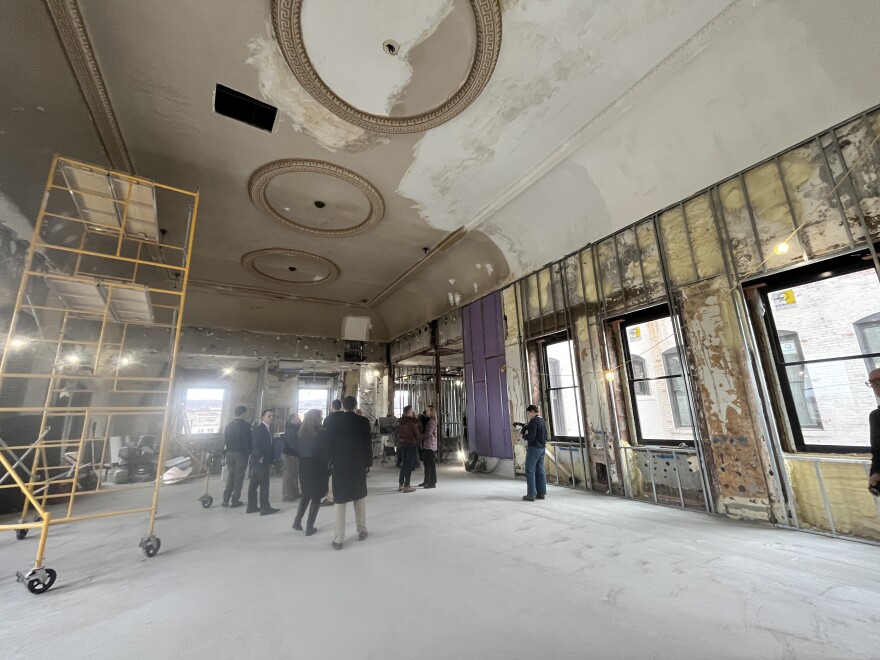
L.R. Constanzo Construction services is working to restore a ballroom in the Scranton Electric Building.
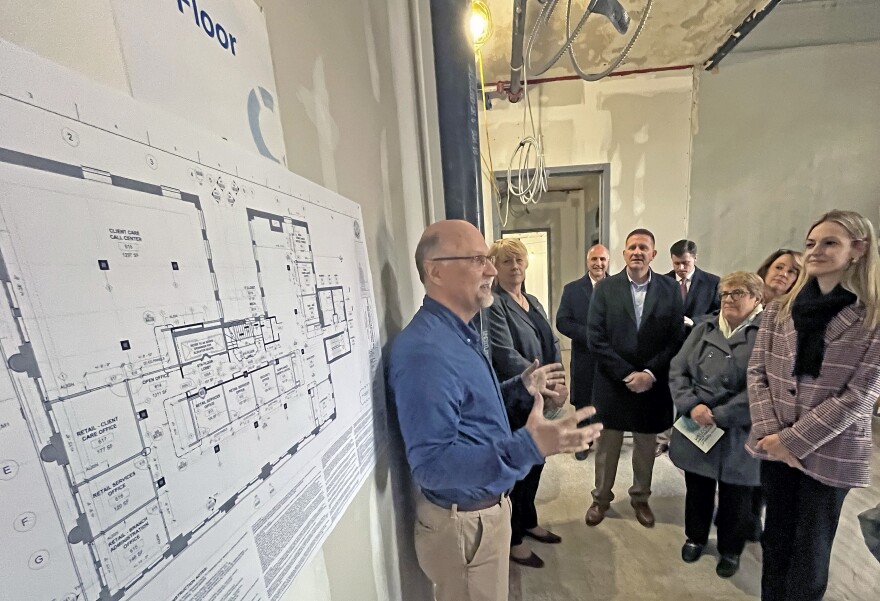
Stephen Peterson, left, Senior Project Engineer at L.R. Costanzo Co., talks about renovation of the historic Scranton Electric Building for guests including Scranton Mayor Paige Cognetti, right, and Lackawanna County Commissioner Bill Gaughan, rear.
A Scranton staple
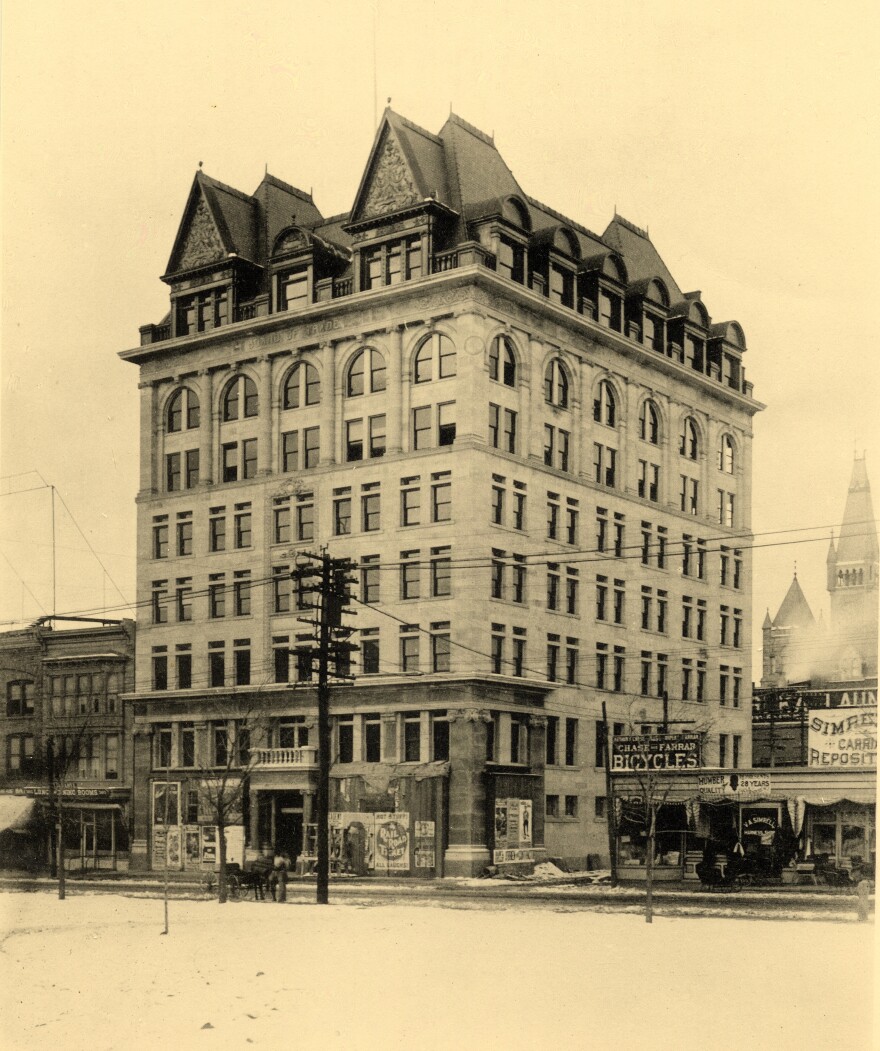
From the Collection of the Lackawanna Historical Society
The Scranton Electric Building, then known as the Board of Trade, at the turn of the 20th century.
The Board of Trade constructed the eight-story Beaux Arts building in 1896. The building’s outer layer is limestone and features a double-gabled roof.
New York City architect Lansing Holden designed the building. He also designed the Connell Building, Scranton Dry Goods (now the Oppenheim Building) and other structures in Scranton.
The Scranton Club — now on Washington Avenue — was on the seventh and eighth floors. There were public and private dining rooms, a smoking room, reading rooms and a parlor, according to newspaper articles from the time.
As a Christmas present to the Electric City from the Scranton Electric Company, who had offices in the building, they lit up the “Watch Scranton Grow” sign on Dec. 24, 1909. It appeared to have a fountain of lights behind the words.
It was replaced in October 1916 with today’s iconic “Scranton The Electric City” sign, which honors the city’s history as the first place to have an electric trolley line.
Ten years later, in 1926, the electric company bought the building.
The sign was dim for years. Then, in 2004, it was restored. LED bulbs were installed in 2014. Then in 2021, the light went off again. Former owner Robert Pettinato could no longer afford to pay the bill. Fidelity stepped in and paid to light the sign for 12 months.
On Wednesday, Santaniello said the sign will be lit in perpetuity.
1 of 4
— Electric City Sign.jpg
The back of the Electric City sign on top of the Scranton Electric Building on Linden Street in Scranton.
Kat Bolus / WVIA News
2 of 4
— Dan Window.jpg
Fidelity Bank President Daniel Santaniello gives a tour of the bank’s new headquarters in downtown Scranton.
Kat Bolus / WVIA News
3 of 4
— Outside.jpg
Fidelity Bank is restoring the Scranton Electric Building on Linden Street in the city.
Kat Bolus / WVIA News
4 of 4
— Dan .jpg
Fidelity Bank’s Ruth Turkington, Executive Vice President and Chief Consumer Banking Officer, left, and Daniel Santaniello, president, stand near a fireplace in Santaniello’s future office in the Scranton Electric Building.
Kat Bolus / WVIA News
‘A new day’
The bank bought the building for $2.5 million in April 2022.
Fifteen years ago Fidelity was a $500 million bank. Today, they’re a $2.8 billion bank, Santaniello said.
Because of that growth, the bank needed a new corporate center. The original idea was to expand in Dunmore Corners, where the bank has been since 1902.
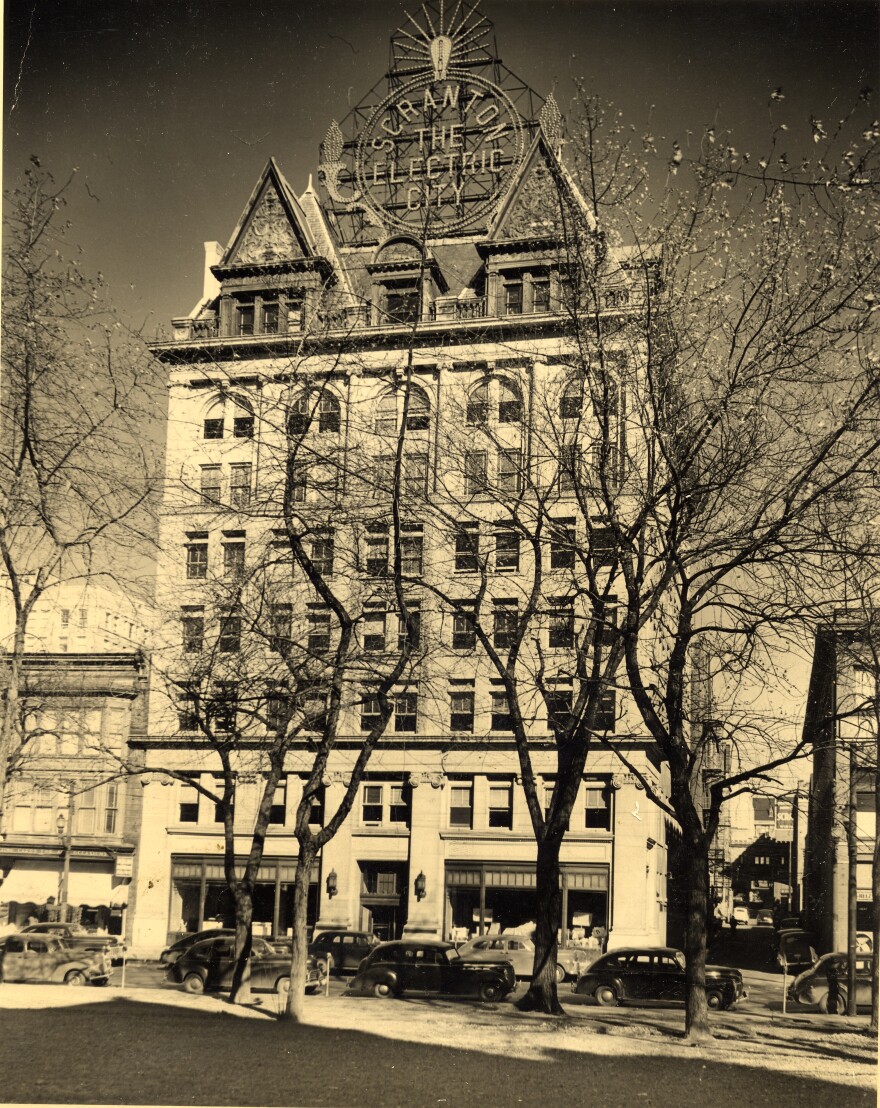
From the Collection of the Lackawanna Historical Society
The Scranton Electric Building with its current-day sign in the 1940s.
Santaniello and the board decided it would be in the bank’s and the region’s best interest to move to downtown Scranton.
The original estimate to renovate the building was $13 million. The pandemic hit and construction prices skyrocketed. Now, it will cost $26 million.
Santeniello said Fidelity is lucky that many local leaders helped them find additional funding.
Last November, Governor Josh Shapiro visited the building to announce a $5 million Commonwealth’s Redevelopment Assistance Capital Program (RACP) grant.
They will consolidate locations. The North Washington Avenue building will close. Santaniello said the City of Scranton is interested in buying that location, which is next to Scranton’s City Hall. They’ll also move out of the Connell Building.
“Which will be good for our bankers from a collaboration perspective,” he said. “It will also be a great place for clients to come, because they can get everything under one roof.”
The newly renovated Dunmore Corners branch will stay open.
“We’ll be staying there for a long time to come,” he said.
Santaniello said the bank is successful because of their clients. Many of those clients are in downtown Scranton.
“So our bankers will continue to support the retailers, many of whom are our clients. So again, that gives back to that ecosystem .. so by us investing downtown, it’s only going to further that.”
“It’s going to be a new day for Fidelity Bank,” he said.
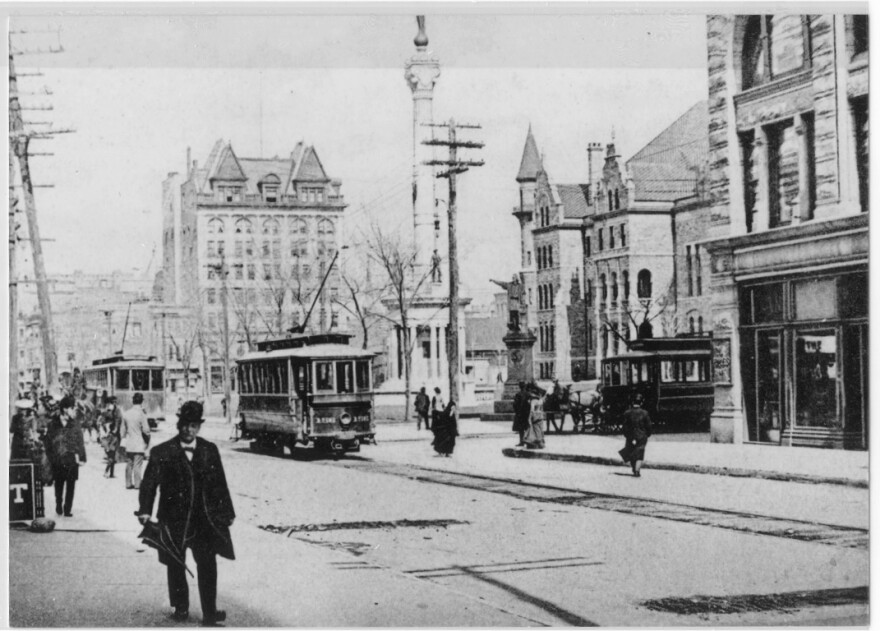
From the Collection of the Lackawanna Historical Society
Trolleys run in downtown Scranton at the turn of the 20th century. The then-Board of Trade building is in the background.