
The Aurora Borealis dazzled the sky over at least 21 states Tuesday night.Western Pennsylvania sky gazers were left scrolling their social media feeds because of cloud cover — but Pittsburgh’s Action Weather meteorologist Jill Szwed says the dancing light show isn’t over just yet.The sun is very active right now, and a rare G-4 (severe) geomagnetic storm watch is in effect for Wednesday. This means that energy from the solar storm will not only spark the Northern Lights, but could also cause GPS disruptions, radio outages and voltage fluctuations on power grids.The Earth’s atmosphere will absorb the energy from this latest solar storm around midday, so the peak will occur during daylight hours for us. It appears the potential to see the Northern Lights will extend overnight.The viewing of this second round will be dependent on sky conditions. Parts of western Pennsylvania may luck out.Clouds will clear from the southwest after dark. That means areas like Greene and Washington counties along with northern West Virginia will have the “best” chance of seeing the aurora.It’s a toss-up for the immediate Pittsburgh area. If the clearing speeds up, that will give us a better shot. Farther to the north and east, clouds will hang around longer.The best time for viewing will be between 8 p.m. and 11 p.m. Look north from a spot with limited light pollution. Taking a photo with your phone may reveal more of the aurora that isn’t visible to the naked eye.
PITTSBURGH —
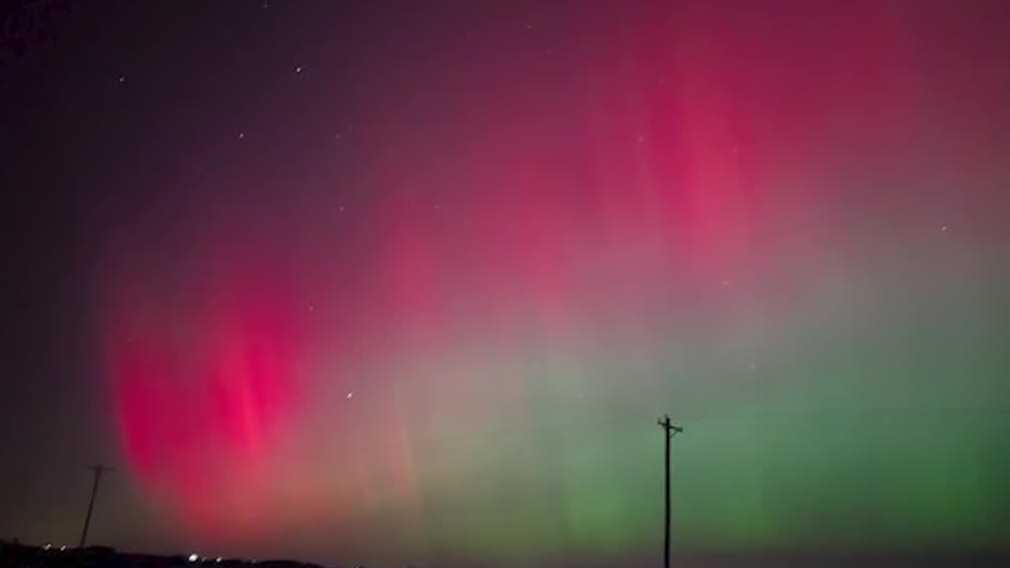
The Aurora Borealis dazzled the sky over at least 21 states Tuesday night.
Western Pennsylvania sky gazers were left scrolling their social media feeds because of cloud cover — but Pittsburgh’s Action Weather meteorologist Jill Szwed says the dancing light show isn’t over just yet.
The sun is very active right now, and a rare G-4 (severe) geomagnetic storm watch is in effect for Wednesday. This means that energy from the solar storm will not only spark the Northern Lights, but could also cause GPS disruptions, radio outages and voltage fluctuations on power grids.
The Earth’s atmosphere will absorb the energy from this latest solar storm around midday, so the peak will occur during daylight hours for us. It appears the potential to see the Northern Lights will extend overnight.
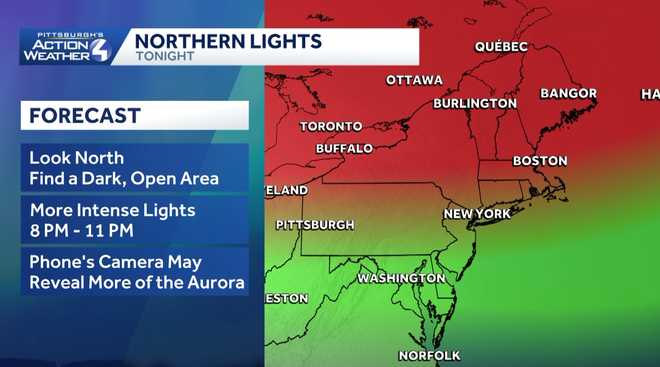
The viewing of this second round will be dependent on sky conditions. Parts of western Pennsylvania may luck out.
Clouds will clear from the southwest after dark. That means areas like Greene and Washington counties along with northern West Virginia will have the “best” chance of seeing the aurora.
It’s a toss-up for the immediate Pittsburgh area. If the clearing speeds up, that will give us a better shot. Farther to the north and east, clouds will hang around longer.
The best time for viewing will be between 8 p.m. and 11 p.m. Look north from a spot with limited light pollution. Taking a photo with your phone may reveal more of the aurora that isn’t visible to the naked eye.