
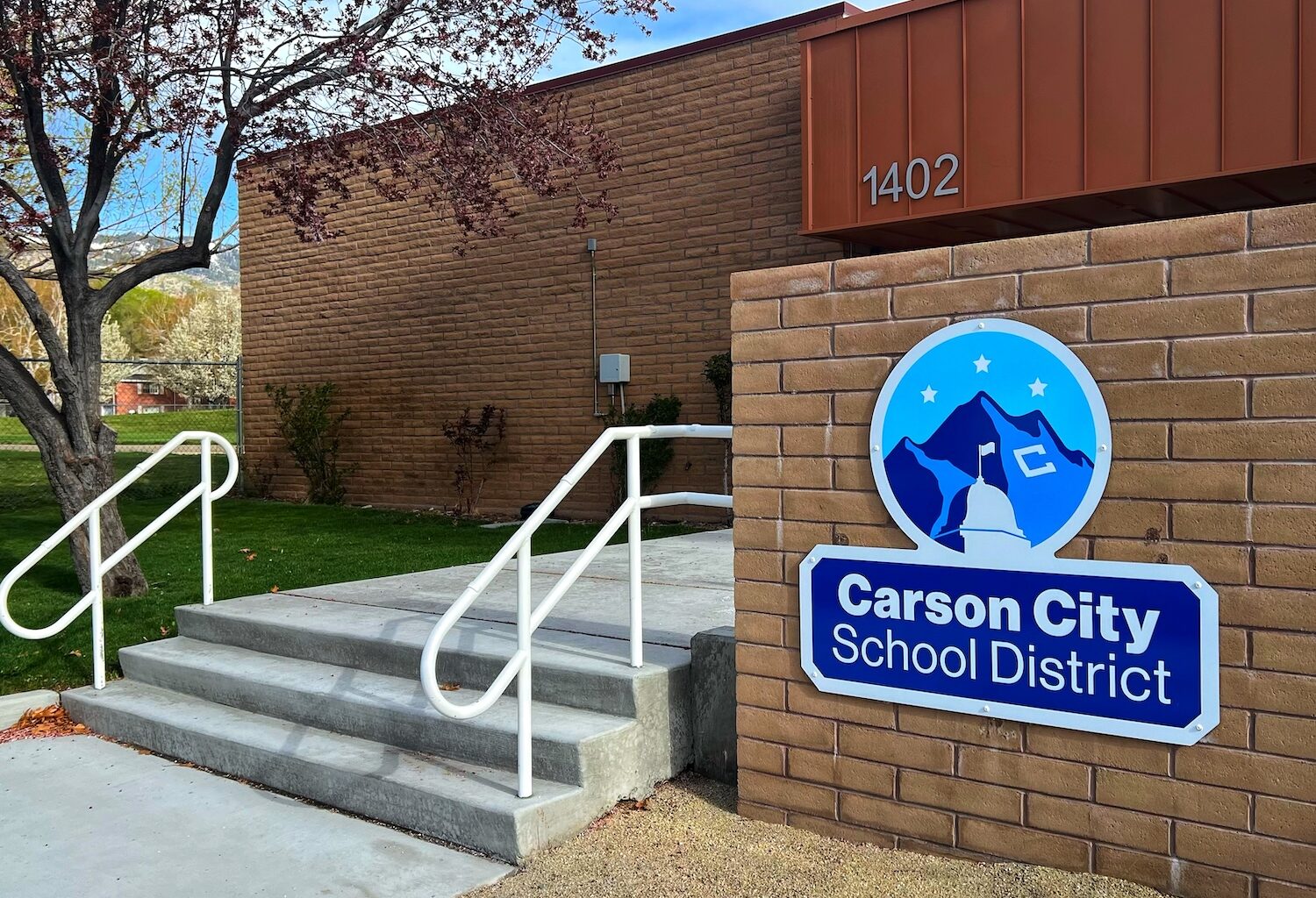
A curriculum Carson City School District teachers were using a few years ago had all the bells and whistles to teach elementary students how to read and write — except it never actually built in time for kids to read and write.
Test scores weren’t improving, and learning outcomes weren’t where they needed to be. So it was time for a change, literacy coordinator Pam Cowperthwaite said.
“As a former classroom teacher, I always tried to do what was best for my kids, and now we know better,” Cowperthwaite said. “We need to do better, and I think that’s how most of our teachers feel, right?”
CCSD adopted the Core Knowledge Language Arts (CKLA) curriculum produced by New York publisher Amplify to give kindergartners through fifth graders foundational skills in literacy. CCSD signed a seven-year contract with Amplify for more than $1.1 million for books, tools for K-5 students and teacher training.
One cohort of 38 Carson teachers are training in their second year with 20 more beginning this year. They must pass the program at 80% to become certified, and that’s about 170 hours of unpaid time over two years they’re dedicating on their own, Cowperthwaite told the Carson City school board on Sept. 2.
CKLA’s approach stays in line with a nationally recognized research-based system called the Science of Reading that draws from years of neuroscience, psychology and linguistics development. In its most basic definition, reading comprehension consists of word recognition and language comprehension. Educators can formulate programs about phonics, vocabulary and reading comprehension from the science to help students at different levels.
The Silver State has introduced at least one type of reform to boost early childhood literacy. Its Read by Grade 3 Act passed in 2015 targets accelerated reading growth to keep students on a clear path to academic achievement. It had a mandatory retention requirement initially taken out then reversed and passed in Assembly Bill 400 in 2023.
But other states, such as Mississippi, Cowperthwaite said, still are making larger gains than Nevada after the pandemic by funding Science of Research programs, and Nevada recently ranked 47th nationally in per-pupil funding.
The NCTQ also showed Nevada’s percentages dropped for underserved students, some as low as 8% for English language learners and students with disabilities.
Academic researcher Connie Juel from the University of Texas, Austin found in a longitudinal study published in 1988 that there was about an 88% chance that a child who was a poor reader at the end of first grade likely would remain a poor reader by the end of fourth grade. Low literacy rates in a child’s formative years then become associated with poor grades, chronic absences, a higher risk of mental health and behavioral issues that potentially worsen into adulthood and increased potential for social issues such as poverty or involvement in the justice system, Cowperthwaite told the school board.
“We needed something new,” Cowperthwaite said. “(The former curriculum) didn’t tell them to practice. It didn’t tell them to practice the application. And the parts that it did provide were so loose that it still was up to interpretation.
“So we now understand what’s important in learning to read,” she said. “We understand how the brain learns to read, and it doesn’t matter whether or not the student is dyslexic or just has gaps. Both of those students need the same thing.”
Cowperthwaite said the challenge is to build teacher capacity and preparation to improve Carson City schools’ literacy rates.
“For some teachers who have not had any training around the science — and they’re getting some training now at their school sites with book studies and such — this is a big, big ask of them, but we’re doing the best we can,” she said.