
Professor Phillip Coles’s supply-chain knowledge about improving efficiency and business growth did not stem from watching it in action — it came from working on a mushroom farm.
Coles studied insects as an undergraduate entomology major at Penn State University. One of his teaching assistants at the time was conducting research on mushrooms, and Coles was intrigued by how they were grown.
From there, he got an internship at a mushroom farm, working to reduce pesticide usage. He discovered the importance of increasing efficiency and fell in love with the distinct art of mushroom farming.
“The first time I saw (mushroom farming), I said, ‘This is the coolest thing I’ve ever seen,’ and had to do it,” Coles said.
He went on to work as a mushroom farmer for 33 years.
Coles worked for Giorgio Fresh Co. located in southeast Pennsylvania. A Pittsburgh native, he’s spent the majority of his life in the state, working on farms across Berks and Chester counties. He said he stayed in Pennsylvania because it suits his interests in mushroom farming and business.
Pennsylvania grows about 61% of the nation’s mushrooms, according to the U.S. Department of Agriculture. Coles said the state’s central location creates a successful business environment.
Throughout his three decades in mushroom farming, Coles moved up through the ranks and became a project manager. At age 54 he chose to quit working at the mushroom farm and go back to school to teach business full time.
Coles said he wanted to teach at a university but was rejected multiple times for not having the qualifications, which inspired him to get his MBA.
He’s now been teaching supply-chain at Lehigh for the past eight years.
Coles said he prioritizes education and continues to take classes at Lehigh, unbothered by the idea of sitting among first-years in introductory courses. He applies that same commitment to teaching, doing his job for the joy of seeing his students thrive.
Greer Erhard, ‘27, one of Coles’ students, said he helped fuel her love for supply chain management after she entered the business school undecided.
She said it’s easy to tell that Coles loves what he does and wants his students to succeed.
Coles teaches both introductory and advanced courses, allowing him to see students at different stages of their college careers. He said he enjoys watching them grow from being shy and uncertain into confident, accomplished post-graduates.
Through his classes and individual conversations, Coles said he aims to help people understand how businesses actually work by correcting misconceptions.
He said markets control the price of goods and emphasized the importance of eliminating waste to improve efficiency — lessons that trace back to his first job where he reduced pesticides.
“No matter what your major is, that is something that you can learn,” Coles said. “Waste is in any kind of business, it’s everywhere, if you can only see it.”
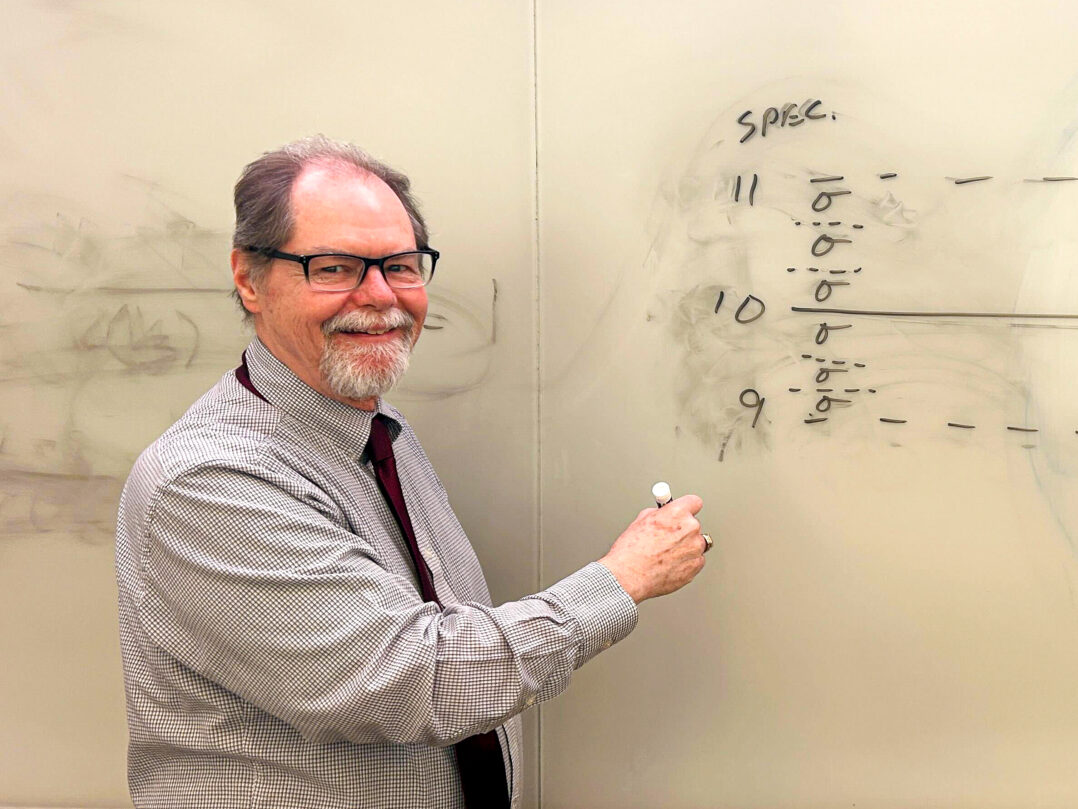
Coles said he teaches these topics by connecting them to real-world examples and using visual cues to help his students better understand the complexities of business.
Erhard said she bonded with Coles because they’re both from Pittsburgh, so she enjoys hearing his hometown stories.
“I feel like every time you’re a student in his class, you can have real conversations with him,” she said.
Marguerite Whitley, the coordinator of the Department of Decisions and Technology Analytics, works in the department’s lobby, constantly interacting with business professors.
She said although she’s been working at Lehigh for only a year, Coles stands out as someone willing to chat.
“He always has stories, so that’s fun,” Whitley said. “He always is sharing music as well.”
Coles also shares his stories and passions through writing. He’s published four articles in The Wall Street Journal and has also written for The Hill, The Washington Examiner and The Pittsburgh Post-Gazette.
He said he doesn’t write for the love of writing, but out of enthusiasm for the topic.
“I get so upset by something that I read and I disagree with it that I can’t stop myself,” Coles said. “I’ll be up until 4 o’clock in the morning writing something, so I need that inspiration.”
Coles writes for business and economic journals as well as agricultural science publications. He said he enjoys bringing his business insights into the agricultural industry and offering new ideas.
A paper co-written by Coles and one of his former students was recently approved for publication in the “HortScience” journal. Coles said he feels grateful to see his students’ success firsthand and is proud to have contributed to it.
“I kind of live vicariously through the students,” Coles said. “When I hear these great things they’re doing, it just makes me feel so good and I enjoy that.”