
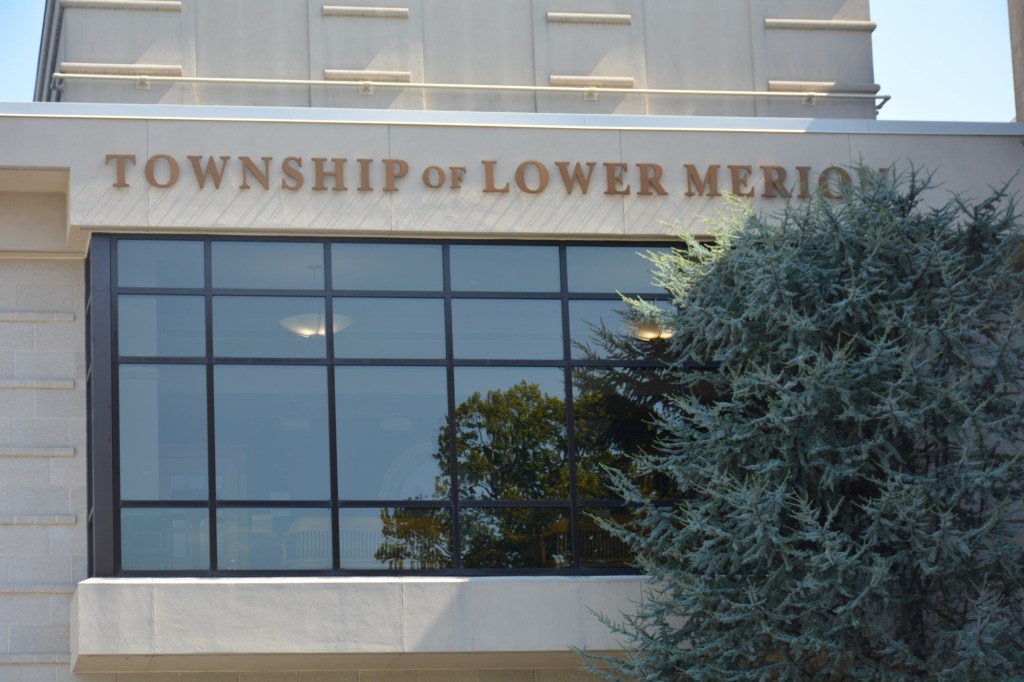
LOWER MERION — During a recent finance committee meeting, Lower Merion Township officials proposed a 9.5% tax increase for 2026.
Adam Szumski, director of finance for Lower Merion Township, outlined the budget details.
The 2026 budget projects total spending of $83.8 million after collecting revenues of $79.3 million. The revenue includes using $4.6 million from its fund balance.
Under the proposed budget, the millage rate will increase from 4.462 mills in 2025 to 4.886 mills in 2026. The millage represents a 9.5% increase.
The tax increase is projected to raise $3.2 million in revenues compared to the 2025 budget.
A property with an assessed value of $200,000 had a 2025 township tax bill of $892. Under the township’s projected tax increase, that same property would have a township tax bill of $977, or an increase of $85.
The median home value of $287,600 had a 2025 tax bill of $1,283 and will have a 2026 bill of $1,405, an increase of $122.
A home with an assessed value of $600,000 had a 2025 tax bill of $2,677. Under the new rate, the bill would be $2,932, or an increase of $255.
Szumski also pointed out that assessed value and market value are two separate figures. Since Montgomery County hasn’t had a property reassessment in decades, the assessed values are much cheaper than the market values.
“These are assessed values and not market values,” Szumski said. “The county has not reassessed since 1999, so if you bought a house recently for $600,000, your assessed value is probably a third of that. So these are not market values. These are assessed values.”
In his budget message to the commissioners, Ernie McNeely, township manager, cited increased health insurance costs as a driver for growth in spending.
“First among the cost pressures is healthcare. After years of far below-average health care premium growth, the Township will experience a 19.9% premium increase for 2026, adding an additional $1.3 million of General Fund expenditures to provide employee and retiree healthcare,” according to the budget message. “The Township’s claims utilization rate, a ratio of actual-to-expected claims, has surpassed 110% since mid-2024. A significant driver of this trend is the costs associated with new non-diabetic weight loss drugs and other specialty pharmaceuticals. While these weight loss drugs may provide long-term healthcare savings in the form of reduced occurrences of other illnesses, the magnitude of these future savings present great difficulty to healthcare actuaries to estimate and work into premium calculations. Pharmaceuticals present significant costs to the Township’s health plan.”
One area that has helped save the township money in past budgets have been vacant employee positions, especially in the police department.
Szumski said the township has had savings in areas such as employee salaries, which were reduced from the $37 million included in the 2025 budget to $33.7 million that will be spent in 2025. The difference primarily came from employee vacancy, mainly in the police department. The police department is currently attempting to fill several vacancies from its authorized strength of 136 uniformed officers.
“The Police Department has averaged 18 uniformed officer vacancies in 2025, a vacancy rate of almost 13% which is consistent with national police recruitment challenges,” according to McNeely’s budget message. “Non-uniform full-time staff averaged a more modest 5.0% vacancy rate in 2025, resulting in a total Township workforce vacancy rate fluctuating between 7.5% and 8% throughout the year. The Board of Commissioners adopted policies this year to boost police officer recruitment, including but not limited to the removal of college credit requirements for entry-level police officers and offering a $5,000 bonus for new hires. These changes have had immediate impact, resulting in a Spring 2025 applicant class several times larger than other recent recruitments. The Proposed 2026 Budget anticipates the total Township vacancy rate to drop from 8% toward 6%. With a General Fund salary and benefits budget exceeding $52 million, each percentage improvement in the vacancy rate reduces budgetary savings by $520,000.”
Szumski said the township also saw savings in its utility costs resulting from the conversion of its streetlights to LED. In 2024, the township spent $1,089,805 under the general fund utilities category. According to the approved 2025 budget, the township projected spending is $1,462,029. As the year comes to a close, the township says it will spend $1,179,595, representing a savings of $282,434, which is a 19.3% decrease.
According to the township’s 2026 budget trends, Lower Merion’s plan to increase parking meter rates from $0.50 per hour to $1 per hour and $1.50 per hour in some locations is expected to generate approximately $850k-$900k in additional revenue.
Szumski said the budget can be reviewed by going to the township’s website.
“If you go to the finance department, there are various subpages including the adopted budget and the proposed budget, past budgets, audits, and so on and so forth,” Szumski said.
Commissioner Scott Zelov added that hard copies are available at each of the township’s six libraries.
The commissioners are expected to vote on the final budget in December.