
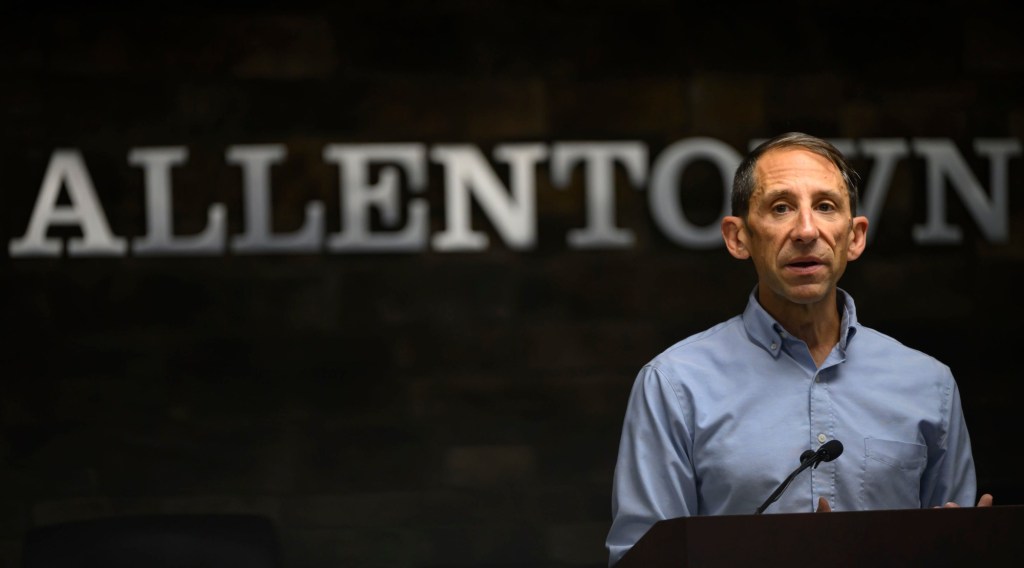
Allentown City Council on Wednesday evening rejected a 4% property tax increase proposed by Mayor Matt Tuerk, and voted to instead take an additional $1.5 million from the city’s cash reserves to balance the 2026 budget.
The vote was 5-2, with council members Cynthia Mota, Daryl Hendricks, Natalie Santos, Ce-Ce Gerlach and Ed Zucal voting to strike the tax increase in a budget amendment. Members Candida Affa and Santo Napoli voted against doing so. A final vote on the budget is scheduled Dec. 10.
In an interview following the vote, Tuerk criticized council and said he may veto the budget if it passes in a final vote with no tax increase.
“I am embarrassed to be in a room for this long, and to watch City Council make asinine decisions,” Tuerk said in an interview following city council’s vote.
City Council Vice President Cynthia Mota, who sponsored the amendment to strike the tax increase, said that she thought the city should not impose both a tax increase and a trash fee hike in the same year.
The city’s proposed 2026 budget includes a $140 increase to trash fees, which is necessary to cover the increasing cost of its contract with trash collector J.P. Mascaro, Tuerk has said.
“I am mostly in agreement that in order for a city to thrive, we need to raise taxes gradually. I do understand that, but we also have to know when,” Mota said. “In my humble opinion, I don’t think this is the time.”
The $246 million 2026 budget adds no new positions or major expenditures next year, but will continue to fund existing jobs and projects, including plans for a multimillion dollar police headquarters renovation, improvements to the Martin Luther King Jr. Trail and traffic safety upgrades.
The city is facing financial challenges including increasing pension obligations, revoked federal funding and growing employee health care insurance costs, which is why the tax increase is necessary, Tuerk said Thursday. The city also will use $2.6 million of its general fund reserves to balance the budget.
Tuerk said that neglecting to raise taxes and instead take more money from the city’s reserves will likely hurt the city’s credit rating, which makes it more difficult to borrow money. The city earlier this year approved $134 million in city borrowing, which would allow it to finance capital projects including a new police building and fire and emergency medical services building.
At Wednesday’s meeting, Tuerk proposed a compromise to City Council, which members rejected. His compromise would have kept the 4% tax increase but reduced the trash fee increase to $115, and pulled around $800,000 from the city’s reserves to make up the difference.
The city’s last property tax increase was in 2019, when former Mayor Ray O’Connell vetoed City Council’s proposed budget, which did not include a tax hike, and instead enacted a 27% increase. Before that, the city had not seen a tax increase since 2005.
In 2023, City Council rejected a proposal from Tuerk to raise property taxes by 2%.
Tuerk vetoed council’s budget, but council overrode his veto, keeping taxes level in 2024.
This is a developing story that will be updated.