
From Delco to Chesco and Montco to Bucks, what about life in Philly’s suburbs do you want WHYY News to cover? Let us know!
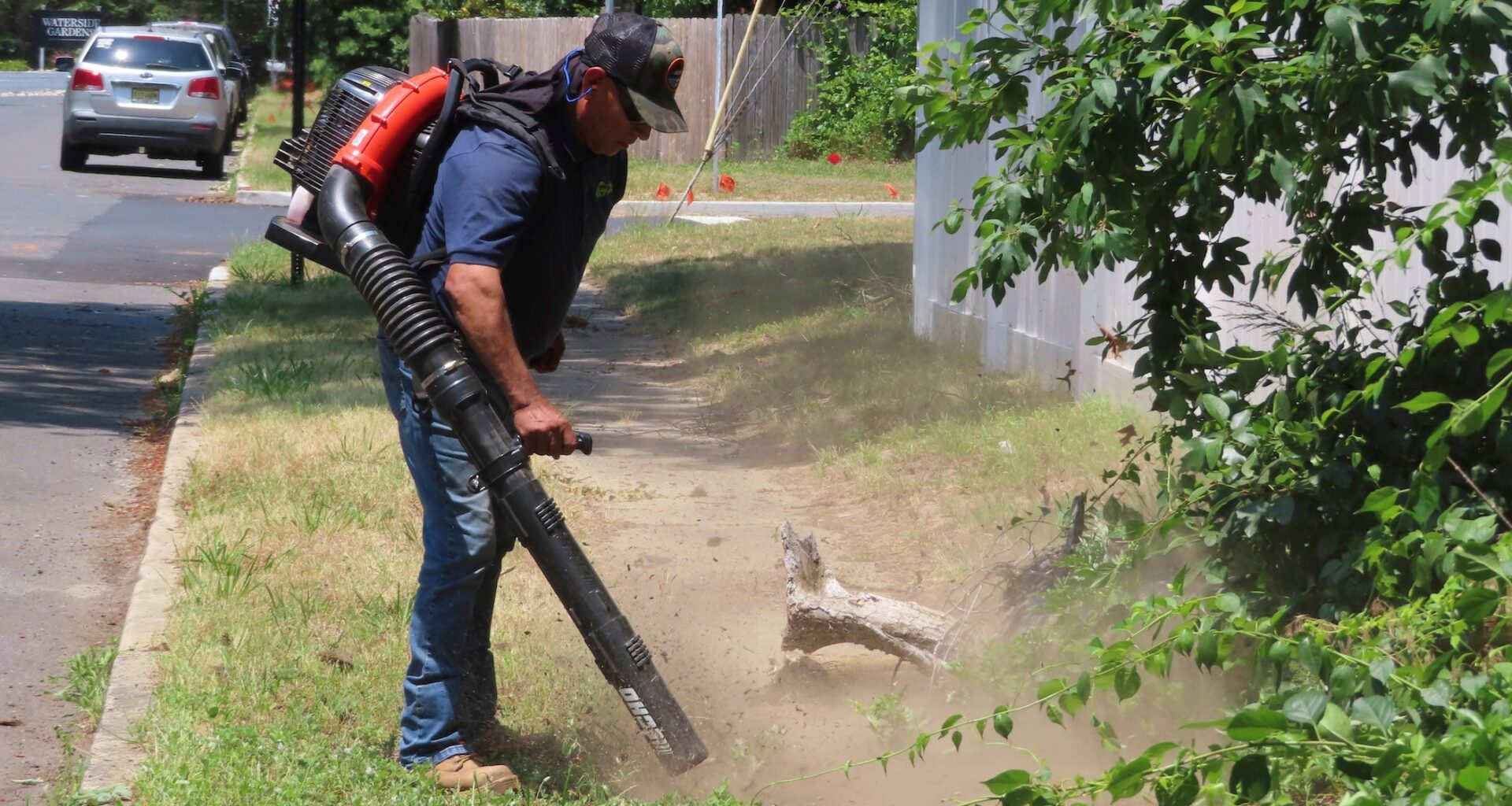
Lower Merion Township’s board of commissioners on Wednesday night voted 10-4 to ban gas-powered leaf blowers following hours of public comment on the measure.
“If this were easy, it would have happened already, right? This is hard,” said Todd Sinai, president of the board of commissioners. “It is hard to push things in and make progress. We’re the first township in Pennsylvania, I think, to do this. So townships and other places have done it, but some town has to go first, right? Some town has to be the one that is the starting point for all the other municipalities to coalesce around.”
Here’s what to know about the new measure.
What is the ban?
Starting on June 1, 2026, gas-powered leaf blowers will be banned seasonally, from June 1 to Oct. 1 and from Jan. 1 to April 1. The seasonal ban will be in place in 2026 and 2027.
In 2028, gas-powered leaf blowers will only be permitted in the fall (from Oct. 1 through the end of the year). Beginning in 2029, gas-powered leaf blowers will be completely banned year-round.
Beginning on June 1, 2026, portable generators for electric leaf blowers are also prohibited.
Anyone who violates the ordinance will first receive a warning, followed by a $100 fine for the first offense, a $250 fine for a second offense within 12 months of the first offense and a $600 fine for a third or more offense within the same 12-month period of the first offense.
What are the environmental impacts of gas-powered leaf blowers?
Bans on gas-powered lawn equipment and incentives for transitioning to electric lawn equipment are on the rise across the country.
Washington, D.C.’s ban on gas-powered leaf blowers took effect in January 2022, and in nearby Montgomery County, Maryland, the use of gas-powered leaf blowers has been prohibited since July 1.
In Pennsylvania, West Norriton Township passed a law incentivizing residents to purchase electric lawn equipment, offering a $100 rebate.
“We don’t have to use these offensively loud, toxic tools,” said Nancy Winkler, a resident of the township’s Ward 12, on Wednesday. Winkler said she has been working to pass a gas-powered leaf blower ban since 2020.
“Leaves can be cleared with electric equipment to manage any safety and property maintenance need,” she said.
Lower Merion residents who spoke in support of the measure cited climate change and pollution-related health concerns as among the top reasons they wanted a ban.
“While the devices are small, they pack a pretty big pollution punch and release high levels of air pollution that causes asthma and other respiratory ailments, climate pollution,” David Masur, executive director of PennEnvironment, a statewide nonprofit environmental group, told WHYY News.
According to data from PennEnvironment, carbon dioxide emissions in Montgomery County topped 148,271 tons in 2020 — the equivalent of CO2 emissions from 32,640 cars in the same period of time.
Running a gas-powered leaf blower for an hour in a yard in Lower Merion produces the same amount of pollution as driving from there to Florida, Masur said.
Dr. David Paul, a physician who has lived in Lower Merion for 35 years, said he was concerned about the health risks.
“We are all living through a health crisis in Lower Marion now, and the facts regarding the health risks caused by these gas-powered leaf blowers is clear and indisputable,” he said. “It is indisputable that these gas-powered leaf blowers are harming us. They are poison. From a cardiovascular standpoint, they increase the risk of heart attack and stroke due to their emission of air pollutants.”
Masur said he is not surprised to see Lower Merion “leading the way” on the issue, since the township, along with Narberth Borough, was among the first Pennsylvania municipalities to introduce plastic bag bans.
“It’s important to have somebody willing to go first, be the guinea pig, test-drive it, and see what’s working, what’s not,” he said. “How does the public respond? And then I think that can really inform other municipalities ‘and counties’ decisions on how to address this issue.”