
As Pennsylvania lawmakers continue their inaction over regulating and taxing slot-like skill game machines, the state Supreme Court justices on Thursday heard arguments over the legality of the devices that are found in thousands of businesses and social clubs across the Commonwealth.The case comes after years of legal challenges over Skill Game machines, which have proliferated across the Commonwealth and could settle from a judicial sense whether the devices are forms of illegal gambling or unique and currently unregulated gaming.Justices peppered a lawyer for leading skill game maker Pace-O-Matic over how the devices operate through two separate stages — one of which is often compared to a slot machine and another that involves completing increasingly longer sequences of touch screen clicks of colored circles until an incorrect circle is pressed or a player completes 20 consecutive sequences without any mistakes. The reward for successfully completing the latter segment of the game is 105 percent of the player’s stake.”It is not enough for that component of the game to be considered predominant,” said Susan Affronti with the Pennsylvania Attorney General’s office.But an attorney representing the largest maker of skill games argued both components of the game make up the actual skill game.”When you play it that way, you can win it every time for at least 105%. And you know, that’s not me talking. The Commonwealth’s own experts and witnesses from the Pennsylvania State Police all agree,” he said.Pennsylvania’s legislature could also move to pass legislation regulating and taxing skill games but has run into a potential move that could bring in hundreds of thousands of dollars and bring the issue of whether the devices are legal or not to conclusion.”That’s a huge concern, and that’s why I’ve been for the longest time of these things being regulated as the industry has asked for,” said Rep. Russ Diamond, minority chairman of the House Gaming Oversight Committee.
HARRISBURG, Pa. —
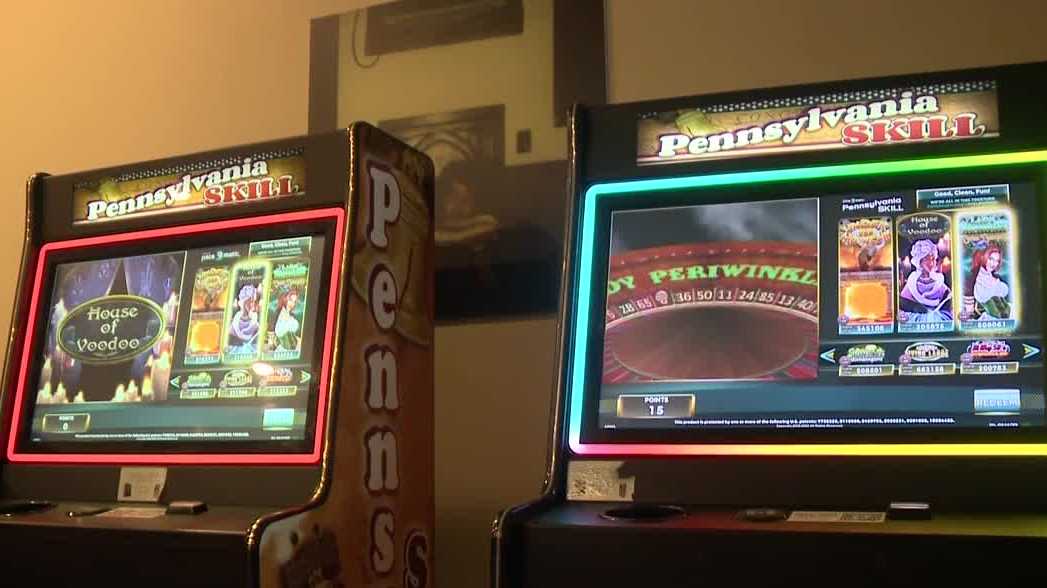
As Pennsylvania lawmakers continue their inaction over regulating and taxing slot-like skill game machines, the state Supreme Court justices on Thursday heard arguments over the legality of the devices that are found in thousands of businesses and social clubs across the Commonwealth.
The case comes after years of legal challenges over Skill Game machines, which have proliferated across the Commonwealth and could settle from a judicial sense whether the devices are forms of illegal gambling or unique and currently unregulated gaming.
Justices peppered a lawyer for leading skill game maker Pace-O-Matic over how the devices operate through two separate stages — one of which is often compared to a slot machine and another that involves completing increasingly longer sequences of touch screen clicks of colored circles until an incorrect circle is pressed or a player completes 20 consecutive sequences without any mistakes.
The reward for successfully completing the latter segment of the game is 105 percent of the player’s stake.
“It is not enough for that component of the game to be considered predominant,” said Susan Affronti with the Pennsylvania Attorney General’s office.
But an attorney representing the largest maker of skill games argued both components of the game make up the actual skill game.
“When you play it that way, you can win it every time for at least 105%. And you know, that’s not me talking. The Commonwealth’s own experts and witnesses from the Pennsylvania State Police all agree,” he said.
Pennsylvania’s legislature could also move to pass legislation regulating and taxing skill games but has run into a potential move that could bring in hundreds of thousands of dollars and bring the issue of whether the devices are legal or not to conclusion.
“That’s a huge concern, and that’s why I’ve been for the longest time of these things being regulated as the industry has asked for,” said Rep. Russ Diamond, minority chairman of the House Gaming Oversight Committee.