
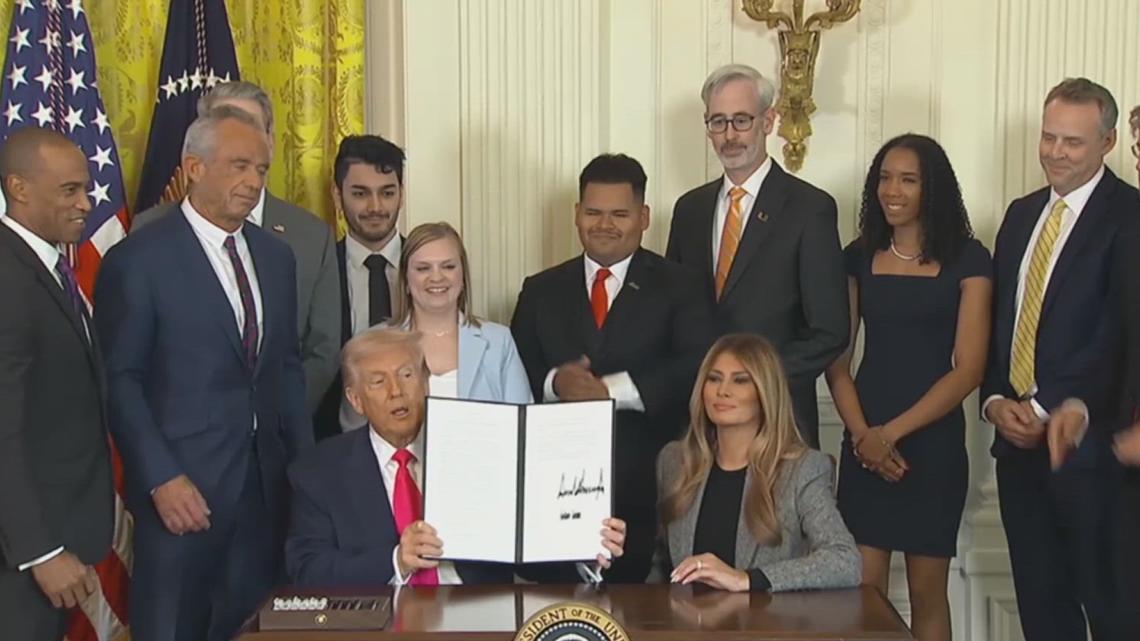
President Donald Trump’s new “Fostering the Future” executive order is drawing attention from child welfare providers in Pennsylvania.
YORK, Pa. — A new executive order signed by President Donald Trump is putting fresh attention on the nation’s foster care system — and raising questions about what it will mean for providers in Pennsylvania.
Terry Clark, president and CEO of the Pennsylvania Council of Children, Youth and Family Services (PCCYFS), said the announcement caught many in the field off guard.
“The timing of it was quite interesting — at the time where a budget was just agreed upon and other things going on in both Pennsylvania and at the national level. It was a surprise to us,” Clark said.
The order, known as “Fostering the Future,” focuses on helping children and teens as they transition out of foster care. It directs federal agencies to update outdated systems, improve how states report outcomes and make the child welfare process more transparent.
Clark said Pennsylvania already has programs aimed at helping young people move into adulthood, but the scope of the order remains unclear.
“We were trying to figure out if this was something that was more symbolic, or if it was something that was more meaningful and would actually bring change in the foster care system,” he said.
A major component calls for expanding data systems and creating a nationwide database to better track youth in care. The order also encourages more partnerships with faith-based organizations to help recruit foster and adoptive families. Clark said the focus on teenagers aging out is especially important, since they face some of the toughest challenges.
“When kids are aging out of the system now, we see them struggling to find jobs. We see them struggling to be ready for adulthood,” Clark said.
He noted that many young people leaving care lack family support networks — making it harder to navigate housing, education and work. The order directs agencies to help youth access job training, mentoring programs and education opportunities.
But Clark warned that ongoing federal budget cuts — especially those affecting Medicaid — could undermine the very youth the initiative is meant to help.
“What we’re seeing is more than 153,000 children across this Commonwealth are now without health insurance, and this is at a time when the federal policy changes are really projected to look worse if those changes go into place,” he said.
Clark said the order offers promising ideas, but the impact will depend on how federal agencies write the rules and how much funding ultimately supports the effort.