
Later today, Pittsburgh City Council will debate the fate of the city’s 2050 Comprehensive Plan. When it was introduced in February 2024, contracts for associated work totaled nearly $6 million.
On Friday, Nov. 14, council member Anthony Coghill put forth resolutions that would claw back remaining funds from two contracts associated with the comprehensive plan.
Since last week, conversation about present action to ensure a positive future for the city has been terse.
What is the 2050 Comprehensive Plan?
The plan has been in development since 2023 — before current Director of City Planning Jamil Bey held the job — and is meant to address segregation-based land use policies, the health consequences associated with Pittsburgh’s industrial past, zoning discrepancies and more in an attempt to prime the city for growth, sustainability and equity.
A comprehensive plan is meant to serve as a collection of guiding principles for the city, similar to the neighborhood plans currently or previously observed by many city locales such as Manchester Chateau and Hazelwood.
“We’ve been managing decline for a long time without a plan, and so this was an opportunity for us to assert our values, our interests and capture what is the city? What do we want to be? Who do we want to be?” Bey told NEXTpittsburgh in August.
While many mayoral administrations throughout history have started the comprehensive planning process, none of them were ever officially implemented into city planning processes.
Why is funding being questioned?
Pittsburgh City Council has never exactly been all in on the comprehensive plan. On Feb. 6, 2024, council approved a $3.25 million contract for the plan’s technical development and a $2.65 million contract for resident engagement.
Pittsburgh’s bill is abnormally high compared to other cities. Cincinnati, which has almost the same population as Pittsburgh, spent $500,000 from the city’s budget between 2009 and 2010 on its comprehensive plan while also putting a $2.4 million grant toward the effort ahead of its 2012 implementation. Chicago — approximately nine times larger than Pittsburgh — spent $4 million on its comprehensive plan in 2022.
The technical contract passed with a 6-3 vote (with “no”s from Council Members Anthony Coghill, Deborah Gross and Theresa Kail-Smith) and the engagement contract with a 5-3 vote (“no”s persisted from the former three, and Khari Mosley abstained).
At a Monday, Nov. 10, post-agenda council meeting, city planning officials presented a progress report, of sorts, to city council ahead of the holiday season and new mayoral administration, where many council members questioned the efficacy of the engagement contract.
They said they weren’t aware of events happening in their own districts until days beforehand and worried that much of the information collected applied to any city in the U.S. and didn’t address Pittsburgh-specific needs.
In the meeting’s initial moments, council seemed skeptical of the spending, but willing to let it persist.
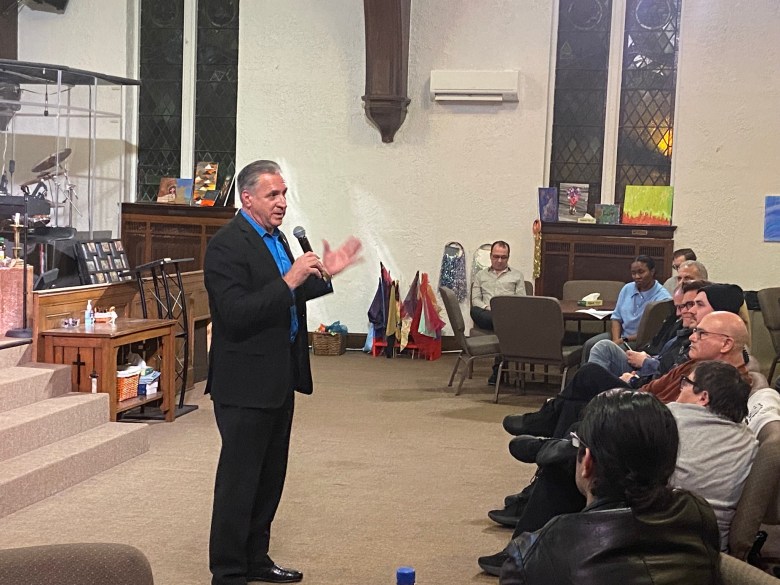 Council Member Anthony Coghill addresses Brookline community members at an event in the Tree of Life Open Bible Church on Thursday, Feb. 27. Photo courtesy of the Anthony Coghill – District 4 Facebook page.
“I have a tremendous amount of respect and confidence in you, Dr. Bey, and I appreciate our many conversations in the past,” Coghill said. “I look forward to seeing it complete. I would be lying if I told you I felt like it was worth $6 million. I just don’t, especially at a time when we’re struggling to keep vehicles on the street.”
Shortly after, Coghill asked how much had been spent so far.
“I’m not looking to pull it back; I’m just asking,” he added.
Bey and City Planning officials could not immediately provide an exact figure, but Coghill has since told other local outlets the amount is $2 million or more.
Shortly after, the Nov. 10 meeting became less amicable.
The planning process often engaged Pittsburgh’s Registered Community Organizations, which essentially give community groups a seat at the governing table. In recent years, changing or eliminating the Registered Community Organization program has been a recurring theme of Kail-Smith’s term.
Council Member Bobby Wilson presented an email that Bey had sent to Registered Community Organization leaders.
“Dear community partners,” he read Bey’s email. “Many of you have likely heard Council Member Theresa Kail-Smith has introduced legislation to eliminate the Registered Community Organization program — one of several programs she and her allies have advanced to ‘make Pittsburgh great again.’”
“I just find this pretty unacceptable,” Wilson later said. “I question the whole thing that’s going on here based on this.”
While Kail-Smith later clarified that she and Bey had spoken about the comments privately, underlying hostility colored the rest of the meeting.
“This has been a more difficult meeting than I maybe anticipated,” said Council Member Barb Warwick before any remarks on the plan.
After this point, many council members reiterated that the engagement process had not been as successful as it should have been. Coghill once again asked how much of the $6 million remained, before introducing the idea of taking some of that money back.
“I would love to see the will as trying to claw back $200,000 — something to buy a vehicle, something we’re in desperate need of,” he said. These are the essentials, I feel. I don’t feel a plan is essential.”
On Friday, Nov. 14, he raised legislation to terminate both the Technical and Engagement contracts.
In the time since, Coghill has told other local media outlets that should the legislation be passed, progress on the plan would be paused and the city would attempt to move the work in-house.
Should the resolutions die, the contract work for resident engagement, outreach and the plan’s technical development would persist. Previously, the plan was expected to be complete in the summer of 2026.
Coghill did not respond to multiple requests for comment.
What are stakeholders saying?
At the Tuesday, Nov. 18, council meeting where Coghill’s legislation was introduced, city residents presented myriad views on the comprehensive plan.
Allentown resident and musician Phat Man Dee made reference to a 2019 Pittsburgh Gender Equity Commission study that found the city “unlivable” especially for Black women.
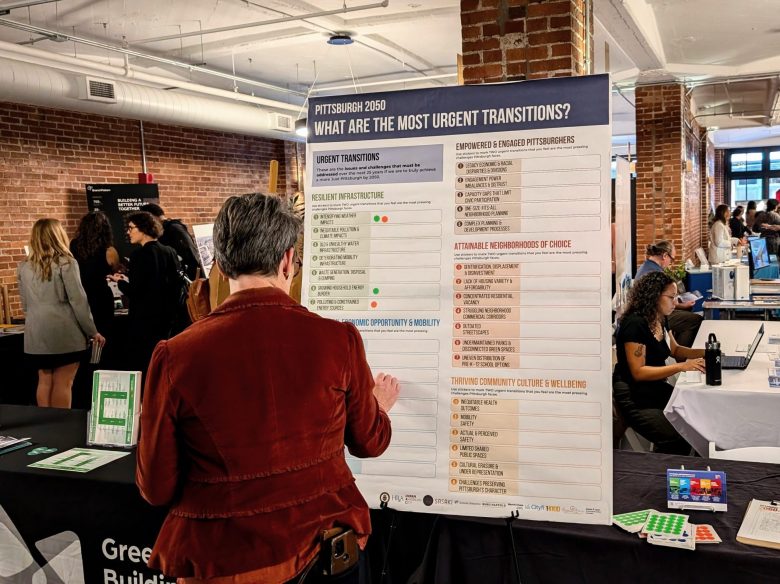 An interactive 2050 Comprehensive Plan poster asked Green Building Innovation Expo attendees to place stickers on Pittsburgh’s most necessary “urgent transitions.” By the end of the expo, comprehensive plan leaders can quickly see which issues matter most to residents. Photo by Roman Hladio.
“We have never had a citywide comprehensive plan that has ever worked to engage all of its citizens,” Man Dee said. “This plan was created by the Gainey administration; it is the first and it’s three-quarters of the way done. Ironically, it was built largely by Black women collectively organizing, so I do not understand why the city council is trying to cancel it.”
Another resident, Amy Zeiss, thanked Coghill for his effort to bring the work in-house and said the contractors are not fulfilling their “statement of work.”
“I am working-class myself and I’ve been less than enthusiastic about the way the process has played out,” Zeiss said. “As someone who’s really involved in my … neighborhood, I was unaware of any of the events that happened, and we heard several council members say basically the same thing at the post-agenda.”
LaTrenda Sherrill is principal of Common Cause Consultants — one of the groups brought on to lead the plan’s engagement process. Sherrill fears that contract terminations will mean the so-called “Summer of Engagement” essentially wasted city residents’ time and will leave the perspectives they shared on the cutting room floor.
“All summer long, residents engaged deeply in this process. They made tough choices and learned about technical planning processes — no-build zones, managed retreat, greater density — building the capacity for everyday residents to have these critical conversations,” Sherrill writes in an email to NEXTpittsburgh. “It’s a shame that all of those voices are now at risk of being dismissed.”
In an email to NEXTpittsburgh, Christine Mondor — co-chair of the plan’s strategic committee and principal of sustainable architecture firm evolveEA — questions whether throwing out a comprehensive plan on the cusp of its completion will once again become part of Pittsburgh’s legacy.
Mondor chaired the planning commission from 2014 to 2023. During that time, the commission continuously sought to engage the community, understand its needs and measure the impacts they made. A comprehensive plan, she continues, provides that data.
“The plan that was passed is expensive, and so we should expect a lot from it,” Mondor writes. “It’s encouraging to see council staying engaged and asking important questions. We all need to be involved to make sure it delivers.
“With that in mind, walking away in the middle of the race does not seem like a good investment.”
The two resolutions for contract termination are on the docket for council’s Standing Committee meeting on Monday, Nov. 24, at 1:30 p.m.