
SCRANTON — Eileen Miller will again have an empty seat at her Thanksgiving and Christmas dinners.
Her son, Paul Miller Jr., was killed at age 21 in a crash in 2010 in Monroe County, where his vehicle was struck by a tractor-trailer when the driver reached for a cellphone while behind the wheel.
“I have an empty seat at my table. I don’t have my son with me because of somebody else’s actions,” the Scranton mother said during a media event Monday at Geisinger Community Medical Center to warn the public of the dangers of impaired and distracted driving, especially during upcoming holidays marked by celebrations and festivities.
Miller and local officials gathered to remind the public to celebrate responsibly and drive safely. They also discussed seat belt safety and increased traffic law enforcement during the holiday season.
Paul Miller’s Law
After her son’s death, Miller became a national advocate for stronger laws to reduce distracted driving.
Her efforts resulted in a law in Pennsylvania named for her son, “Paul Miller’s Law,” that was enacted June 5, 2024, and took effect June 5, 2025. The law prohibits the use of handheld devices while driving, even while stopped temporarily due to traffic, a red light or other momentary delay.
Pennsylvania already enforces a texting-while-driving ban that prohibits drivers from using mobile devices to send, read or write text-based communications while their vehicle is in motion. On June 5, 2025, law enforcement began issuing written warnings for violations of the new law. Police will have the ability to issue summary citations to violators beginning June 6, 2026.
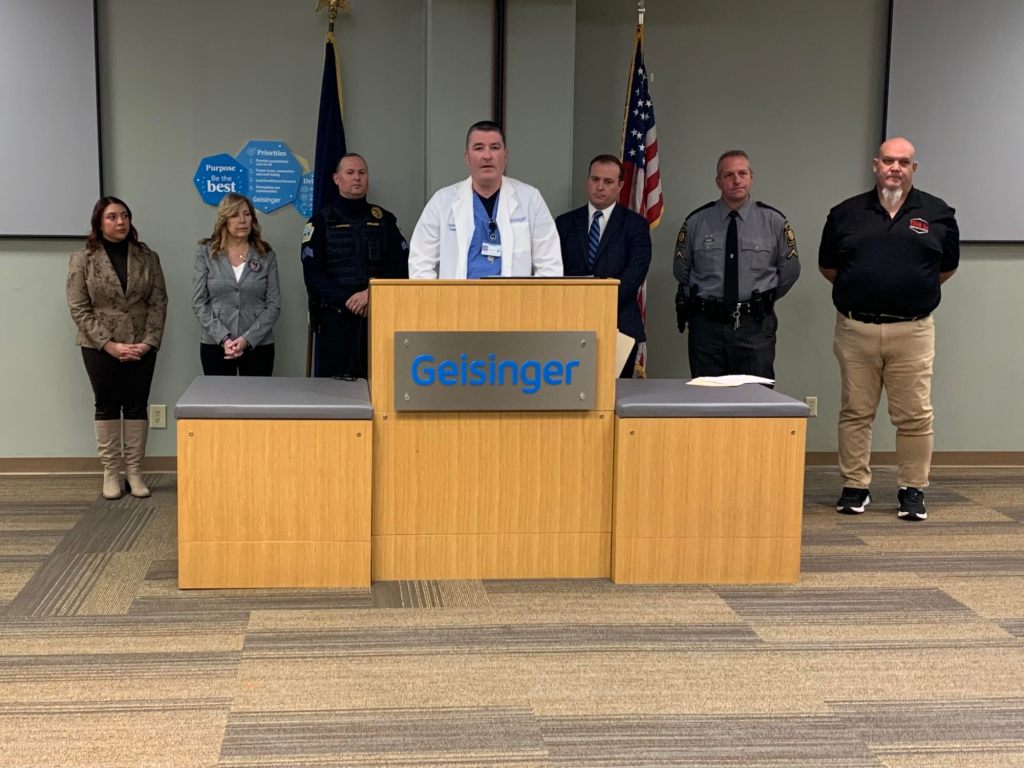
Eileen Miller of Scranton spoke during a media event held Monday, Nov. 24, 2025 at Geisinger Community Medical Center in Scranton to warn the public of the dangers of impaired and distracted driving, especially during upcoming holidays marked by celebrations and festivities. Her son, Paul Miller Jr., was killed at age 21 in a crash in 2010 in Monroe County, where his vehicle was struck by a tractor trailer when the truck driver reached for a cell phone while behind the wheel. After her son’s death, Miller became a national advocate for stronger laws to reduce distracted driving. Her efforts resulted in a law in Pennsylvania named for her son, “Paul Miller’s Law,” that was enacted on June 5, 2024 and that took effect June 5, 2025. This law prohibits the use of hand-held devices while driving, even while stopped temporarily due to traffic, a red light or other momentary delay. Miller wore a memorial pin of her son at the media event at GCMC. (JIM LOCKWOOD / STAFF PHOTO)
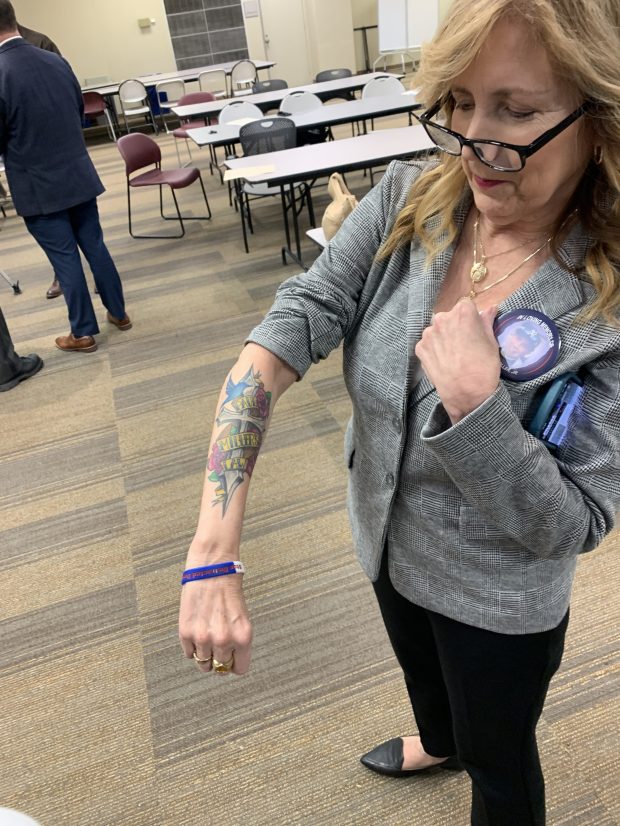
Eileen Miller of Scranton shows a tattoo in memory of her son after speaking during a media event held Monday, Nov. 24, 2025 at Geisinger Community Medical Center in Scranton to warn the public of the dangers of impaired and distracted driving, especially during upcoming holidays marked by celebrations and festivities. Her son, Paul Miller Jr., was killed at age 21 in a crash in 2010 in Monroe County, where his vehicle was struck by a tractor trailer when the truck driver reached for a cell phone while behind the wheel. After her son’s death, Miller became a national advocate for stronger laws to reduce distracted driving. Her efforts resulted in a law in Pennsylvania named for her son, “Paul Miller’s Law,” that was enacted on June 5, 2024 and that took effect June 5, 2025. This law prohibits the use of hand-held devices while driving, even while stopped temporarily due to traffic, a red light or other momentary delay. (JIM LOCKWOOD / STAFF PHOTO)
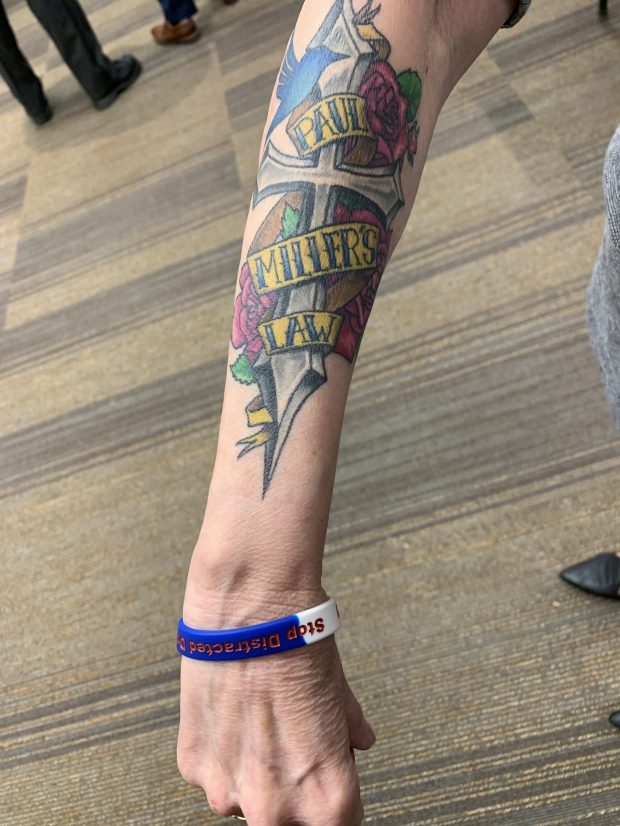
Eileen Miller of Scranton shows a tattoo in memory of her son after speaking during a media event held Monday, Nov. 24, 2025 at Geisinger Community Medical Center in Scranton to warn the public of the dangers of impaired and distracted driving, especially during upcoming holidays marked by celebrations and festivities. Her son, Paul Miller Jr., was killed at age 21 in a crash in 2010 in Monroe County, where his vehicle was struck by a tractor trailer when the truck driver reached for a cell phone while behind the wheel. After her son’s death, Miller became a national advocate for stronger laws to reduce distracted driving. Her efforts resulted in a law in Pennsylvania named for her son, “Paul Miller’s Law,” that was enacted on June 5, 2024 and that took effect June 5, 2025. This law prohibits the use of hand-held devices while driving, even while stopped temporarily due to traffic, a red light or other momentary delay. (JIM LOCKWOOD / STAFF PHOTO)
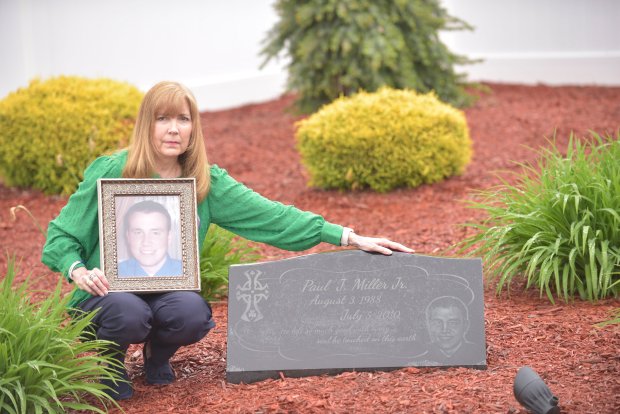
Eileen Miller holds a photo of her son, Paul Jr., while kneeling near his grave site.

Gov. Josh Shapiro listens as Eileen Miller, mother of Paul Miller Jr., speaks during the signing of Paul Miller’s Law during a ceremony last year.
Show Caption
1 of 5
Eileen Miller of Scranton spoke during a media event held Monday, Nov. 24, 2025 at Geisinger Community Medical Center in Scranton to warn the public of the dangers of impaired and distracted driving, especially during upcoming holidays marked by celebrations and festivities. Her son, Paul Miller Jr., was killed at age 21 in a crash in 2010 in Monroe County, where his vehicle was struck by a tractor trailer when the truck driver reached for a cell phone while behind the wheel. After her son’s death, Miller became a national advocate for stronger laws to reduce distracted driving. Her efforts resulted in a law in Pennsylvania named for her son, “Paul Miller’s Law,” that was enacted on June 5, 2024 and that took effect June 5, 2025. This law prohibits the use of hand-held devices while driving, even while stopped temporarily due to traffic, a red light or other momentary delay. Miller wore a memorial pin of her son at the media event at GCMC. (JIM LOCKWOOD / STAFF PHOTO)
Expand
Make good choices
Representatives of PennDOT, Lackawanna County Highway Safety Program, Lackawanna County district attorney’s office, Pennsylvania DUI Association, Pennsylvania State Police, Scranton Police Department and GCMC attended the event, called “Operation Safe Holiday.”
“We are not here by accident,” Lackawanna County District Attorney Brian Gallagher said. “We are here because every year throughout Thanksgiving, Christmas and New Year’s, somebody loses their life because of a drunk driver or a distracted driver. So we’re here to encourage everyone to make good choices. Making good choices is critical, especially during the holiday season.”
People holding festivities and those attending should plan ahead with designated drivers, safe rides home or alternative arrangements, said Pennsylvania DUI Association Regional Program Administrator Shawn Noonan and Pennsylvania State Police Trooper Robert Urban.
“Thanksgiving is a time with travel, gatherings and celebration, but it’s also a time when roadway risks increase significantly,” Urban said. “One poor choice can turn the holiday filled with gratitude into a moment of irreversible loss.”
Established in 1979, the nonprofit Pennsylvania DUI Association works to address DUI prevention, enforcement, adjudication and rehabilitation. The organization provides direction, training, information and technical support to reduce impaired driving.
Although alcohol-related fatalities account for nearly 30% of all traffic fatalities in Pennsylvania, impaired driving also can involve drugs or prescription medication, or combinations of them; and 35% of crash deaths involve an impaired driver, according to PennDOT.
“DUI is a crime that is 100% preventable,” Noonan said.
DUI law
The Act 24 Driving Under the Influence (DUI) Law enacted in 2003 lowered Pennsylvania’s legal limit of alcohol from .10 to .08, created a tiered approach toward DUI enforcement and treatment, and changed penalties, terms of suspension, fines and other requirements.
The combination of an individual’s blood alcohol content (BAC) level, and prior offenses, determines the licensing requirements and penalties, and with a focus on treatment for first-time DUI offenders, rather than strictly punishment and suspension. Act 24 created three levels of DUI:
• General Impairment BAC: .08 to .099%
• High BAC: .10 to .159%
• Highest BAC: .16% and higher
Cost of a DUI
The costs associated with an impaired driving arrest can vary depending on factors including blood alcohol content, location of arrest and number of offenses. The effect on a driver’s wallet starts the moment they are stopped by police. Here are a few expenses associated with a DUI:
• Traffic fine: $300-$10,000 depending on blood alcohol content and number of offenses
• Towing vehicle: $175-$500
• Impound: $75-$175 per day
• Legal fees: $2,000-$8,000 or more
• Alcohol evaluation: $35-$100
• Accelerated rehabilitative disposition (ARD): $100-$1,800
• Education and treatment: $100-$1,000 or more
• License restoration: $76 noncommercial, $184 commercial
• Insurance premium: increase of about $1,000 a year or cancellation of policy
Other ramifications may include court appearances, community service requirements or jail time, possibly leading to lost time, wages or even employment. A DUI conviction also may impede attempts to get a job and cause embarrassment to an offender and their family.
Miller said, “So go out, have a great holiday, but please, for the love of God, be safe.”