
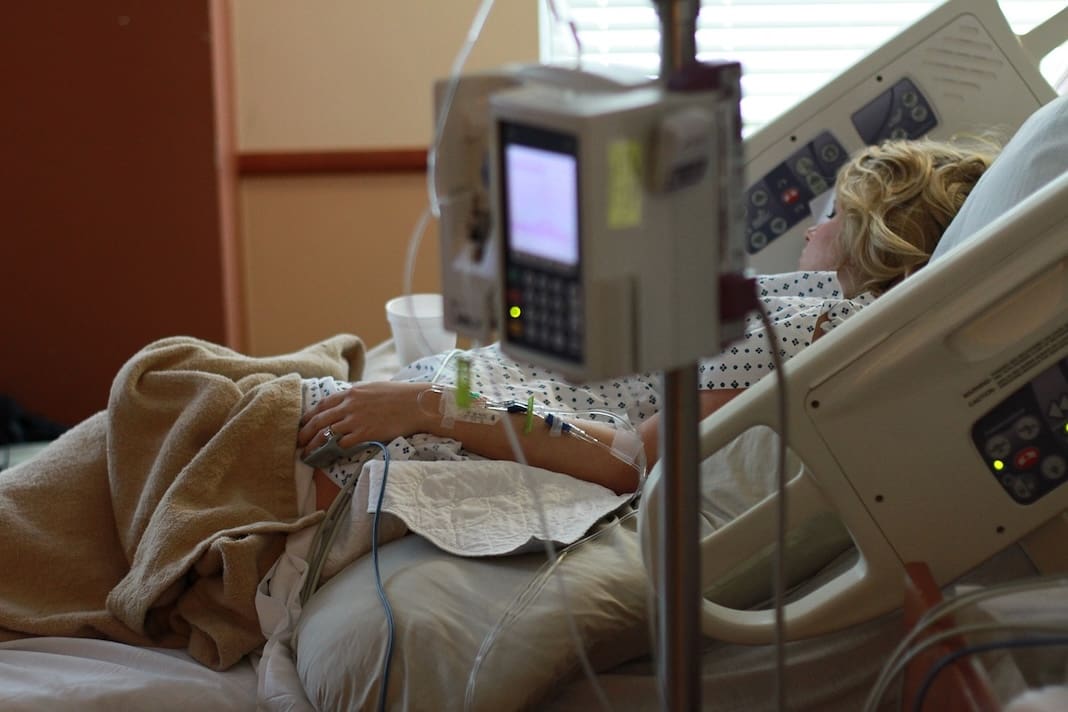
Krysten Xanthis knows her life would be very different without Medicaid. Most likely, she said, she would have lost a leg after years of surgeries to address injuries from a fall.
There’s no way the Scranton resident could have afforded any one of the six surgeries she had, nor could she pay for her $800 brace or her $290 monthly pain medication, without her insurance. While she works as a home health care aide for a patient who also relies on Medicaid, her job doesn’t provide benefits nor a salary that would allow her to pay for another insurance plan or health care out of pocket.
Now, after congressional Republicans slashed Medicaid funding as part of their One Big Beautiful Bill Act, Xanthis is worried what is in store for her and the other 70.3 million people enrolled in Medicaid, the nationwide public health insurance program that covers about 3 million Pennsylvanians.
 Photo courtesy of Krysten Xanthis.
“When they make more cuts to it, or whatever else, God forbid they put an end to it, I will not have anything,” Xanthis said. “I won’t have the medicine. I won’t have physical therapy because I cannot afford physical therapy. There’s a lot of people that probably couldn’t afford it either, but I cannot. I can’t afford the shots. I can’t afford the MRI. Every now and then they take another one. Or an X-ray even — an X-ray isn’t as much as an MRI, but I can’t even afford that.”
Xanthis is now using her voice as someone who understands the benefits of Medicaid to call out Republicans who supported the cuts, particularly her own congressman, U.S. Rep. Rob Bresnahan. In October, the national group Unrig Our Economy featured Xanthis in an ad criticizing Bresnahan for his vote to cut Medicaid, and she has spoken out about the need for the insurance program at various community gatherings.
Bresnahan, a Republican who defeated Democratic Rep. Matt Cartwright in the 2024 election, has recently faced criticism following reports from NBC News and the right-wing OAN that, prior to voting to cut Medicaid, he sold up to $130,000 worth of stock in four companies that manage almost half of the country’s Medicaid enrollees.
Bresnahan told NBC News that he “never instructed my financial advisors on what to buy, sell or hold.”
“It is no secret that I built a successful career before serving, and I am beholden to no lobbyist or special interest,” he said, per NBC News.
For Xanthis, support from Bresnahan and other Republicans for cutting Medicaid is a slap in the face to herself and other Americans who are struggling to make ends meet in a country with rising costs for health care, groceries, housing, and more. Without Medicaid, Xanthis said, many of the people she knows and loves would be unable to afford health care. Her mother, for example, has glaucoma and wouldn’t be able to afford eye drops. A family friend was enrolled in Medicaid while battling cancer, something Xanthis said he would have never been able to afford to do without his health insurance.
“They don’t care about the people,” Xanthis said. “They don’t care about somebody else. All they care about is their pocket.”
Every Democratic lawmaker in the U.S. House and Senate voted against the One Big Beautiful Bill, which includes about $1 trillion in cuts to Medicaid over the next decade and could result in hundreds of thousands of Pennsylvanians losing Medicaid coverage. All but five Republicans voted for the legislation, which President Donald Trump signed into law on July 4.
Republicans created the One Big Beautiful Bill to pay for such Trump priorities as tax cuts for the wealthiest Americans and the mass deportation of immigrants. The law also slashes funding for the Supplemental Food Assistance Program and threatens facilities such as rural hospitals, nursing homes and health clinics that rely on Medicaid reimbursements.
Now, nearly half a year after Republicans passed their bill, the effects of the Medicaid cuts are becoming clearer: hospitals and health clinics are closing. Planned Parenthood has had to shutter 20 clinics following the One Big Beautiful Bill becoming law — and that’s on top of 24 other clinics they had to shutter earlier this year because of other federal cuts. Home caregivers are facing reduced wages.
Xanthis recently discovered Medicaid cut the number of times she can go to physical therapy from three times to twice a week. If Medicaid stops covering her physical therapy altogether, Xanthis said she’d likely be unable to work and would no longer have any income. She’s also worried that her doctor’s office is now checking her insurance card every time she goes in. That never happened before the One Big Beautiful Bill Act, and she’s concerned it could be a prelude to Medicaid stopping payment for services it has long covered.
“I’m thinking to myself, Well, what am I going to do?” Xanthis said. “I don’t have the money. I literally have nothing in the bank right now. So I get paid tomorrow, but the paycheck tomorrow goes for taxes and then the rest of bills.”