
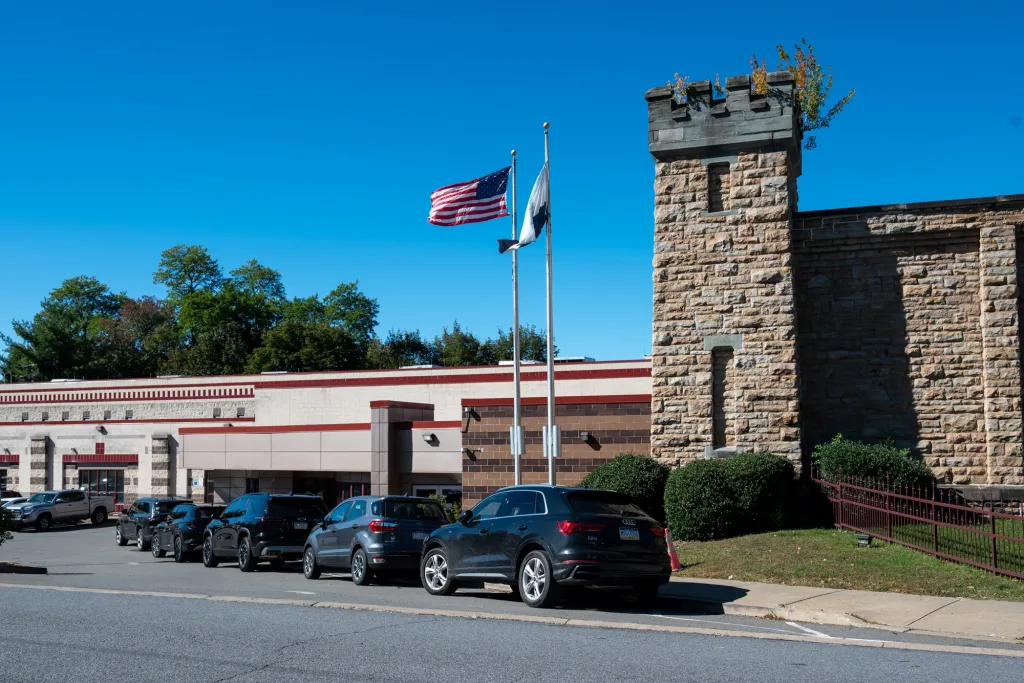
Lackawanna County Prison is poised to finish 2025 about $1 million under its overtime budget for the year following successful efforts to curtail those costs at the jail on North Washington Avenue in Scranton.
The newspaper has been tracking that success since late 2024, when prison overtime costs began to drop considerably compared to early 2024 and 2023. The positive trend has continued this year, with prison officials recently reporting just about $1.3 million in overtime costs through the pay period ending Nov. 4, the 22nd pay period of 2025.
Overtime costs through the first 22 pay periods of 2024 totaled almost $2.7 million, more than double the 2025 figure.
The county’s 2025 budget included $2.5 million for prison overtime, meaning officials have a good chance to finish the year at least $1 million under that mark. In any event, the prison will finish the year well below the roughly $2.9 million and $2.5 million it spent on overtime in 2024 and 2023, respectively.
PFM Group Consulting LLC, the county’s grant-supported financial consultant, has called on officials to target prison and other overtime spending as part of a broader effort to curtail costs. Those recommendations are included in a five-year financial management plan PFM crafted for the county still facing fiscal headwinds following a nearly 33% 2025 tax hike and other corrective action taken in the interest of sustained financial stability.
Officials touting the prison overtime reduction this past summer attributed some of the success to efforts to minimize staff vacancies. Warden Tim Betti said in a July press release the prison had been filling part-time positions more aggressively, using part-time corrections officers “to fill in for the shifts of full-time officers who are out on workers’ compensation and to fill in for full-time vacancies.”
The prison also improved shift planning by increasing the time required for corrections officers to notify management of their use of vacation time, officials said earlier this year.
Asked about the overtime numbers in October, Betti said it’s attributable to “maintaining as full of a complement as we can of full-time employees” and to a reduction in “FMLA usage” by corrections officers. FMLA usage refers to leave taken under the Family and Medical Leave Act, including intermittent FMLA where leave is taken in smaller increments.
While Betti did not address overtime at length during November’s brief meeting of the county prison board, his monthly report includes an overtime comparison chart showing the considerable 2025 cost reduction.
Commissioner Bill Gaughan, who credited prison leadership for doing a “really nice job” mitigating overtime spending, said it’s proof that planning and employing best practices delivers results. Commissioners serve on the prison board alongside District Attorney Brian Gallagher, Sheriff Mark McAndrew, Controller Gary DiBileo and county Judge Michael Barrasse.
“It’s much more efficient at the prison now that we’ve put those plans into place,” Gaughan said.
Commissioner Chris Chermak said he’s “thrilled” prison overtime spending will come in so far under budget.
“Hopefully it continues through next year,” Chermak said. “That’s what I’m hoping.”
The 2026 county budget Gaughan, Chermak and recently sworn-in Commissioner Thom Welby are expected to approve Dec. 3 earmarks $2 million for prison overtime next year. Unlike the 2025 spending plan, it does not include a property tax hike.