
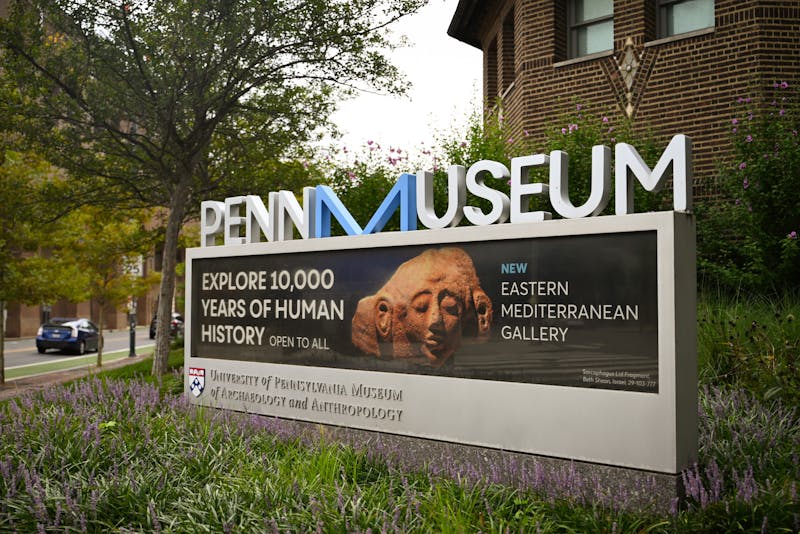
The Penn Museum opened a newly renovated Native North America Gallery on Nov. 22 featuring a 2,000-square-foot exhibition developed with eight Indigenous consulting curators.
The gallery features more than 250 archaeological, historic, and contemporary items from the Museum’s North American collections. According to a Penn Museum press release, the exhibition explores Indigenous perspectives by incorporating first-person videos, Native languages, and interactive components such as weaving stations.
“Updating this gallery has taken two years and is a continuation of the Museum’s long-standing commitment to amplify Native voices, honor their perspectives, and ensure their stories are represented with integrity,” Lucy Fowler Williams, the co-curator of the gallery wrote in the press release.
The installation highlights four regions represented in the collections: the Northeast, Southeast, Southwest, and Northwest. At the entrance, an empty display case acknowledges “repatriation as an essential point of discussion” while “offering a moment of reflection for guests,” according to the press release.
Consulting curator Joseph Aguilar also told Penn Today that the case “is a deliberate intervention — not an act of censorship,” adding that it serves “as a thoughtful prompt for visitors to reflect on the fraught relationship between museums and Indigenous communities.”
Aguilar and seven other consulting curators worked with Williams and co-curator Megan Kassabaum during the development of the exhibition. Each regional section presents themes identified by the curators.
“Longevity of Lënapehòkink” in the Northeast, for example, addresses Lenape presence in the Delaware Valley and their forced removal. “Persistent Places and Traditions” in the Southeast includes materials from Eastern Band Cherokee and Muscogee communities, along with information on Indigenous engineering, agriculture, and art.
“Connecting with a Sacred Landscape” in the Southwest features Pueblo history, and “Stewardship around the Gulf of Alaska” in the Northwest presents Alutiiq and Tlingit traditions related to land and natural resources.
Objects on view range from projectile points dating back to 9,500 BCE to “Parceled Space #2,” a commissioned woven piece by Cherokee artist Brenda Mallory.
The Penn Museum is currently undergoing its largest renovation in the museum’s history, including changes to the Ancient Egypt and Nubia Galleries. These galleries span two floors of the Coxe Egyptian Wing, which houses 50,000 Egyptian and Nubian objects dating from 4,000 B.C.E. to the seventh century C.E.
In March 2025, the museum also made progress in conserving the artistic and cultural legacies of two Buddhist murals, both of which were initially taken off display in the spring of 2016.