
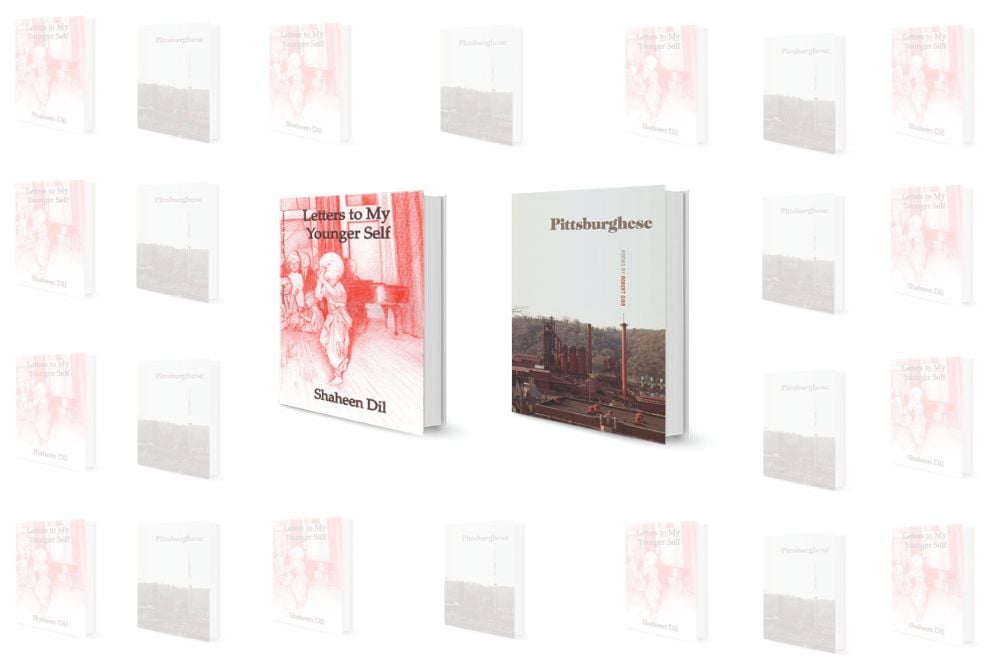
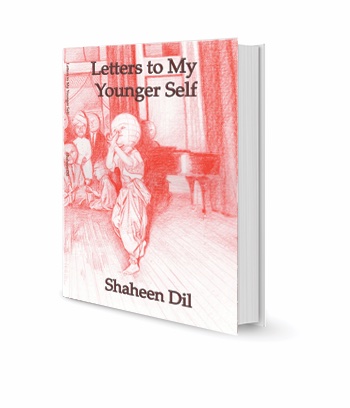
“Letters To My Younger Self ”
Shaheen Dil
Gyroscope Press, $20
Photography as we know it pretty much started in France, when in 1826 the inventor Joseph Niépce — who was also responsible for coming up with the first internal combustion engine — was able to permanently fix an image onto a pewter plate by way of a process he called heliography.
That blurry image of Niépce’s estate in Saint-Loup-de-Varennes, entitled “View from the Window at Le Gras,” has survived these many years and currently resides at the University of Texas at Austin. Poetry may be considerably older than photography; the earliest poems even predate written language. But the two artforms make excellent bedfellows.
Both highly value the image — and in a handful of recent collections by local poets, photos take centerstage. Shaheen Dil’s “Letters to My Younger Self” combines ekphrastic poems, which are poems that specifically respond to different sorts of art such as photography, painting and music, and the epistolary form which mimics letter writing. In a series of 43 letter-poems, Dil addresses the girl and young woman she was as she moves through the world from Pakistan to Pittsburgh.
Dil writes, “I know the bend in the road you can’t yet see, / what lies past / the hill rising.” The poems are, by turns, playful and nostalgic, and suffused with the bonds of family.
Dil does not shy away from the harder stuff of history, though. Violence and prejudice are never far from the surface. Dislocation and cultural assimilation are themes that are tightly threaded throughout.
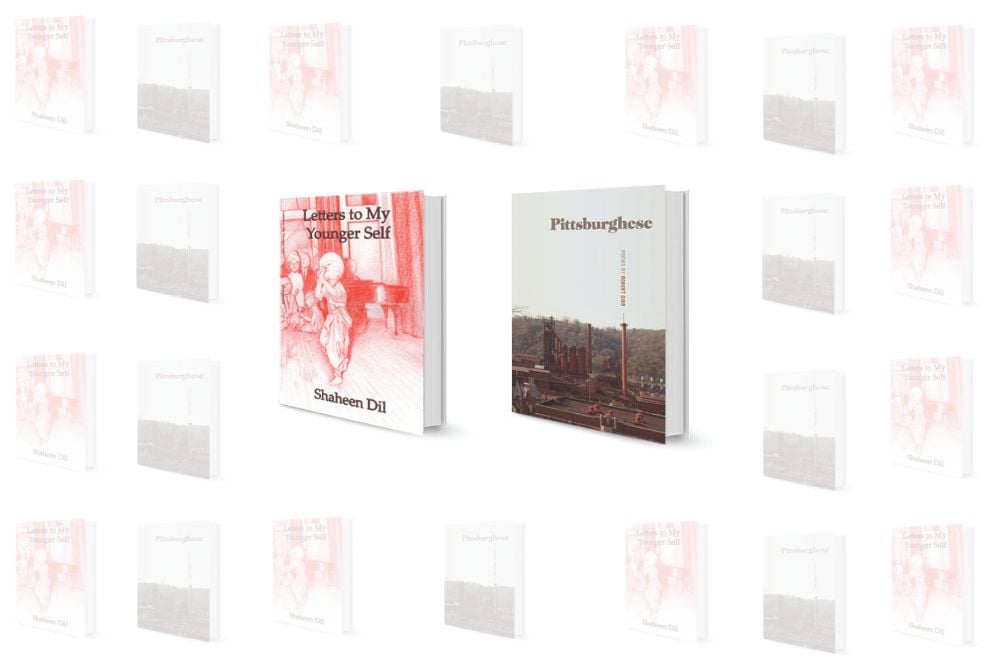
“Pittsburghese”
Robert Gibb
Wheelbarrow Books, $15.95
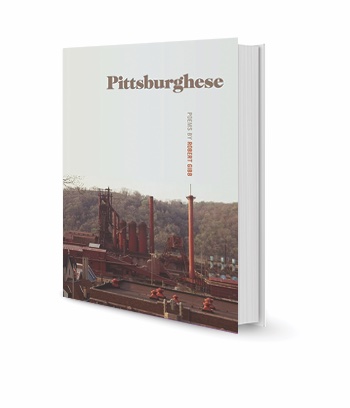 Robert Gibb would be the poet laureate of Homestead, if such a position existed.
In more than a dozen collections of his poems, Gibb has documented his hometown as granularly as James Joyce did Dublin. In “Pittsburghese,” Gibb’s poems are in direct conversation with the photographs of Ramon Elouza and W. Eugene Smith.
As the reader has come to expect from Gibb, these are poems of grace and power.
As a disembodied voice says in the poem “Voice-Over,” “I live in Homestead with ghosts.” Gibb offers a spectral excavation of the past while grounding his work in the crumbling firmament of the present.