
Pittsburgh entrepreneurs didn’t invent the movie theater. But the first dedicated movie theater, dubbed the nickelodeon, did debut here in 1905 when Harry Davis and John P. Harris opened their Smithfield Street cinema. Within a decade, movie theaters spread from downtown to early outlying shopping districts including East Liberty and the North Side. They also sprung up in the Hill District.
Historians have documented the history and architecture of Pittsburgh’s movie theaters in books, articles, and historic preservation studies. The early cinemas built in the Hill District seem to be mostly absent in these works.
Michael Aronson wrote a history of early Pittsburgh movie theaters, Nickelodeon City: Pittsburgh at the Movies 1905-1929. Hill District theaters were notably missing from his 2008 book. He says he didn’t intentionally overlook them.
“I don’t know that I have much to add beyond what’s in the book, which I know isn’t much,” he tells Pittsburgh City Paper.
Aronson cited gaps in the Pittsburgh Courier as one reason — the paper didn’t begin publishing until 1907, and many of its early editions have not survived and were never microfilmed.
But Aronson’s explanation doesn’t fully capture the Hill District’s diversity at the time. The neighborhood in the first half of the 20th century was a mix of European immigrants and Black migrants from the Deep South. Ads for Hill District movie theaters and features tied to shows appeared in the city’s daily newspapers with mostly white readerships.
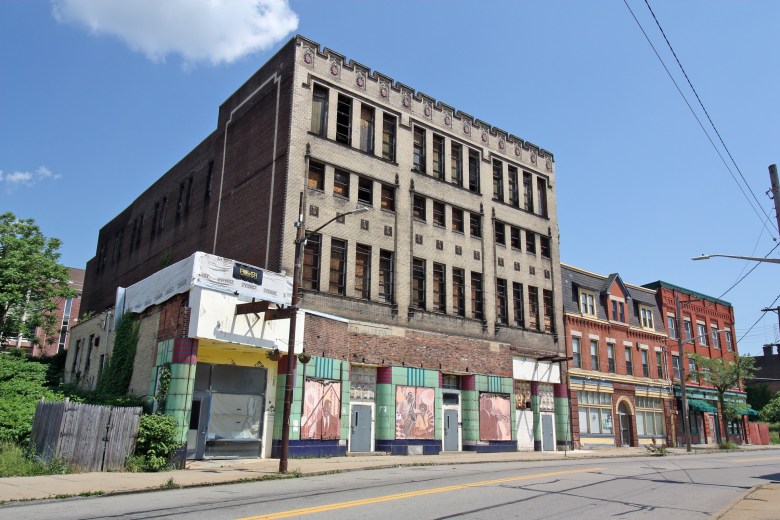 The New Granada Theater building in 2021 before renovation began Credit: David S. Rotenstein
History books and the memories of older Hill District residents preserve some of the stories behind these venues. Some disappeared during urban renewal, and others were demolished to make way for new developments. A few buildings have survived, their original uses concealed beneath new facades. The rest of the Hill District’s cinemas are little more than marks on old maps and ads in digitized newspapers. Because they also doubled as venues where some of the biggest Black stars in music and vaudeville performed, their histories endure in studies of the city’s notable jazz history.
Bootleggers’ cinema
Bootlegger Thomas Burke Jr. built what might have been the Hill District’s earliest cinema. Completed in 1914, Burke’s Theater at 53-55 Fullerton St. featured a first-floor movie theater and a second-story dance hall. The basement was home to a popular pool room.
Burke was part of a family of bootleggers and politicians. His uncle, Martin Burke, had been dubbed a “bootlegging king” and was preparing to enter the Atlanta federal penitentiary in 1923 when he was gunned down in his East Liberty home. Thomas Burke Jr. had been a city council member before being ousted in 1910 for taking bribes.
The Burkes had operated Hill District taverns since 1900. Their venues at the intersection of Wylie Avenue and Fullerton Street contributed to the Hill District getting its enduring nickname, the “Crossroads of the World.”
Thomas Burke Jr. got a building permit on December 3, 1913, to construct a two-story building at 53-55 Fullerton St. “The building is to be used as a store, nickelodeon and a dance hall,” the Pittsburgh Daily Post reported.
The building remained in the Burke family until 1936 when Martin Burke’s estate was finally settled — it took 13 years to work through the Allegheny County courts. Over the next 40 years, the building continued to be known as “Burke’s Hall.”
Different proprietors operated the second-floor nightclub and basement poolroom. Javo’s Jungle and the Bambola Club were two of the names attached to the nightclub. The movie theater in the early 1930s and operated as the Golden Theater. It screened some of Hollywood’s biggest hits of the time, including The Fourth Horseman starring Tom Mix and Edward G. Robinson thriller The Little Giant.
After Jacob Soltz bought the building from Martin Burke’s estate, he renamed the cinema the Rhumba Theater. That’s the name it kept until 1959, when the Urban Redevelopment Authority bought the property and demolished the building.
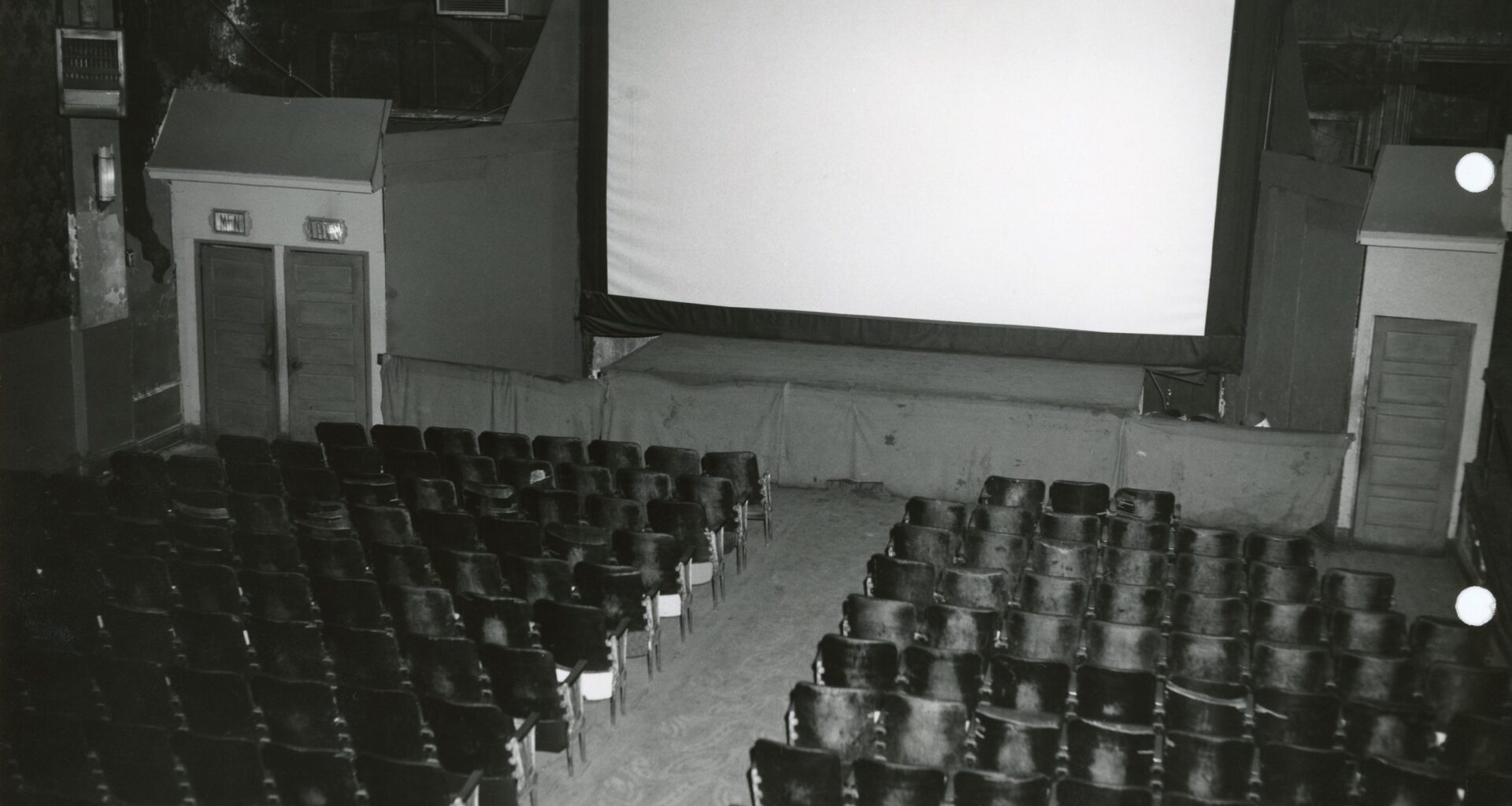
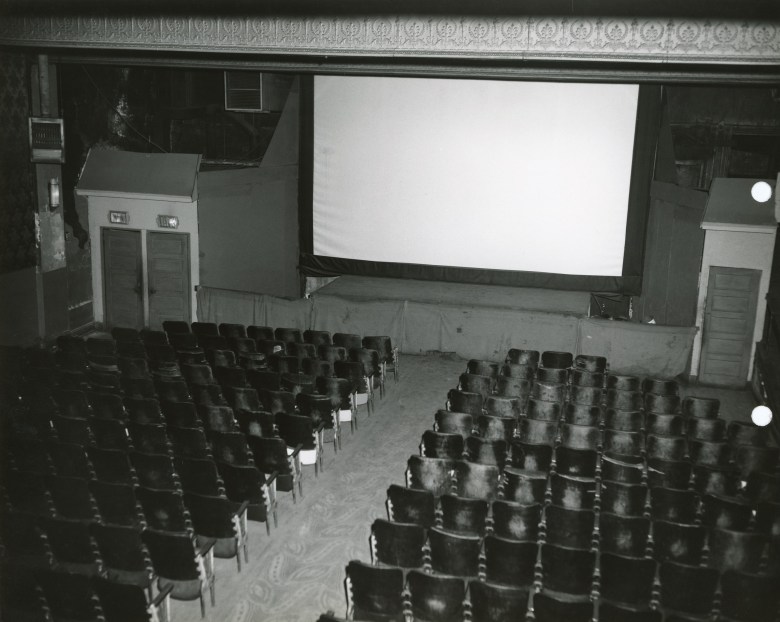 Interior of the Rhumba Theater showing the cinema’s screen and seating Credit: Courtesy of Pittsburgh City Archives
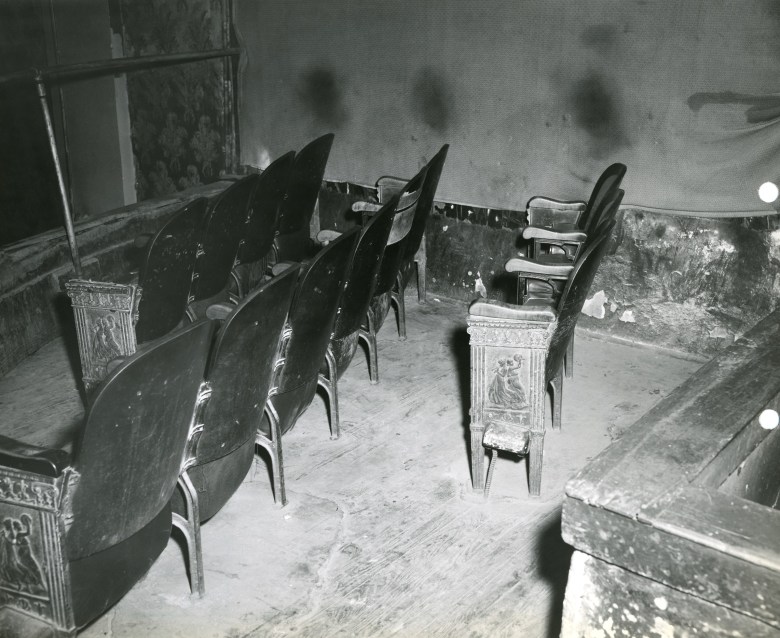 Closeup of seats inside the Rhumba Theater before the Urban Redevelopment Authority demolished the building Credit: Courtesy of Pittsburgh City Archives
An unlikely survivor
Unlike Burke’s Theater, the building where the Elmore Theater operated for more than 30 years is still standing on Centre Avenue. The Courier reported the Elmore as “opening to record-breaking crowds and bidding to outrival all other movie houses in the Hill District for popularity” in 1923.
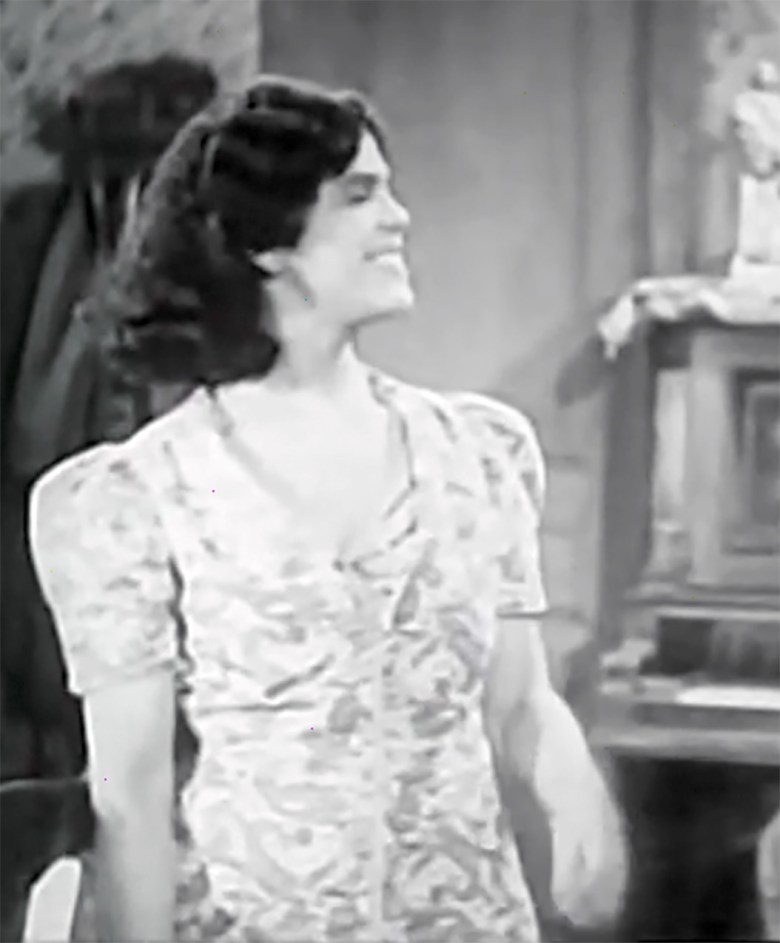 Frame from the 1938 film, “Paradise in Harlem.” Pittsburgh favorite Madeline Belt (shown here) appeared in the film. Credit: Public domain
The new theater could seat 1,000 people and its amenities included a $10,000 pipe organ. It screened some of the top silent films and staged shows by top jazz, blues, and vaudeville acts. Mamie Smith, Bessie Smith, Ma Rainey, and Jelly Roll Morton all performed there. So did hometown favorites, including one of the nation’s first Black movie and vaudeville stars, Madeline Belt.
Belt had a role in the show Plantation Days while it was touring in the spring of 1925. The show had a one-week run at the Elmore in April 1925. “Miss Belt was recognized by the audience and was tendered a wonderful ovation,” the Courier reported. “She was cheered to the echo every time she appeared.”
Belt’s ties to the Hill District were deep. Her mother, Bessie Simms was another early stage star who had married barber Frank Belt. Frank Belt had opened the Crystal Barbershop on Wylie Avenue. In 1923, he sold the business to numbers gambling pioneer Woogie Harris, who used it (and Frank Belt) as a front to thinly conceal the gambling that took place there.
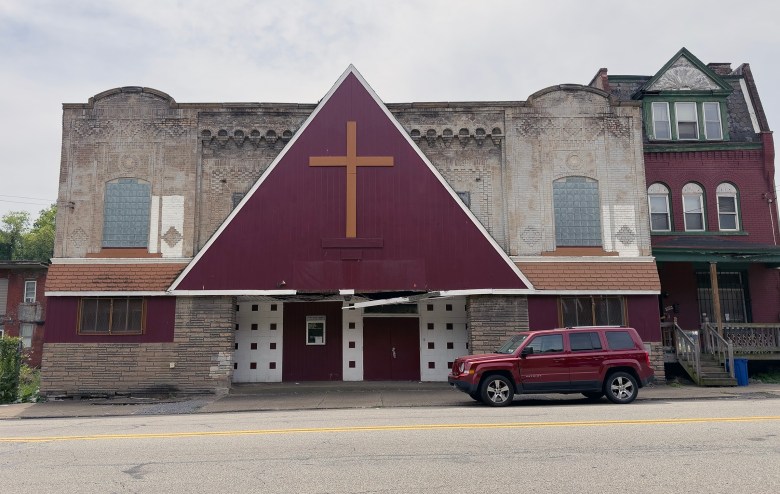 Former Elmore Theater on Center Avenue Credit: David S. Rotenstein
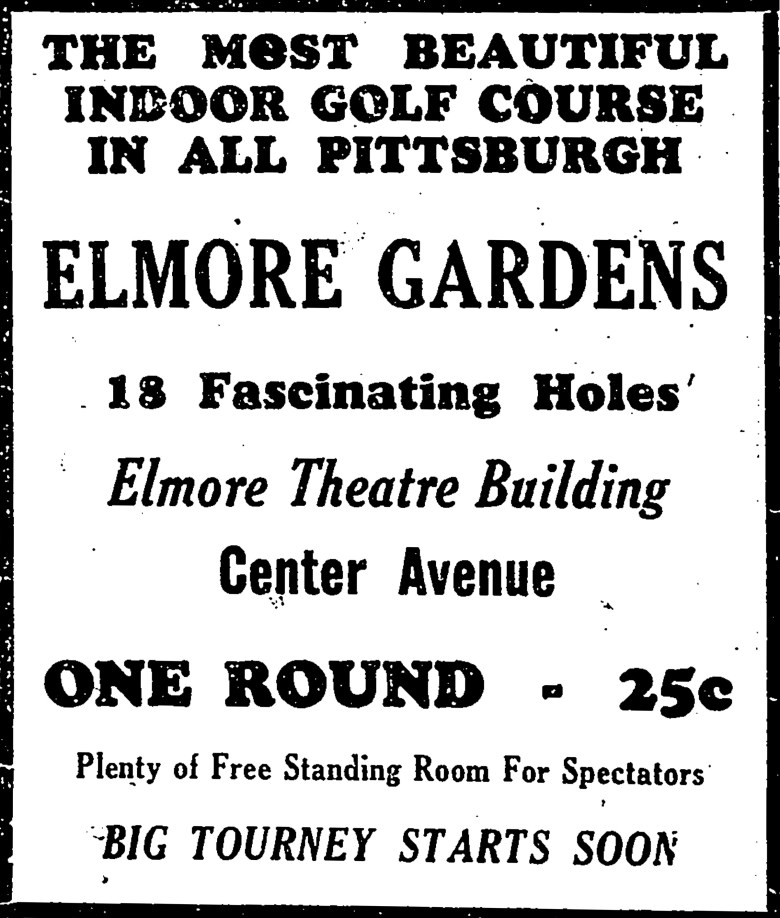
The Elmore’s shine dimmed in less than a decade. The silent movie theater hadn’t upgraded to “talkies” and became a rundown cinema relic. In 1930, Elmore Gardens opened inside the building. It was one of several indoor golf courses operated in Pittsburgh during the first half of the 20th century.
 Credit: Via newspapers.com
 Credit: Via newspapers.com
In 1933, a new owner reopened the Elmore and a new jazz venue in the building, the Savoy Ballroom. The new owners completely remodeled the building and promised to screen “only first run pictures that have never appeared on the Hill,” the Courier reported.
The Savoy, which later moved to the new Pythian Temple (New Granada), continued to book popular local and nationally touring acts. It became known as one of Pittsburgh’s premiere musical and dance venues. In 1955, Olivet Baptist Church bought the building.
The New Granada
Another Hill District movie theater that’s still there is the New Granada Theater. It’s perhaps the best-known Hill District theater, partly because of the architect who designed it. Louis A.S. Bellinger was Pittsburgh’s first licensed Black architect. Until he died in 1946, he was Pittsburgh’s only practicing Black architect.
The New Granada originally was known as the Pythian Temple for the fraternal order that owned the property and that met there, the Knights of Pythias. It opened in 1927. Its historical significance is as much tied to Bellinger as to the movies and music offered there.
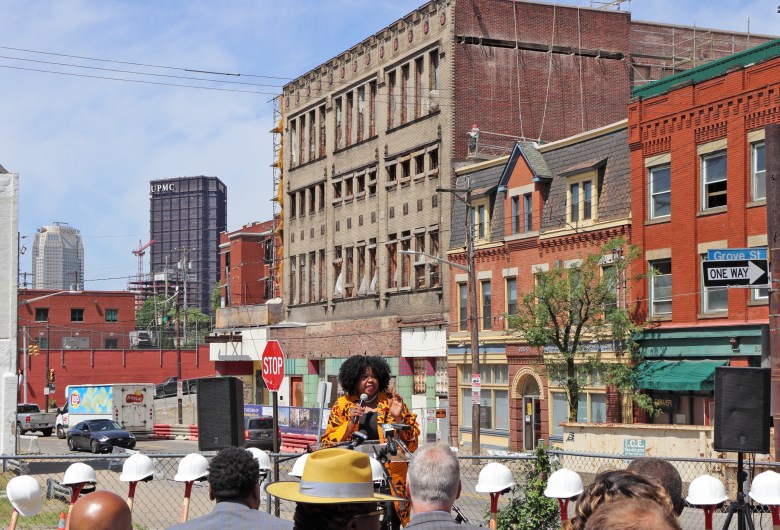 Hill CDC leader Marimba Milliones speaks at the May 2023 groundbreaking for the New Granada Theater project. Credit: David S. Rotenstein
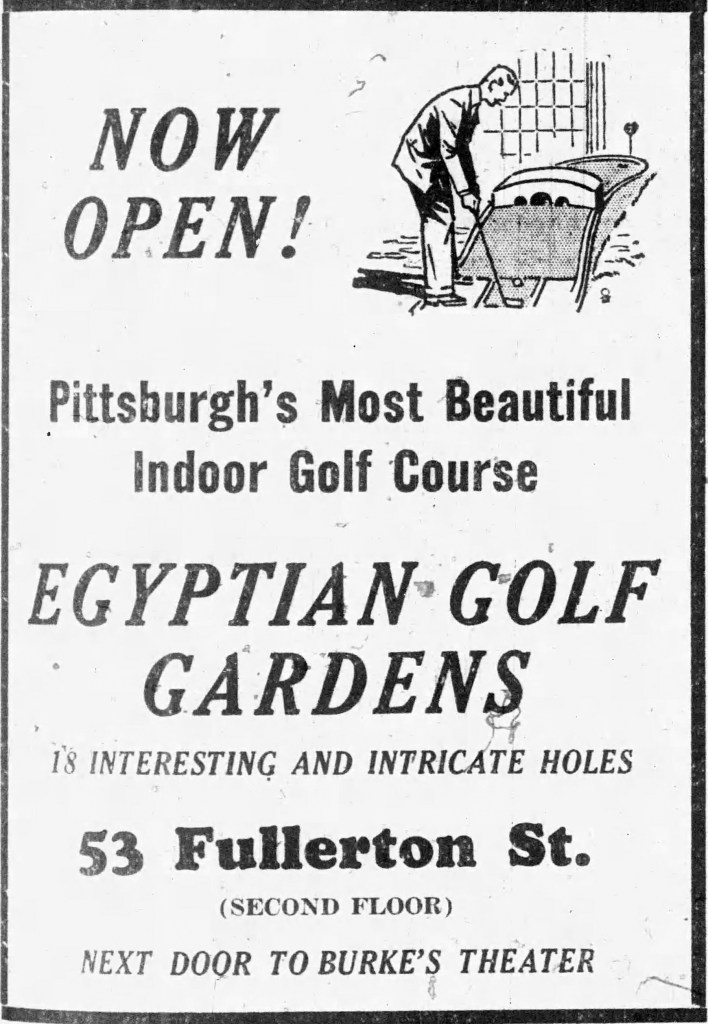
In 1930, the owners capitalized on the building’s spacious interior by also opening an indoor golf course. The course opened around the same time as the one in the Elmore Theater and one in the building at 55 Fullerton St., next to Burke’s Hall.
After upgrades and the addition of new programming in 1937, it became one of the Hill District’s leading entertainment venues. Showman Harry Hendel, who had taken over the Elmore Theater’s Savoy ballroom, moved the venue to the New Granada that year.
Following decades of disinvestment, redevelopment is underway at the New Granada building. The Hill CDC is keeping the historic name and is adding new businesses and housing to the 2000 block of Center Avenue that the CDC has rebranded New Granada Square. With spaces dedicated to artists and creators, the new New Granada promises to connect the Hill District’s silver-screen past to its future.
This article appears in Nov. 26-Dec. 2.
RELATED