
By the beginning of December, the holiday season is in full swing, bringing more responsibilities for college students in the midst of finals and rising costs of living.
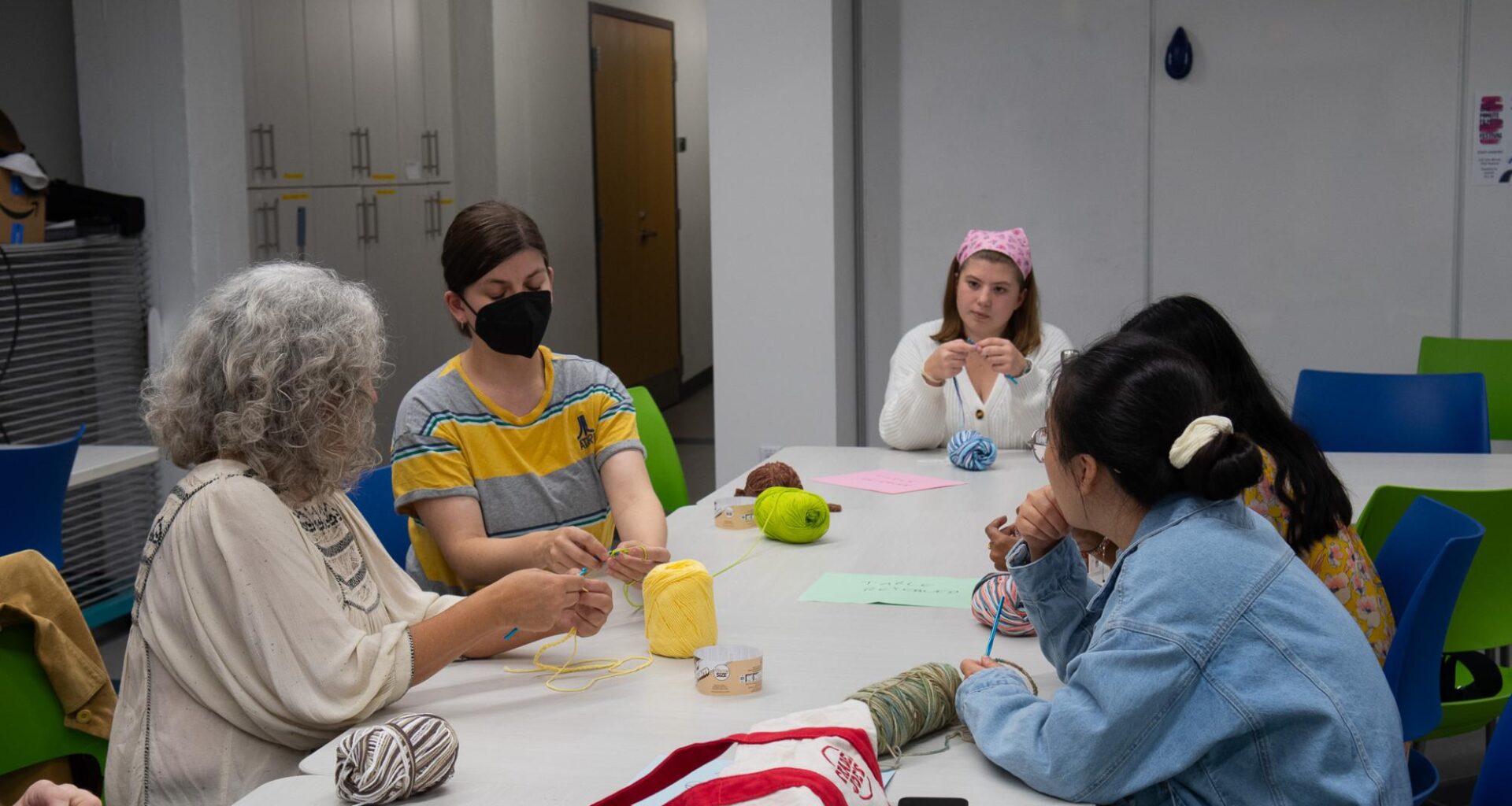
Money can be tight for students all year round, but especially during the holiday months of November and December. Since April, prices across the U.S. have been steadily rising, making necessities like groceries more expensive and leftover money for holiday gifts slim. Due to these factors, many students are planning to make homemade gifts or spend less on personal expenses to keep this holiday season affordable on a college budget.
Janet McLaughlin, associate director of Pitt Financial Wellness, said students trying to keep shopping costs low should try their best to make a realistic budget.
“Establish a benchmark. How much are you thinking about spending from the start and how can you stick to it?” McLaughlin said. “Prices are going up. It’s one of those things where money when you’re in school isn’t always that available.”
Holiday gifts don’t always have to be expensive or even cost anything. McLaughlin said she recommends crafts, volunteering and buying generic gifts in order to keep costs inexpensive.
“I think when you go into a gift for any occasion, it’s from the heart,” McLaughlin said. “Sometimes I think folks are afraid to do homemade things, but I think it’s more appreciated, because you are putting more time into that. Especially when you’re in college and you don’t really have that much time.”
Dalton Klein, a senior political science and Russian major, said since coming to college, they mostly give homemade gifts.
“I’m not buying Christmas gifts,” Klein said. “I’m just making things using whatever I can, but most of the people in my life understand that we’re not really giving each other gifts.”
Rachel McGregor, a senior communication and rhetoric major, said each gift she gives doesn’t need to be overly expensive.
“I utilize the Pitt Pantry for my food so I can save money to buy gifts,” McGregor said. “I’ve learned it doesn’t have to be a big gift. It can just be a thing of candy and a nice message to say, ‘Hey, I’m thinking about you during the holidays.’”
McLaughlin said giving the “gift of time” is something her office really recommends for college students.
“Instead of going out and buying gifts for everybody, plan a get-together,” McLaughlin said. “Maybe do a meal, and everybody brings something, and then you get that gift of time, opposed to an actual gift.”
McGregor said for the past few years she has chosen to cook Christmas dinner for her family rather than buying actual gifts.
“I’ll actually go buy real food instead of just canned goods, and I’ll cook dinner for them as my appreciation because I think eating a meal together is very family-esque,” McGregor said.
Anna Von Gaudecker, a junior political science and international relations major, practices monthly budgeting year-round, which she said becomes especially important during the holiday months.
“I usually plan a budget every month, and then, according to each month, I’ll adjust things. Like Thanksgiving is a week off, so I’m budgeting according to that,” Von Gaudecker said. “For the holidays, I definitely am a lot more careful about how much I’m spending.”
Students also save with other methods. Katie Mosca, a senior biology major, said she recently started using coupons while shopping.
“I’m very committed to only buying things on sale. It definitely saves me money,” Mosca said. “I’ve cut back on spending money on things for me so that I can buy things for other people this season.”
Another tip for a cheaper holiday season is shopping early, according to McLaughlin. She said to shop during Black Friday or Cyber Monday — or even earlier— before holiday prices rise. But, if you’re shopping early, make sure you are keeping track of what you’ve already bought.
“With shopping early, we always tell everybody to make a list because, and I’m guilty of this one, you buy things, and then you forget that you’ve bought them, and then you’ve doubled up on things,” McLaughlin said. “So it didn’t really save you money when you do it that way.”
McLaughlin said budgeting can also help minimize impulse buying, which occurs when people go into the holidays without a plan and buy items when they spot them.
“Don’t buy something off the cuff. Look at it [like], is it a need or a want? Is it practical for this person? Is it affordable for you to actually do this?” McLaughlin said. “It’s nice if somebody wants something really expensive, but is it going to put the person giving it in dire straits? Make sure that you go into it really thinking it through.”
Johchine Dixon, a junior psychology major, works jobs in her hometown and at school so she can save to buy gifts early.
“I always start buying gifts and stuff months in advance,” Dixon said, “so the money doesn’t all hit me at once.”
Naman Verma said that he will probably buy fewer gifts this season because costs are higher this year. He plans on making a loose budget based on the money he has purposefully set aside for the holidays.
“I just look at how much money I have and then just buy the gifts based off of that,” Verma said. “But I usually save a little more right before the holiday season.”
Veronica Williams, a sophomore history and museum studies major, recently helped to hold a food drive for the Pitt Pantry with her sorority Delta Phi Epsilon. Although she knows many college students are struggling, Williams said giving back to your community when you can is still important this holiday season.
“If you can donate five dollars to people who are in a more dire situation, or people who are in the same boat but aren’t as self-motivated as you, or don’t have the resources, do it,” Williams said. “We can’t change the prices of things, but if you have five extra dollars, use it for good.”