
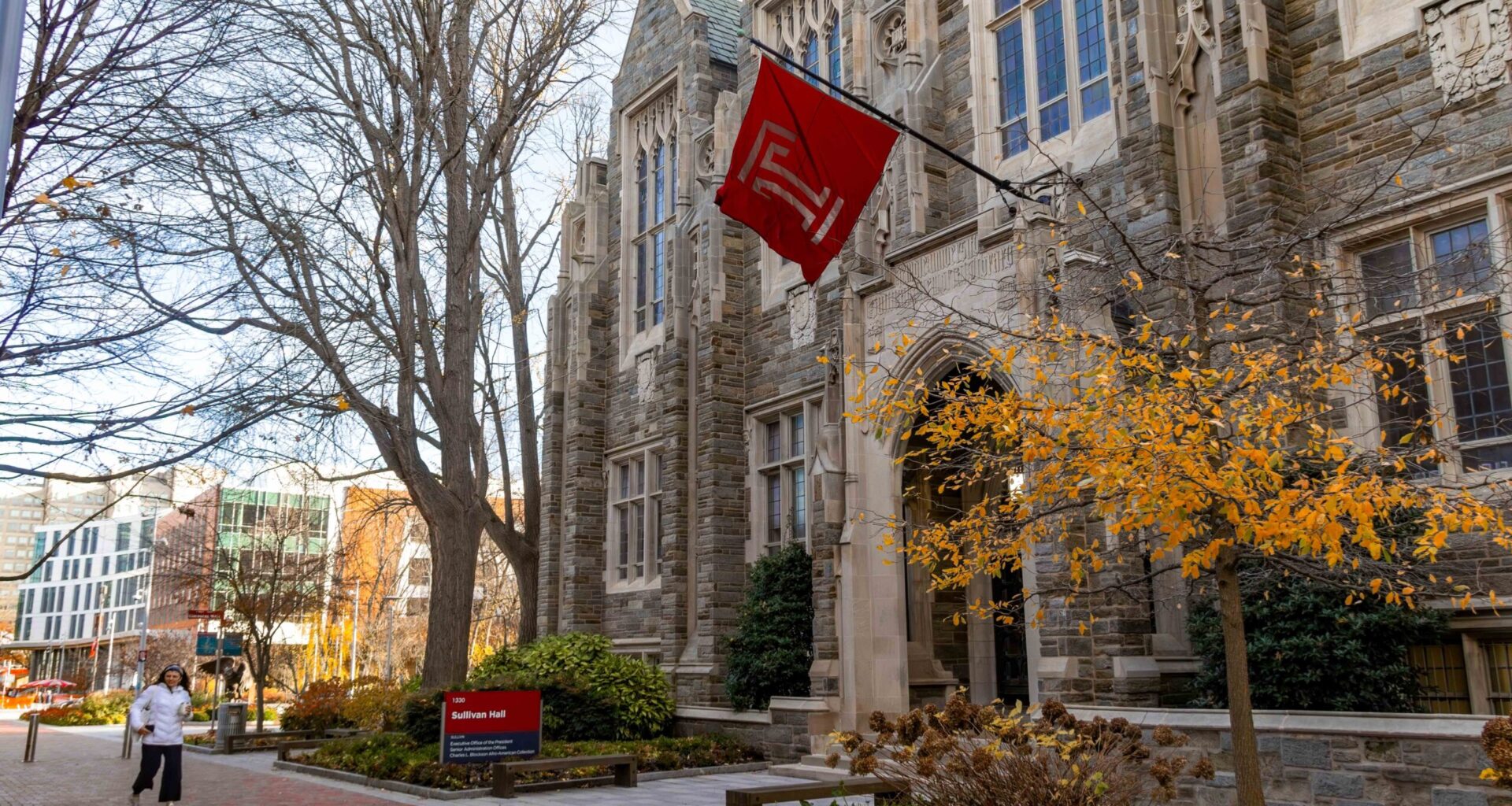
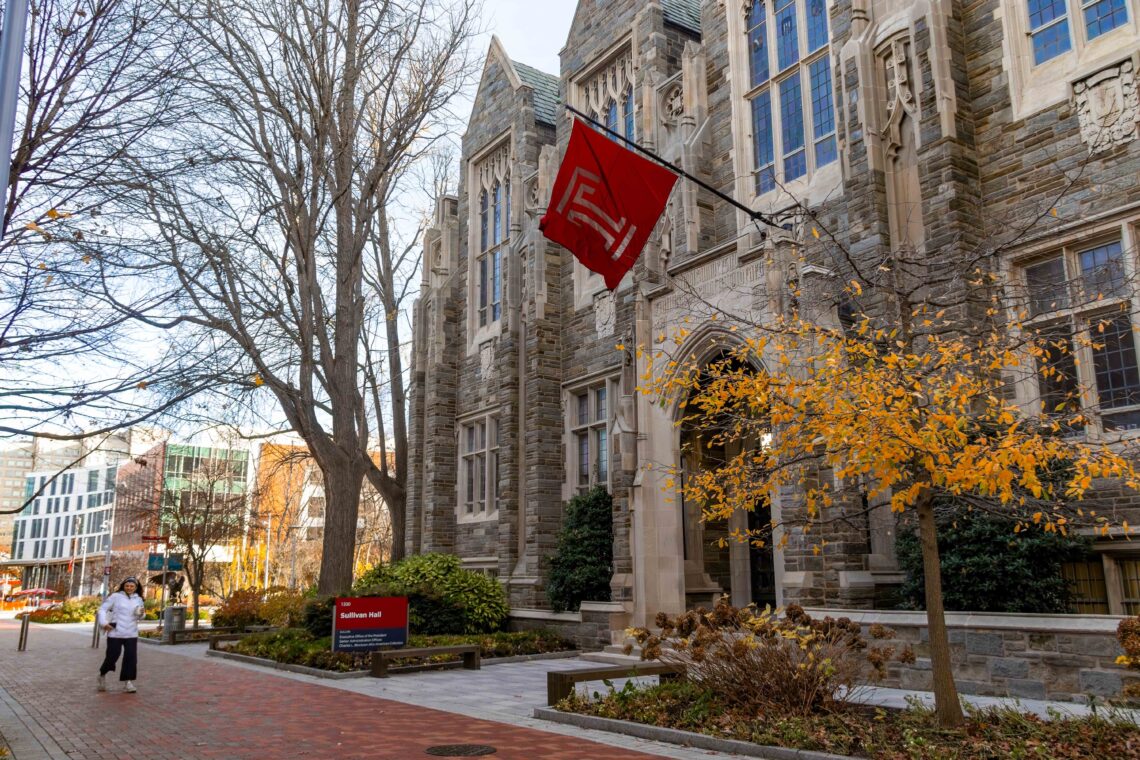
 A pedestrian walking by Sullivan Hall . JUSTIN ALEX / THE TEMPLE NEWS
Temple received $158.2 million in state funding after Pennsylvania lawmakers passed the nonpreferred appropriations bill on Nov. 19, marking the seventh consecutive year the university’s appropriation remained flat.
The $50.1 billion state budget was signed on Nov. 12, 135 days past the June 30 deadline.
The university relies on 12 monthly installments and is currently invoicing the state for five months’ worth of missed payments, totaling around $65 million. The delay raised cash-flow concerns but legislative support for the appropriation remained consistent throughout negotiations, said Brian Keech, vice president for government and community relations.
“The delay did present a concern for us, but there was never any doubt that we had some very strong support in the general assembly and from the governor,” said Dennis Lynch, assistant vice president of government relations. “It was just a matter of the entire budget being reconciled, and then our piece followed the way it did.”
The Pennsylvania House and Senate are currently divided, with Democrats controlling the House and Republicans controlling the Senate, causing the delay to persist into fall due to the lack of bipartisan agreement.
“Unfortunately, the states closely divided nature contributes to the budgets delay,” said Michael Sances, a professor of political science. “For example, Democrats pushed for more money in higher education, and Republicans refused to tap into the rainy-day fund or raise taxes.”
University officials, including Temple President John Fry and members of the government relations staff, made repeated trips to Harrisburg this year to testify before committees and meet with legislators during negotiations.
Appropriations for Temple, Pennsylvania State University, the University of Pittsburgh and Lincoln University must receive a two-thirds approval vote from the General Assembly each year, a process that often prolongs funding discussions.
The appropriation, which is separate from the state’s main budget, supports in-state tuition discounts for Pennsylvania residents and contributes to Temple’s academic operations and student services.
This year’s tuition was based on the current $158.2 million allocation. Next year’s tuition will depend on the 2025-26 appropriation; decisions made in the state budget next spring will directly affect what students pay in the fall, Keech said.
In February, Gov. Josh Shapiro proposed $60 million for Performance-based Funding for Penn State, Pitt and Temple to be governed by Act No. 90 of 2024.
The funding did not make it into the final budget, but legislators authorized the new performance-based allocation system. State agencies will begin collecting Temple’s institutional data this year to prepare the model’s rollout.
This newly approved system will most likely be included in the next fiscal year, Lynch said.
“Our focus has always been on student success, attainment, and affordability at Temple,” Lynch said. “Having the opportunity to take a holistic look at all these pieces and how they work together will help us understand success.”
Representatives from Temple, including former Chief Financial Officer Ken Kaiser, served on the statewide council that designed the new metrics throughout the past year and a half. The council began meeting in January this year and held hearings in Harrisburg and at each of the three universities to discuss goals and meet with budget experts, university officials and student voices.
Temple plans to receive $13.7 million of the $60 million from the funding, according to the Performance-based Funding final report.
The next budget cycle will begin in February, when Shapiro is expected to release his 2025-26 budget proposal. The budget will likely include the first round of performance-based funding.
“We are already working ahead on next year’s budget,” Keech said. “Part of what our responsibility is to represent Temple before the General Assembly and the governor’s office and try to find opportunities and really turn over every stone that we can to drive resources back to the institution, to help students, faculty and staff, and frankly, the community around us as well.”