
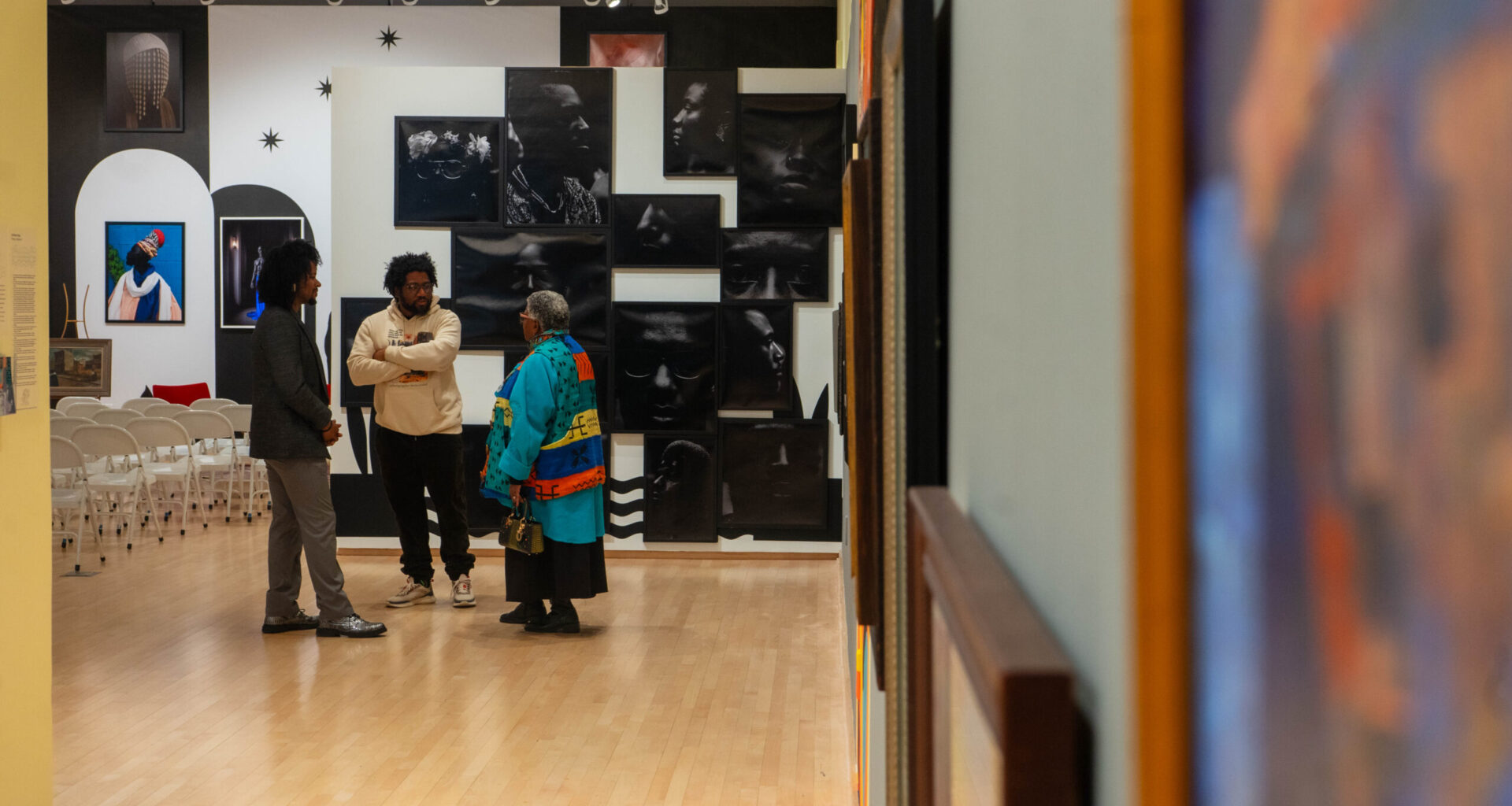
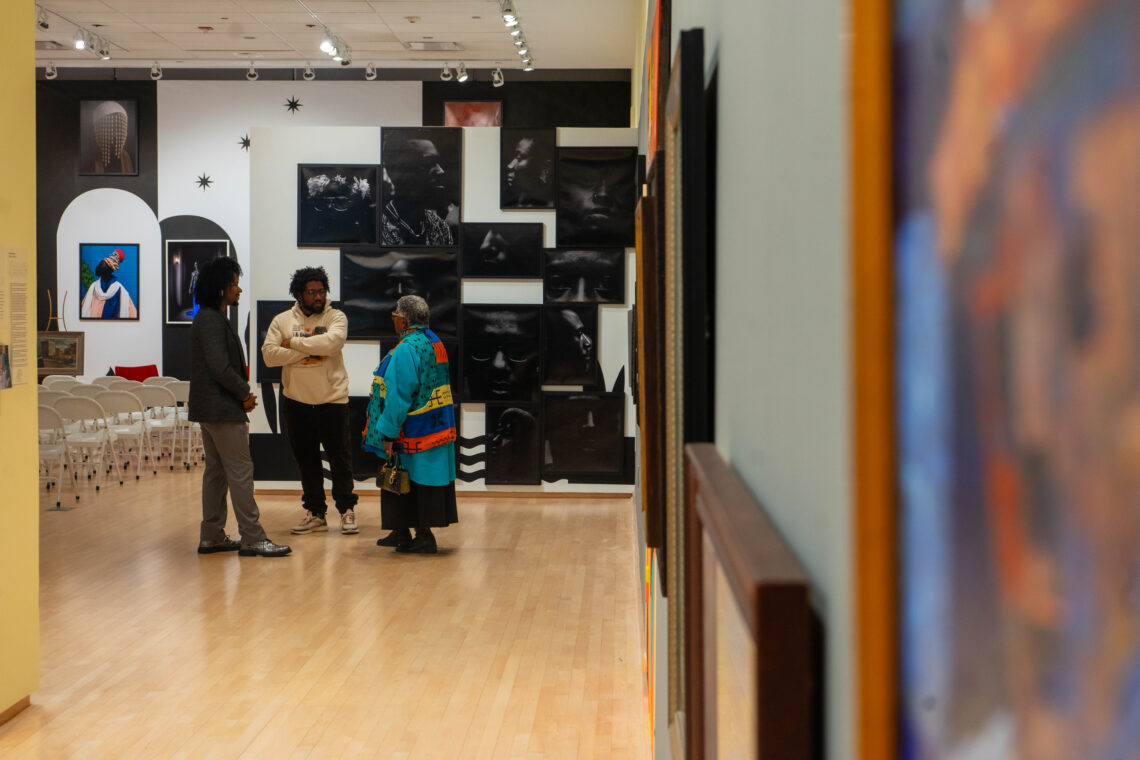
 Guests arrive at the Pyramid Club Panel on Nov. 12. | BRIAN NELSON / THE TEMPLE NEWS
Students passing through the Tyler Contemporary Art Gallery are transported to twentieth century North Philadelphia, into the world of the Pyramid Club. Portraits of prominent Black Americans line the walls, coupled with artwork and photos from various Black artists.
The Pyramid Club was an influential cultural hub for Black professionals during segregation from 1937-1963. Located at Girard Avenue and 16th Street, it hosted artists and leaders like Duke Ellington, Marian Anderson and Martin Luther King, Jr. while it was active.
On Sept. 5, the university opened an archive, curated by Matthew Jordan-Miller Kenyatta, the Director and Curator of Exhibitions and Public Programming at Temple Contemporary, showcasing photos of the club. The exhibit features 34 paintings and 35 pictures by the renowned photographer John Mosely.
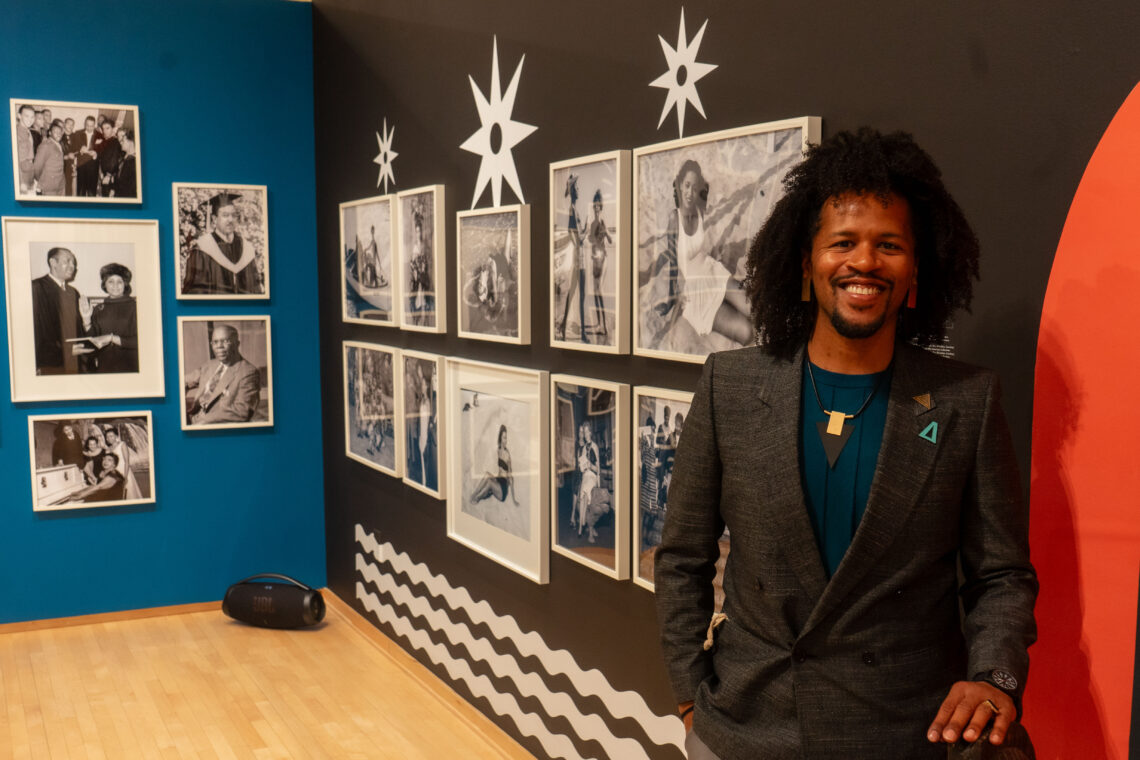 Matthew Jordan-Miller Kenyatta in front of the curated images at the Tyler School of Architecture. | BRIAN NELSON / THE TEMPLE NEWS
Kenyatta designed the exhibition to explore the curatorial question of “What if the club hadn’t closed?” by including work from artists who are currently prominent in the art world, like interdisciplinary artist Shawn Theodore, alongside those involved in the original Pyramid Club.
The exhibit has garnered attention from both Philly residents and students and has seen more than 200 attendees at events hosted by Kenyatta between its launch and November.
“We’ve had such an incredible response to being a show that a lot of people couldn’t tell you what we were gonna do before it opened,” Kenyatta said. “We’ve gotten some really positive responses, and I feel very proud of the work that we’ve done with this show.”
Kenyatta hosted events focused on platforming those close to the Pyramid Clubs’ historical and cultural impact on the North Philadelphia community, like archivist William Dodd and North Philadelphia residents from the area where the club was active.
The exhibit presents art and photos originally archived by Dodd, Leslie Willis-Lowry and the Charles L. Blockson Afro-American Collection, the university’s African American culture and history research facility. Dodd began archiving the Pyramid Club nearly 20 years ago when he decided to focus on collecting work from Philadelphia artists as a passion project.
For Dodd, the archive represents the culmination of his work throughout those years, 15 of which were spent working with Willis-Lowry to research the Pyramid Club. They identified artworks and pulled thousands of prints and negatives from the John W. Mosley archive. Their long-term research laid the foundation for the new exhibit as it stands today.
“It’s a blessing for me to see the collection be presented in a tightknit presentation that’s open for people to see,” Dodd said. “Hopefully this will get us started for other ventures with the Pyramid Club.”
Since the exhibit debuted, several faculty members have begun incorporating the Pyramid Club into lessons on archival practices and Black art history, Kenyatta said.
Alicia Link, an adjunct professor in art, had students create flags to represent individuals associated with the Pyramid Club. The project, titled “Flags for the Forgotten and Formidable Pyramidions,” is meant to honor artists featured in the show, including John W. Mosley, Jacob Lawrence and Elizabeth Catlett.
Willis-Lowry is excited about the next chapter in the Pyramid Club archive and working on the book project, which is tentatively titled “Art for Race: The Pyramid Club.”
The book, which draws from Willis-Lowrey and Dodd’s archival work, will provide a more in-depth overview of the history and cultural significance of the Pyramid club, including significant details that weren’t included in the Tyler art exhibit.
“I think it’s important to talk about the exhibit and about the artists and the experience of Black joy,” Willis-Lowry said. “[Mosley] captured a moment in history when people of African descent were kept out in open spaces, and despite that he created something beautiful.”
Those involved in the exhibit feel that this is a significant step forward for Temple’s art program. Kenyatta hopes the exhibit’s premiere will define Temple Contemporary in the coming years by creating a bridge between archivists and the contemporary artists who helped reimagine the space.
“I think that this show is a bit of a blueprint for how art can really help bring history alive and help shape how we think about the future,” Kenyatta said. “A lot of the way that we pulled this off is in many ways is what you can come to expect from Temple contemporary.”