
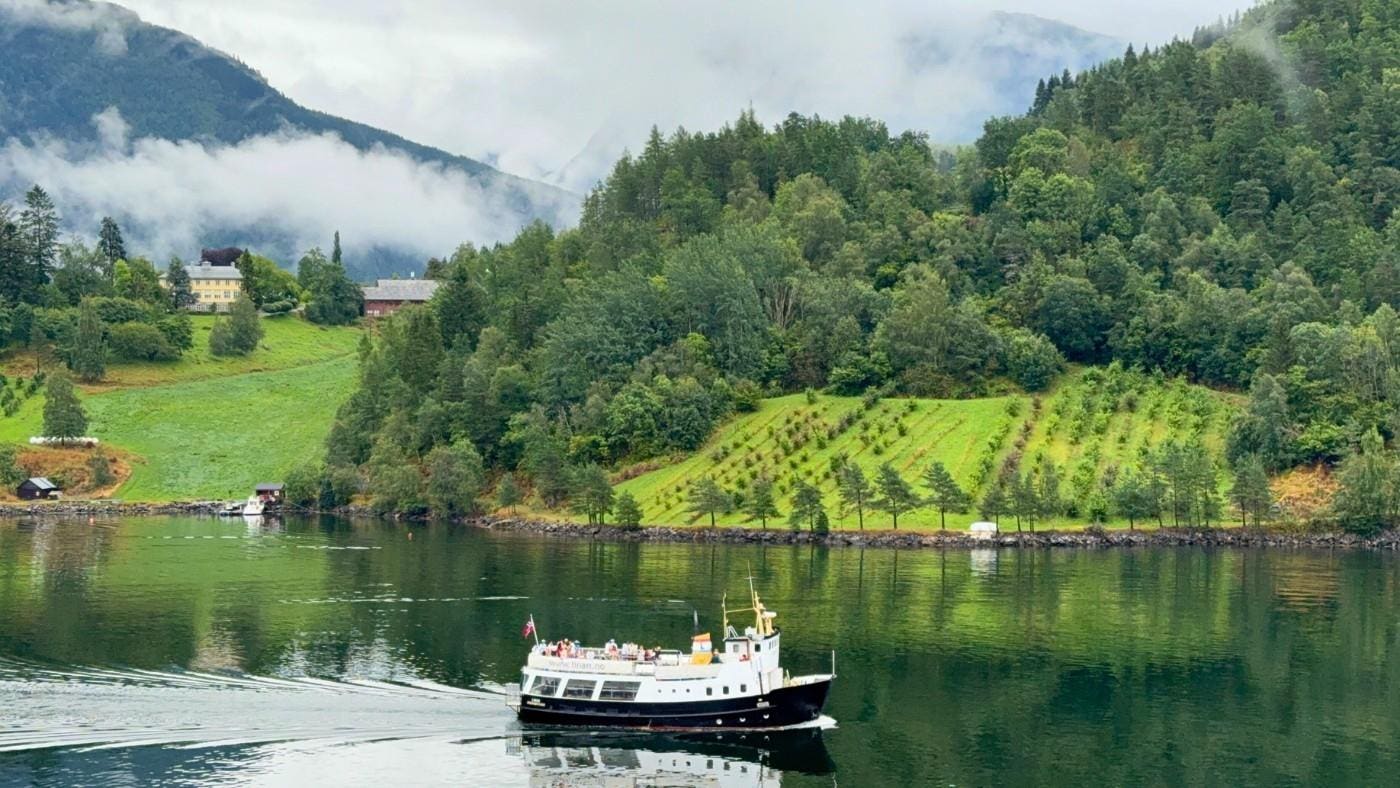
Norway’s small fjord villages are delightful places to spend multiple nights, especially when the cruise ships have gone.
David Nikel
Sweden has taken an unusual approach to winter tourism this year. Instead of promoting new attractions or packed itineraries, the country is encouraging visitors to come and, quite literally, get bored.
The tourism campaign is built around silence, empty schedules and the idea that boredom can help the brain reset after a year of constant noise.
It is a bold message for a travel industry that often celebrates activity and constant movement. Yet it taps into a real shift in what many travelers now want from their time away.
Sweden’s approach grabs attention, but the concept behind it stretches beyond one country. The entire region of Scandinavia has become one of the world’s most natural homes for slow travel.
Spacious landscapes, reliable public transport, easy access to nature and a deep cultural respect for silence combine to create a travel environment that invites visitors to slow down without trying.
Why Scandinavia Is Built For Slow Travel
Scandinavia’s appeal starts with geography. Sweden, Norway and Denmark have a combined population smaller than many major European countries, yet they occupy vast land masses. Forests outnumber cities. Lakes outnumber hotels.
There is also a cultural element. Time outdoors is regarded as part of everyday life rather than a luxury. Norwegians talk about friluftsliv, the tradition of living simply and spending time in nature.
Sweden’s vast region of forests and lakes is perfect for slow travel.
getty
Silence is not considered awkward. Space is not something you need to ask for. All of this makes slow travel feel less like a trend and more like a natural part of daily life.
This mindset spills into tourism. In Norway, officials often remind travelers that “the fjord next door” is just as beautiful as the ones with UNESCO status. Across the region, travelers are encouraged to stay longer, avoid peak seasons and use the journey as part of the experience.
Staying Put Instead Of Racing Through
One of the simplest ways to embrace slow travel is to stay longer in a single place. Scandinavia rewards this approach, especially in rural regions where the atmosphere changes dramatically throughout the day.
Take Flåm, the small fjordside village in western Norway. During the busiest summer days it fills with cruise passengers arriving to take the famous Flåm Railway or on day excursions from Bergen and the Sognefjord.
Yet as soon as the ships depart in the late afternoon, the village settles into a peaceful stillness.
Spend a few days there and you begin to notice details you would never experience in a quick stop: how the weather shifts through the valley, how the fjord sounds at night and how conversations change when you are not rushing to catch a bus.
The same is true in countless fjord villages. Places like Aurland, Balestrand, Ulvik and Eidfjord reward those who stay for more than one night. By evening you feel not like a visitor passing through but a temporary resident with a sense of belonging.
Slow Travel Along The Coast
Norway offers a second path into slow travel through its coastal express route, operated by Hurtigruten and Havila. These daily voyages between Bergen and Kirkenes were originally designed to connect remote communities.
They still function this way today, which makes them very different from large cruise ships.
The ships sail at a calm, steady pace, stopping in dozens of small ports along the coastline. Some stops last only minutes as cargo is loaded or mail comes aboard. Others stretch long enough for short walks in coastal towns that rarely make it into mainstream itineraries.
The journey becomes a moving window into Norwegian life: morning deliveries in fishing villages, students boarding the ship for a short hop to the next town, and long stretches where the only landmarks are mountains and sea.
Four Havila Voyages ships operate on the Norwegian coastal route.
David Nikel
For travelers used to fast-paced cruising, the Norwegian coastal express feels like a complete reset. The scenery does the heavy lifting.
Seeking Quieter Corners
Sweden’s new campaign highlights the serenity of its under-the-radar regions. Places like Hälsingland and Sörmland offer long forest walks, digital detox cabins and stargazing nights that are only possible in areas with limited artificial light.
Denmark, meanwhile, encourages visitors to explore its small islands by bicycle, where the absence of cars instantly resets the pace of the day.
Embracing Slow Travel Through The Seasons
Slow travel in Scandinavia is not tied to one season. It simply looks different depending on when you visit.
Winter invites stillness. In many areas north of the Arctic Circle, daylight is limited to a few hours, which naturally creates slower routines. Activities revolve around the basics: lighting a fire, going for a walk, waiting for the Northern Lights or spending an evening in a local sauna.
Summer brings a different kind of slowness. The long evenings encourage lingering outside long after dinner, whether you are in a small fjord village or a lakeside cabin.
Spring and autumn are ideal seasons for slow travel. Trails are quieter and accommodations more affordable. These months are especially good for travelers who want the scenery without the crowds.
The Journey Is The Experience
One of the reasons slow travel comes so naturally to Scandinavia is that transport often feels like part of the experience rather than a distraction from it. Trains weave through mountains and lakes. Ferries link islands and peninsulas.
Even long road trips can be restorative thanks to empty roads and views that change constantly from forest to sea to farmland.
Sweden’s Blue Highway crosses forests and lakes all the way to the Norwegian border. Norway’s scenic routes program has built architectural viewpoints and rest areas designed to slow people down and create moments of reflection.
A Mindset Shift To Slow Travel
Slow travel is not about avoiding activity. It is about changing the intention behind it. In Scandinavia, the point is not to disconnect entirely or do nothing for a week. It is to find space to breathe.
That might mean choosing a quiet cabin in Sweden, lingering in a small fjord village in Norway or cycling the length of a Danish island with no fixed schedule.
What Sweden is really promoting through its new campaign is a mindset. Travelers do not have to achieve anything. They do not need to check off a list of sights. The absence of urgency and the importance of presence become part of the experience.
That ethos echoes throughout the region. Scandinavia does not need dramatic marketing slogans to encourage slow travel. The culture, the landscape and the rhythms of daily life already support it.
MORE FROM FORBESForbesCan A Trip To Sweden Really Be Good For Your Health?By David NikelForbesThe Fjord Sauna Is Having A Moment. Here’s Where To Try It In NorwayBy David NikelForbesWhy You Should Plan A Northern Lights Trip To Scandinavia In 2025By David Nikel