
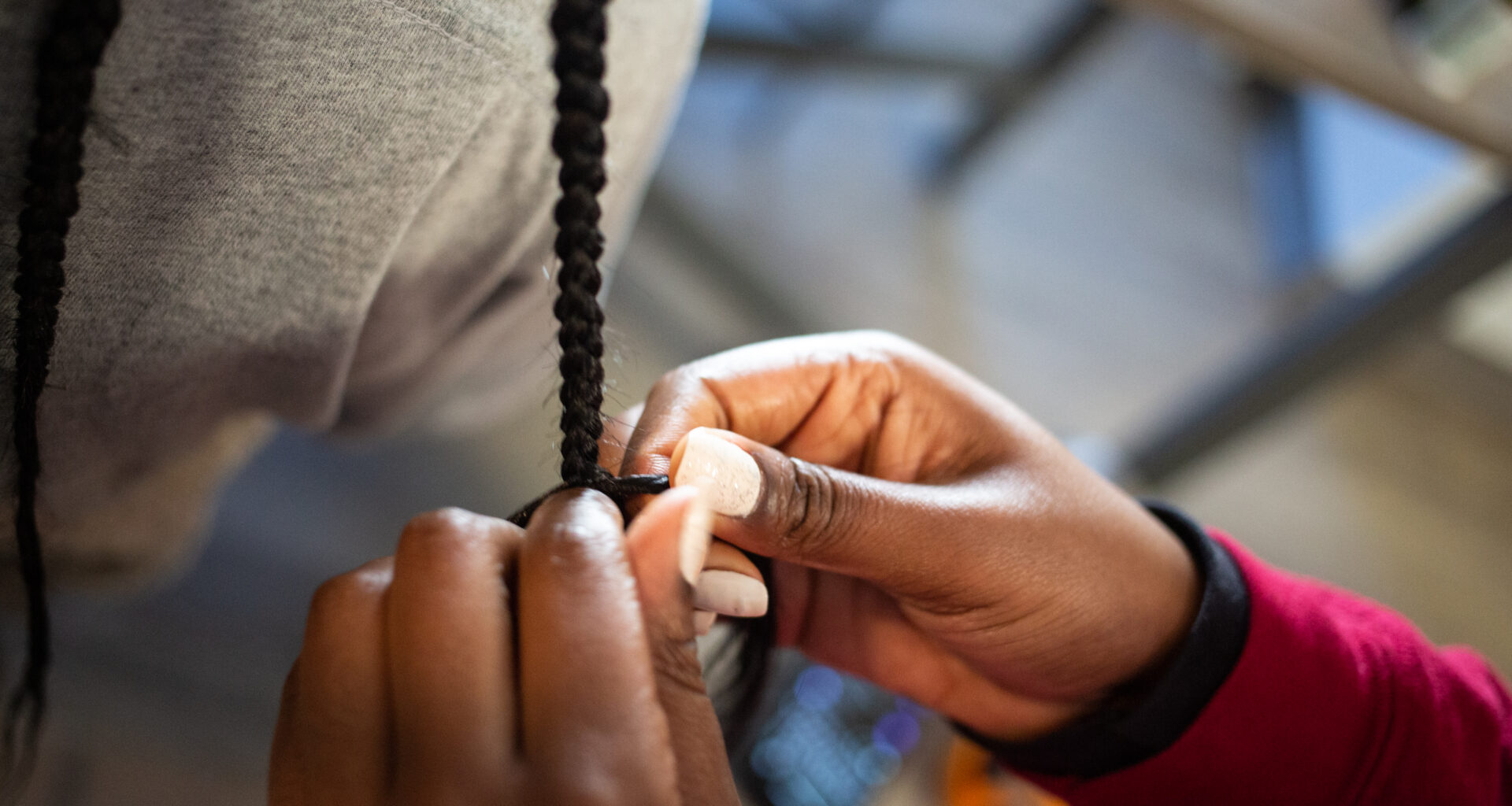
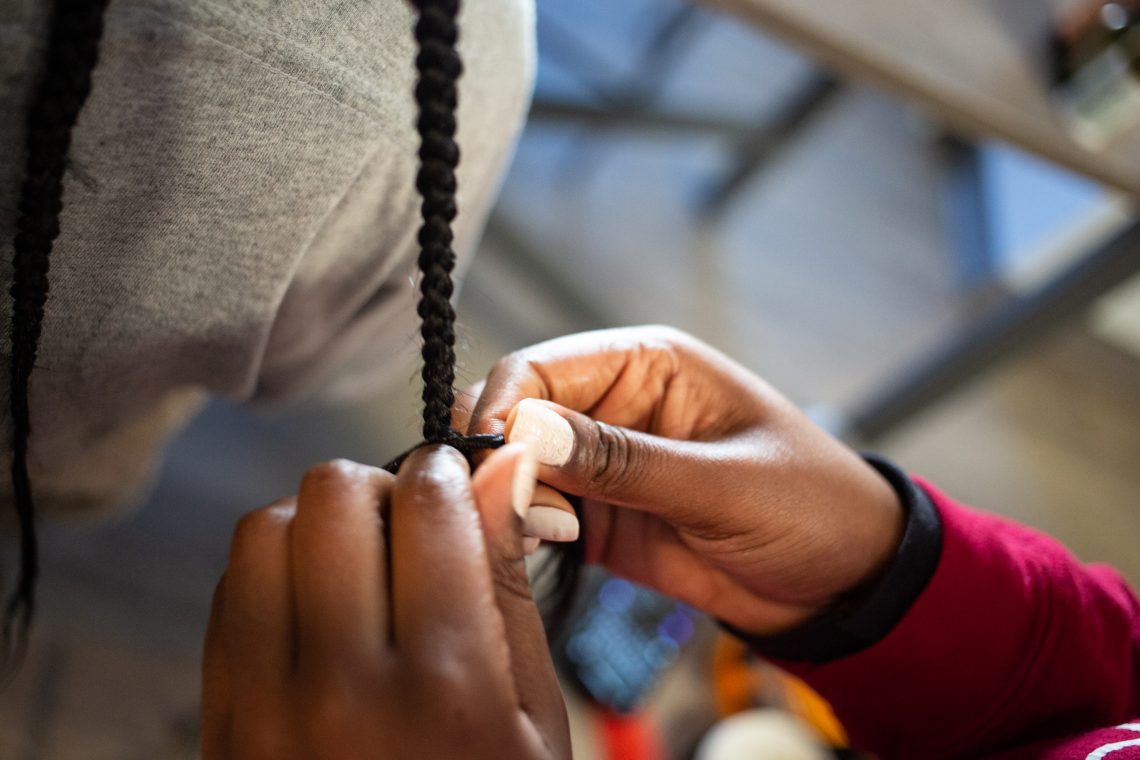
 Tynecia Wilson, a senior Spanish major and Latin American studies minor, braids Lauren Booth’s hair in Booth’s Vantage apartment on Temple campus on Feb. 19, 2020. | FILE / THE TEMPLE NEWS
Governor Josh Shapiro signed the Creating a Respectful and Open World for Natural Hair Act into law on Nov. 25. The act expands the Pennsylvania Human Relations Act, which prohibits racial discrimination, to include protections surrounding hair styles and textures associated with race and cultural identity.
The CROWN Act prevents employers, businesses and schools from discriminating against hairstyles like braids, twists, afros, locs and extensions, which are historically associated with Black women and men.
The bill passed with support from both Republicans and Democrats in the Pennsylvania General Assembly. The law will go into effect on Jan. 26.
Adjoa B. Asamoah, 1998 African studies and psychology and 2001 educational psychology alumna and political strategist, helped create the CROWN Act, which was first signed into law in California in 2019. Pennsylvania is the 28th state to sign the policy into law.
In collaboration with attorneys, Asamoah helped craft the policy to argue that requiring conformity to Eurocentric grooming standards has a disparate impact on Black people, especially how common practices for straightening natural curls can have damaging effects.
“This has been a multi-year effort, multi-session effort,” Asamoah said. “I am grateful that [the sponsors] never gave up.”
Asamoah credits Speaker Joanne McClinton, Sen. Vincent Hughes and Rep. La’Tasha D. Mayes for their work in the Pennsylvania General Assembly.
“The partnership with those lawmakers and the leadership of those lawmakers is so instrumental,” Asamoah said. “And it’s why the CROWN Act is so beautiful, in that it is an example of what it looks like for the community to partner with lawmakers. We don’t always have to be at odds.”