
The World Cup, the MLB All-Star Game, celebrations of the nation’s 250th anniversary: Not a day seems to go by without an elected official or city booster proclaiming the critical importance of capitalizing on the surge of visitors expected for the many high-profile events happening in Philly next year.
That was certainly the case at a City Council hearing on sidewalk dining — specifically, a proposal to allow restaurants around the city to more easily put tables and chairs outside their front doors.
The main reasons to reform the slow, cumbersome, unpredictable process of getting sidewalk licenses are to boost business, create jobs and add vibrancy to commercial corridors, according to the bill’s sponsor, Councilmember Rue Landau, and other speakers at Tuesday’s hearing.
But proponents also stressed the need to get the rules fixed in time to let restaurants put on their best faces for next year’s events, both for the immediate benefits and to shape the lasting impressions of some 500,000 expected visitors.
“There is power to outdoor dining beyond just the tables and the chairs,” said Zakary Pyzik, of the Pennsylvania Restaurant & Lodging Association. “If we get it right, people come back and they spend their money here in Philadelphia. If we don’t, then they won’t. Where they, and particularly how they eat, is critical to the stories that they tell when they return home and the memories that they make here.”
Landau has support for her measure from at least nine other councilmembers and the Parker administration, which sent Philadelphia 2026 Director Michael Newmuis to the hearing to put in a plug for the bill.
“There’s really no greater way to explore the [city’s] cultural vibrancy than through our incredible, vibrant food opportunities,” he said. “This legislation is about positioning Philadelphia for long-term success, ensuring that our businesses and our communities are empowered to benefit not just in 2026, but for the years to come.”
Confusing, slow, and out of reach
Landau’s bill would expand the number of streets and areas where restaurateurs could set up sidewalk dining “by-right,” meaning they wouldn’t need City Council to pass an ordinance approving a permit, as is currently required for businesses in most of Philadelphia.
The city’s official support for the measure recalls the Kenney administration’s posture back in June 2020, during the pandemic.
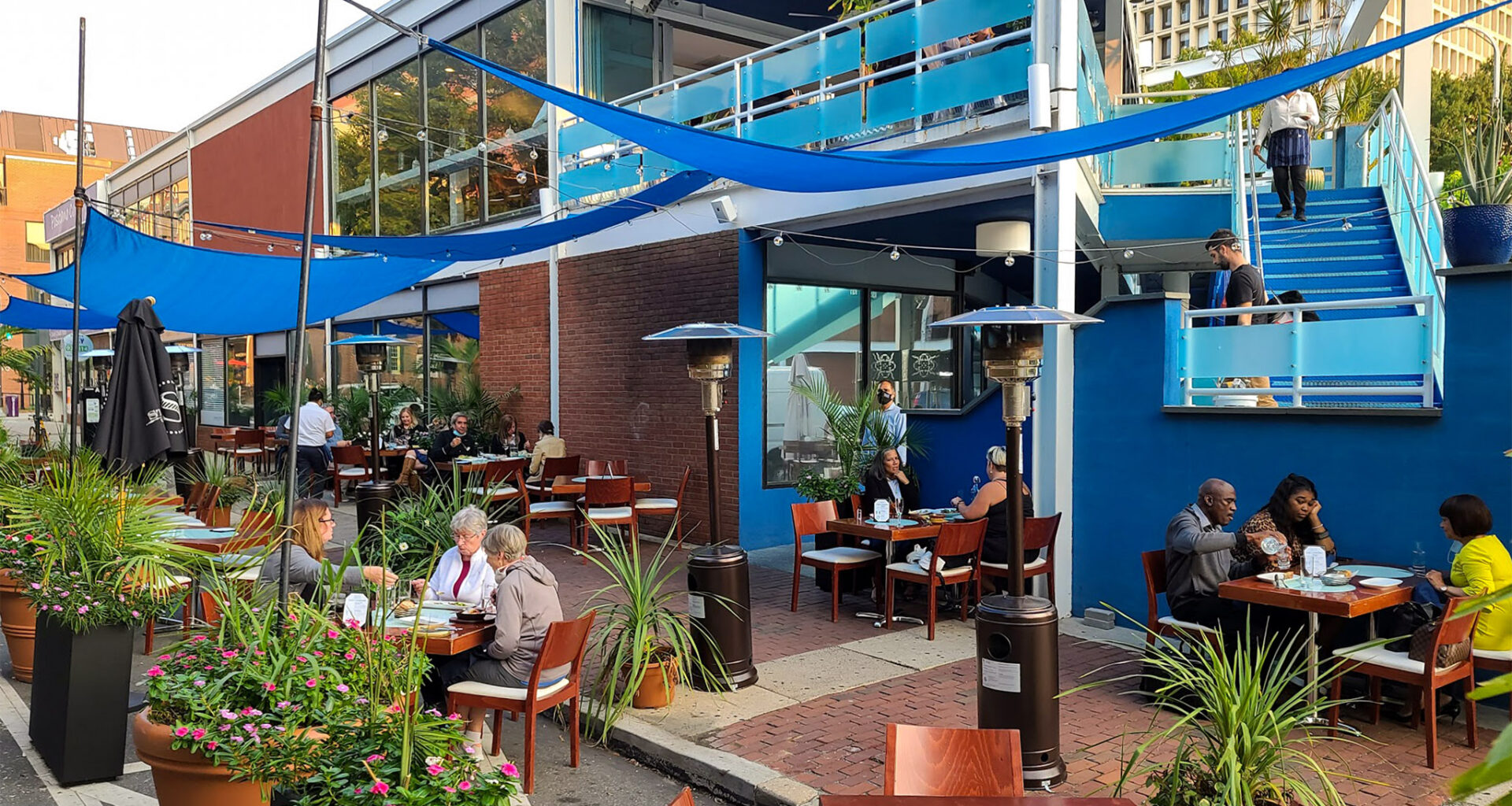
Restaurants were allowed to start hosting customers on-site again, but only outdoors. The city temporarily made it easy for them to open both sidewalk cafes and streeteries (which typically occupy on-street parking spaces), promising to issue permits within a few days of receiving applications.
That helped spur a boom in al fresco dining, with about 800 restaurants serving outdoors at one point.
However, in 2022 the city issued strict new regulations on the layout and locations of streeteries, which led most restaurants to dismantle them rather than try to navigate the expense and complexity of complying. There are now just 28 active streetery licenses, according to the Department of Licenses & Inspections data dashboard.
Sidewalk dining has been somewhat more resilient, with L&I listing 289 active licenses, as well as more than 600 inactive licenses. Sidewalk seating already allowed by-right on a number of streets.
But Landau and other advocates said that for most restaurants it can take a year and half or longer to work through bureaucratic red tape and wait for council to approve an ordinance, and in some cases applications are never approved.
“Sidewalk cafes should be the easiest, most accessible way for a restaurant to offer outdoor seating. Yet today the process, as we’ve heard, can be confusing, it can be slow and too often far out of reach, especially for smaller businesses that are oftentimes the ones that are going to be more underresourced,” Pyzik said.
Ryan Mulholland, director for operations for CookNSolo, which includes Zahav, Dizengoff, Goldie and Federal Donuts, said the difficulty of obtaining sidewalk dining licenses hampers the company’s planning of new restaurants.
The legislation is appealing because it promises predictability, he told council — “the idea that I can lease a property, I can look at the way that it’s set up, the sidewalk space, how it’s arranged, and know, based on the legislation, I can put six tables outside,” he said. “Currently, if I lease a restaurant, there is an uncertainty there. I might get turned down.”
That’s in part because the application process often involves a community meeting, where a neighbor will complain about a nearby nuisance bar that has outdoor seating, he said. Those comments influence the district councilmember who must sponsor an authorizing ordinance, slowing down the whole process or sabotaging approval.
Fears of nuisance bars
Under Philadelphia’s tradition of councilmanic prerogative, the 10 district councilmembers have feudal-like power to endorse or block applications for sidewalk seating, zoning variances and many other types of permits within their districts. They also introduce any required legislation.
Landau is one of the seven at-large councilmembers who have no such authority. But over the past two years she worked closely with her district councilmember colleagues to come up with a list of streets and areas where they were comfortable ceding those powers.
“Every district councilmember who put in areas of their districts did so after a thorough process,” she said.
With the assent of Councilmember Mark Squilla and Council President Kenyatta Johnson, for example, the legislation includes Washington Avenue from Columbus Boulevard to 25th Street, and stretches of Point Breeze, West Passyunk and Snyder avenues, among other areas in their districts. Councilmember Jamie Gauthier agreed to allow by-right sidewalk seating throughout her West Philly district.
“I want to applaud my colleague, Councilwoman Landau, on working on legislation to really cut red tape, because it’s so important that folks have confidence in government,” Councilmember Cindy Bass said during the hearing.
However, Bass declined to allow any new parts of her district in the bill. She cited the problem of stop-and-gos — businesses that are technically restaurants but are effectively nuisance liquor stores — and the prospect of them being able to expand their operations outdoors.
“They’ll be able to now move their foolishness from inside the stop-and-go out on the sidewalk, and so until we can get better controls and better handles and make sure that the community has very much a say in terms of what’s going into their neighborhood … the Eighth District would be excluded” from the bill, she said.
City officials said existing city laws allow them to withdraw sidewalk seating permits from any establishment that violates any city regulation. But Bass said she’s tried for years to get the Licenses & Inspections and Health departments to crack down on businesses that blight their neighborhoods and are in flagrant violation of various laws, with limited success.
“We just have not seen any level of enforcement. It just does not exist. We’ve been out knocking on doors, talking to business owners, and have not received any level of enforcement that we actually need to be able to address what’s happening in those neighborhoods,” she told Landau. “And so while I get what you’re saying, the practicality of it is it’s just not happening, and it’s just not working.”
Landau said she agreed on the need for more enforcement, while arguing that expanding by-right outdoor seating wouldn’t change the behavior of “bad actors” like stop-and-gos that already ignore the law.
A spokesperson for L&I didn’t respond to a request for comment on Bass’s complaint about the lack of enforcement.
After the hearing, council’s Committee on Streets & Services voted to give Landau’s bill a favorable reading. The full council will likely take up the measure early next year.