
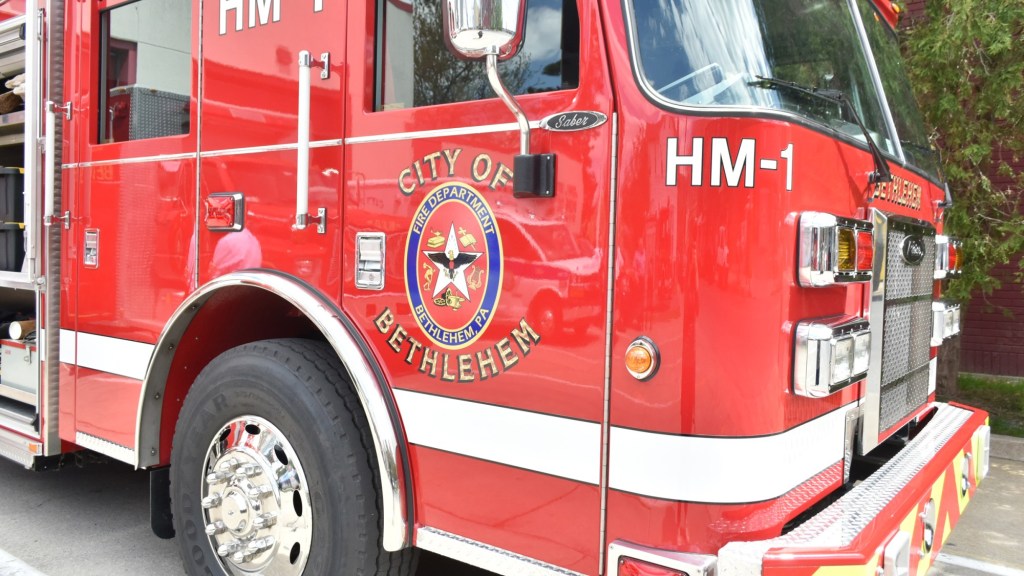
Despite a push from the city’s fire union, Bethlehem City Council on Thursday rejected several budget amendments that would have re-allocated existing funding or raised taxes to add four firefighters to the department’s ranks.
Amendments proposed by City Council member Grace Crampsie Smith would have re-allocated funding from the city’s community recovery fund, firefighter overtime budget, and Community and Economic Development Department to bring the fire department’s workforce up to 110.
A last-minute amendment proposed by member Bryan Callahan to raise property taxes — without providing a specific figure because he made the proposal in a spontaneous motion — also failed.
The vote on Crampsie Smith’s amendments were 2-5, with Crampsie Smith and Callahan voting in favor and members Michael Colon, Colleen Laird, Hillary Kwiatek, Rachel Leon and Kiera Wilhelm voting against it. Callahan’s amendment failed by 3-4; Laird joined Crampsie Smith and Callahan in supporting the proposed tax increase.
Council members and city administration opposed the move because it would take money out of one-time cash funds to pay for a recurring expense, which they said would hurt the city’s finances.
Council members also lamented that they didn’t have enough time to consider the fire union’s proposal, which came just one day before Mayor J. William Reynolds presented his 2026 budget proposal, which keeps taxes level next year.
In an eight-hour marathon budget hearing on Nov. 20, the city heard from firefighters and advocates for the department as they called on the city to add firefighters to their ranks.
The city most recently cut four firefighters from its budget in 2021 via attrition, leaving the budgeted number of firefighters at 106. The city also closed a fire station on Dewberry Avenue in 2011 and converted it into a second emergency medical services center, a move opposed by the fire union at the time.
The city’s staffing level is below standards set by the National Fire Protection Association, according to a study backed by the International Association of Fire Fighters (IAFF) released by the local fire union in late October. The department should have at least 113 firefighters to adequately protect the growing city from fire dangers, Local 735 President Lou Jimenez said.
The city staffs 18 firefighters citywide per shift, below the 30 recommended by the NFPA. Further, though it is budgeted for 104 firefighters, it only has 82 currently due to vacancies or long-term absences due to illness or military deployment.
Reynolds, who was not at Thursday’s meeting, has said adding the additional firefighters to the payroll would cost an additional $480,000, and the city would need to raise property taxes by about 1.7% to accommodate the request. He said he would not support taking funds from elsewhere in the budget to fund the new positions because he believes the city should not use one-time sources of cash to pay for a recurring expense such as an employee.
He has said he would prefer to have the results of a city-funded study into the fire and EMS department efficiency, which is expected next year, before making any decisions on fire staffing.
However, advocates have said the need for more firefighters is too urgent to wait, and could prevent a tragedy. Union officials have called on Bethlehem leaders to take funds from the city’s cash reserves in order to pay firefighter salaries.
“We have paved sidewalks with [cash reserves], bought fire trucks, done all different types of projects in the city, yet we cannot hire four additional firefighters under this rainy day fund?” Jimenez said. “Isn’t that what it’s for, a rainy day? We are having a rainy day.”
Several nonprofit leaders said that they support the fire department but asked the city not to take money from the city’s community recovery fund, which awards grants to local nonprofits for educational, food, arts and other programs.
This story will be updated.