
Matney says that an object recorded by Chinese astronomers in 5BC was visible in the sky for more than 70 days beginning in the spring of that year.
Historians place the birth of Christ between 6BC and 5BC because of the recorded date of the death of King Herod the Great.
Herod, a crucial part of the Nativity story, died no earlier than late in 5BC.
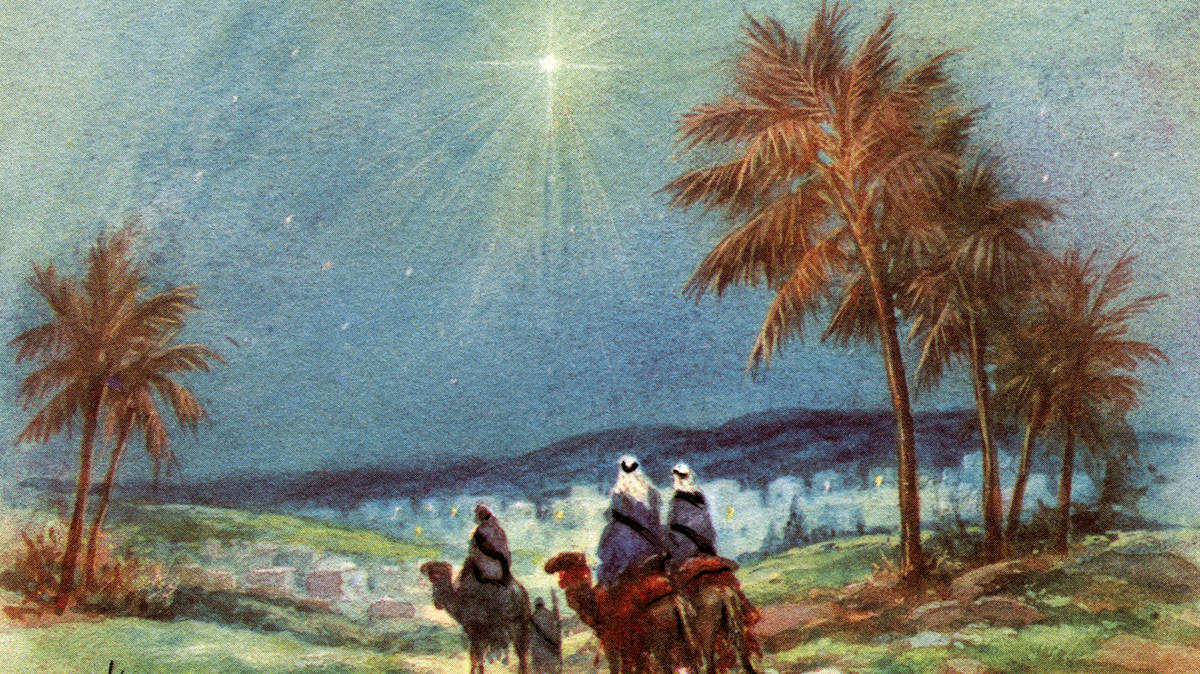
The Star of Bethlehem is said to have hovered still in the sky above the settlement – a description which led many to suggest it was a miracle or a myth rather than fact.
In the Journal of the British Astronomical Association, Matney detailed how he used a novel technique to try and figure out how the comet would have looked from the ground on the road from Jerusalem to Bethlehem that the Magi were said to have travelled on.
After modelling the documented orbits of the comet from the Chinese records, he found a possible set of trajectories which would have brought the object so close to Earth that its eastward motion would cancel out the effect of our planet’s rotation.
This would create an illusion of the comet remaining stationary that the Magi were said to have seen, a phenomenon known as “temporary geosynchronous motion”.
For one scenario which was modelled, this would have occurred on a June morning in 5BC when seen from Judea.
Matney wrote: “This is the first astronomical candidate for the Star ever identified that could have had apparent motion corresponding to the description in Matthew, where the Star ‘went before’ the Magi on their journey to Bethlehem until it ‘stood over’ where the child Jesus was.”
He also posited that a comet that approached so closely might “easily have been visible in the daytime — it would have been extraordinarily bright”.
“As the Magi travelled south, it would have been an unmistakable object in the southern sky, rising higher and higher,” he said.
Despite the theory, this has not been proven and many will prefer to continue believing in the miracle as stated in scripture.