
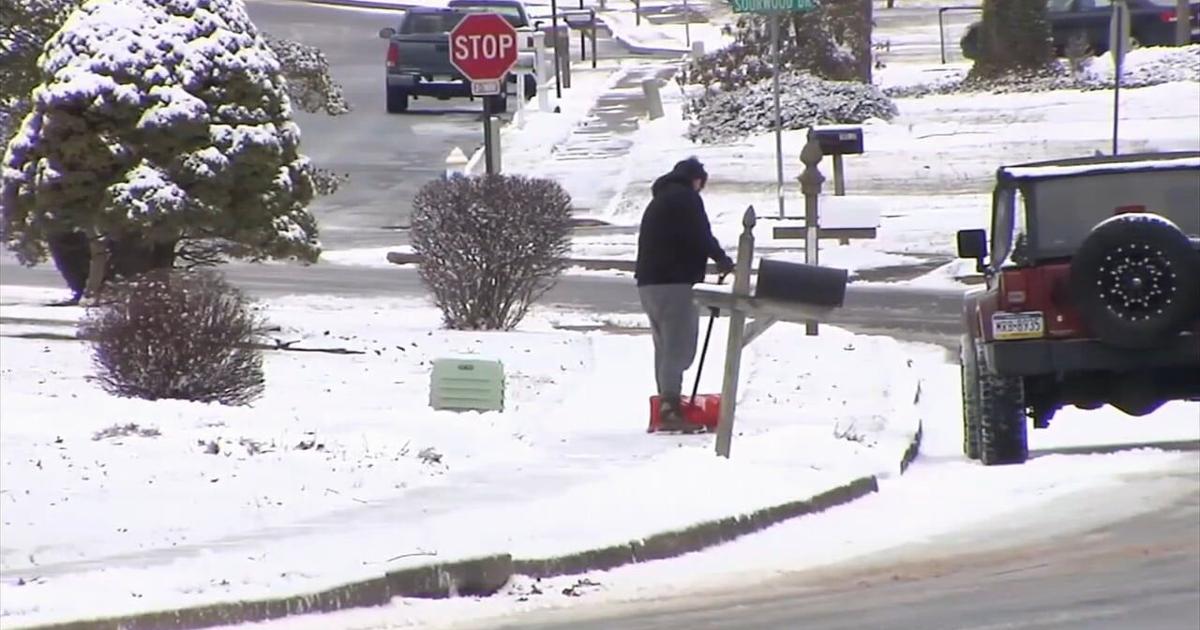
Unpredictable winter weather can make for a dangerous holiday season.
Health officials are warning people about the risks the freezing temperatures can have on us.
Before going outside to shovel the snow or deck the halls, health experts have helpful tips for folks to stay safe.
Sometimes, the jolliest time of year can drag in slippery roads, slushy sidewalks and snow-covered driveways.
“Everybody’s bit more active trying to get things done, cooking and baking, especially the decorating. And then when it starts to be inclement weather, snow removal, ice, we see a ton of increased injuries,” said Dr. Gerald Rossini, Orthopedic Surgeon at Lehigh Valley Health Network.
Rossini said injuries can range from sprains and fractures to broken bones.
“This time of the year, between the hustle and bustle with the holidays and the dramatic change in the weather, we usually see a spike in visits in the orthopedic office,” said Rossini. “We see a parade of patients coming in between November and probably the end of February.”
The brisk cold can restrict blood flow to the muscles and joints, and Rossini said further increase the chances of getting hurt.
“Pain is your body’s way of telling you something is not right, so you want to listen to that,” Rossini said. “I think number one is understanding your limitations. You shouldn’t be doing it. It’s always a good idea to check with your physician first prior to doing more strenuous activities, but it a lot of it has to do with mechanics.”
“If you’re hurt, how important is rest?” asked 69 News Reporter Cierra Genelle.
“You don’t want to be working through an injury,” said Rossini. “The ‘RICE’ protocol: rest, ice, compression, elevation, is usually very helpful.”
Before venturing outside, people are advised to stretch, dress in layers and use proper footwear.
“And then watch the terrain that you’re walking on. If you see icy patches or uneven surfaces, you want to avoid that,” said Rossini.
As people watch their steps, Dr. Christopher Sarnoski said people should also take it slow when shoveling the snow.
Sarnoski is the Section Chief of Interventional Cardiology and Structural Heart Disease Program at St. Luke’s University Health Network.
“It’s the combination of the cold weather and the actual lifting of typically heavy snow that puts the demand on the heart,” said Sarnoski.
Sarnoski said that can cause an uptick in heart attacks.
“It can be in patients who don’t exercise routinely. Can be their first activity that they’ve done throughout the year or in a long time,” said Sarnoski.
He said the risk is higher for those with pre-existing conditions.
“Such as patients who have high blood pressure, diabetes and high cholesterol. We have those patients who have established heart disease, or patients who’ve had prior heart attacks, open heart or bypass surgery or stents placed. Those patients are obviously at increased risk because they are already in secondary prevention,” said Sarnoski. “Patients with prior known heart disease, shoveling should be avoided.”
Those who do not have heart disease, Sarnoski recommends shoveling in small increments, avoiding early morning heavy lifting and turning to a snow plow for help.
“Or, a neighbor or somebody else to do it, that’s ideal,” said Sarnoski.
If all these steps are followed and something still feels off, it’s best to seek medical attention. Health experts said to visit a primary care provider or if it’s an emergency, dial 911.