

From Philly and the Pa. suburbs to South Jersey and Delaware, what would you like WHYY News to cover? Let us know!
The Philadelphia Ballet’s annual staging of “The Nutcracker” has begun its holiday run, and, as usual, the company’s principal dancers rotate through various characters during the four-week production.
On Friday, Nicholas Patterson will make his “Nutcracker” solo debut as the Cavalier, dancing the showstopping pas de deux with the Sugar Plum Fairy.
But a year ago, Patterson could barely walk due to punishing rounds of chemotherapy. At 28 years old and at the top of his profession as a dancer, Patterson was laid out by a diagnosis of Stage 4 cancer.
“I didn’t know what my life was going to be like, if I would ever dance again,” Patterson said during a break of “Nutcracker” rehearsals. “You humor your worst fears in that moment. I wasn’t focused on ever dancing again, I just wanted to live out my life.”
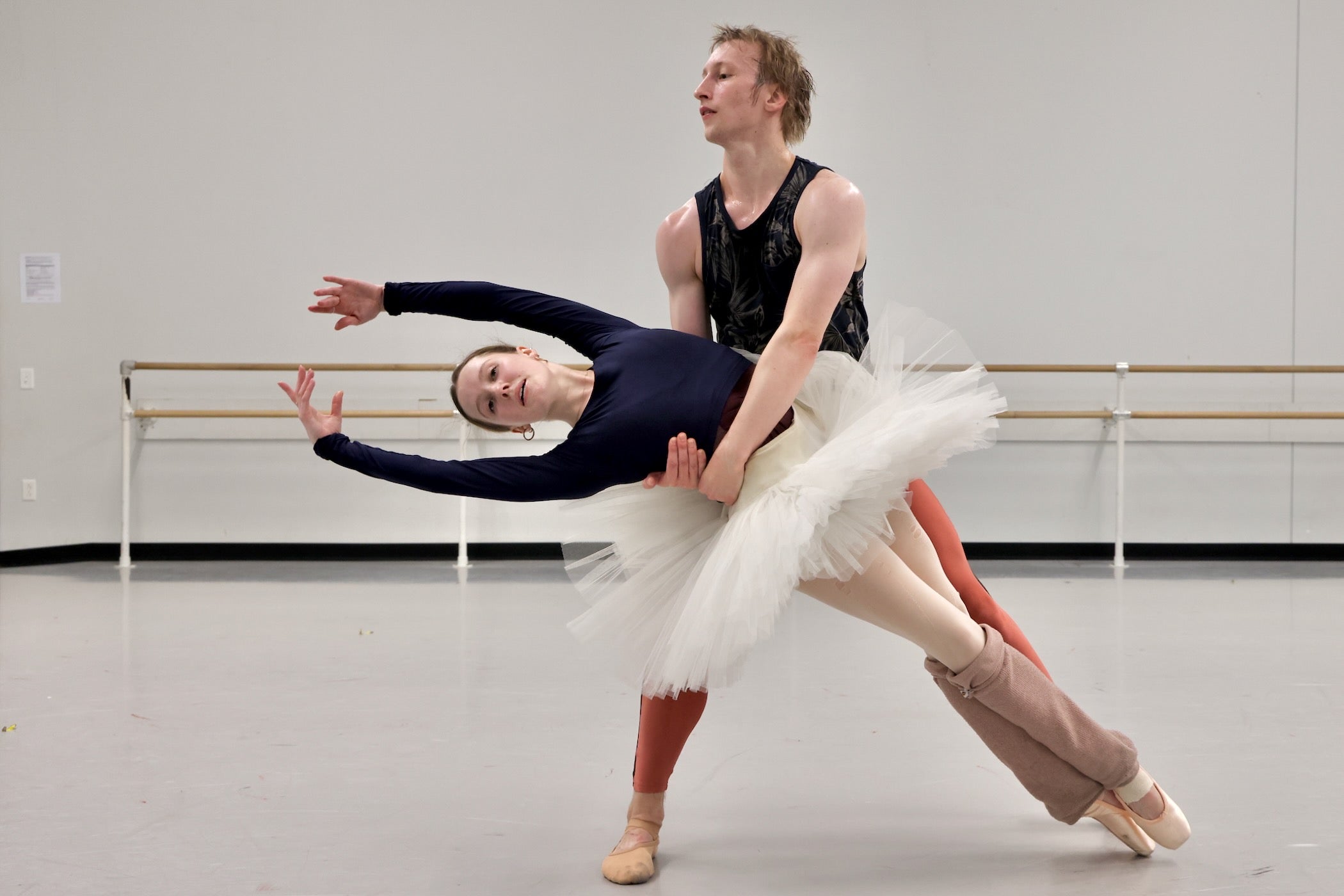 In his first year as a soloist for the Philadelphia Ballet, Nicholas Patterson is dancing the role of the Cavalier to Lucia Erickson’s Sugar Plum Fairy. (Emma Lee/WHYY)
Patterson has been with the Philadelphia Ballet since 2019, promoted to soloist during the 2024-2025 season. Angel Corella, the ballet’s artistic director, said the diagnosis hit everyone in the company hard.
“Nobody deserves anything like this, but especially Nick,” he said. “He’s such a positive person. Everybody loves him in the company. He’s one of the few people that just gets along with absolutely everyone, and he’s such a hard worker.”
At the start of 2024, Patterson thought he had the flu, feeling fatigued with swollen lymph nodes. He could not get through a day without taking naps. Doctors said his symptoms were consistent with Epstein-Barr virus, or mononucleosis.
“That was the cloak. I was testing positive for mono during all of this,” he said. “That’s actually quite common, where people are testing positive for mono but there’s actually an underlying, more severe situation that they don’t realize.”
By fall 2024, Patterson’s condition had worsened and he went to an emergency room. That is where doctors determined he had an advanced stage of non-Hodgkin lymphoma.
He was admitted into a treatment program at Penn Medicine’s Abramson Cancer Center. Patterson said the staff there are “miracle workers,” in spite of especially grueling treatment they put him through because he is a dancer.
“Because of my age and being a professional athlete, they felt that they could be pretty aggressive with the treatment,” he said. “I was going in every two weeks, doing four chemotherapies every treatment.”
 Philadelphia Ballet soloist Nicholas Patterson was diagnosed with non-Hodgkin lymphoma in 2024. Several rounds of chemotherapy temporarily robbed him of his strength, his focus and his hair, but he’s back to dancing, filling the role of the Cavalier in this year’s production of ”The Nutcracker.” (Emma Lee/WHYY)
The stepped-up chemotherapy caused not just nausea, fatigue and hair loss, but neuropathy, or nerve damage that can be permanent.
“You hit the wall immediately with the first treatment and you’re thinking, ‘Dang, how can this get any worse?’ And it does,” Patterson said. “It just gets worse and worse and worse.”
During his chemotherapy treatments, Patterson wanted to come back to the ballet studio to be with the company, which Corella barred him from doing for his own health.
“It was kind of dangerous. He couldn’t get even a cold from another dancer,” he said. “It was hard for him to stay away from the studio.”
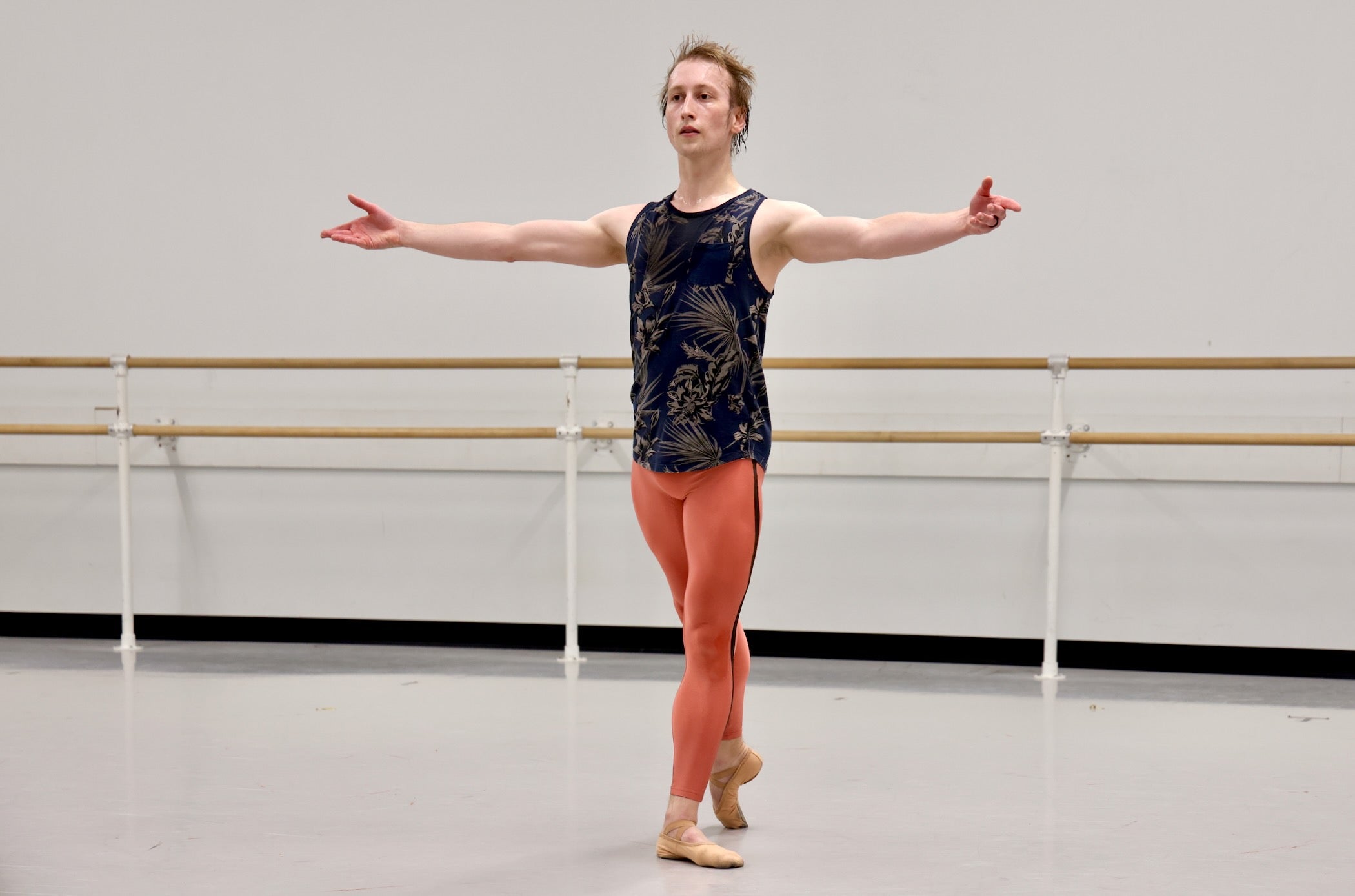 Nicholas Patterson rehearses for his role as the Cavalier in the Philadelphia Ballet performance of George Balanchine’s ”The Nutcracker.” (Emma Lee/WHYY)
To get through the low points of chemotherapy, Patterson relied on his wife, fellow dancer Erin Patterson, and sought moral support from other dancers who had survived cancer. There aren’t that many. Patterson went to the internet to search for anyone who had been through what he was experiencing.
On Instagram, he connected a fellow cancer dancer: Chiara Valle with City Ballet in San Diego, California, who posted pictures of herself during cancer treatment and her ultimate recovery.
Patterson said he would message Valle about how terrible he was feeling and she would respond in the affirmative: Yes, she had felt the same way.
He said even a single supportive voice made him feel part of a community.
“It can be so helpful when you’re going through something so traumatizing to know that somebody else has also gone through it and have seen the other side,” Patterson said. “I’m in the midst of the dark ages, but this other person has gone through that, they’ve overcome it, and they’re now dancing again at this elite level.”