
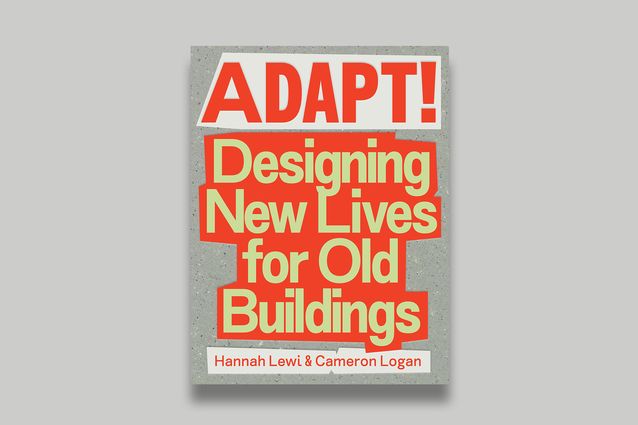
Adapt: Designing New Lives for Old Buildings
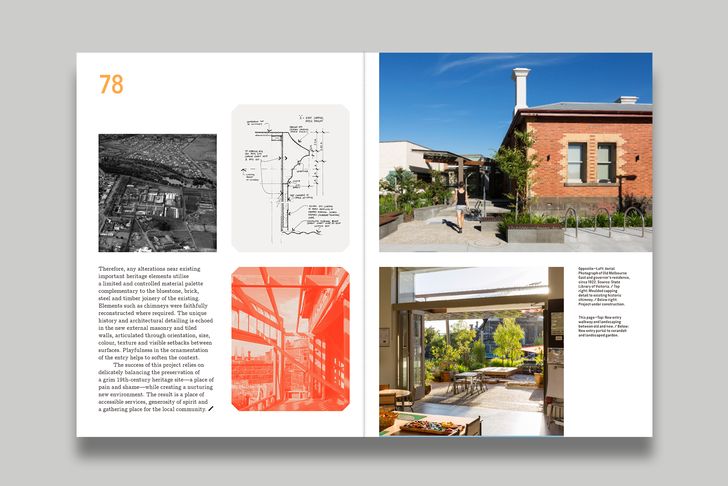
Authored by Hannah Lewi and Cameron Logan, Adapt: Designing New Lives for Old Buildings showcases a wealth of approaches to the sustainable adaptive reuse of historic places, demonstrating how architects can design projects with dramatically less impact and longer-lasting social and cultural outcomes.
The book builds on the authors’ extensive research in the field, with contributions from leading architects and heritage practitioners, sharing their first-hand experiences and methods for transforming existing built fabric into contemporary architectural spaces. It contains illustrated case studies, expert analysis and a series of essays. Featured practitioners include Conrad Gargett, Dunn and Hillam, Fieldwork, Foreground, Gilby and Brewin, Kerstin Thompson, Lahznimmo Architects, Neeson Murcutt Neille, NMBW, Peter Elliott Architecture and Urban Design, Spaceagency, SJB, Six Degrees, Tonkin Zulaikha Greer, Williams Burton Leopardi and Williams Boag Architects.
Adapt: Designing New Lives for Old Buildings by Hannah Lewi and Cameron Logan is published by Uro Publications.
View gallery
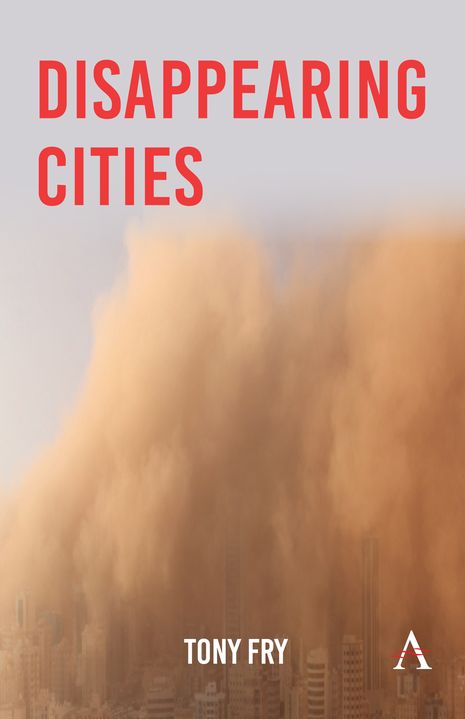
Disappearing Cities
Inspired by Italo Calvino’s book Invisible Cities, Tony Fry’s Disappearing Cities is a collection of over fifty short stories of fictional cities in the not-too-distant future, each destroyed by various climate change impacts and related natural disasters. The stories explore responses to various disasters and the lessons learned from them. They draw on projected climate facts, trends and the author’s experience of population displacement, relocation and design-based climate change responsive action.
The book’s thesis is that our ability to respond and adapt to the scale of coming climate changes requires going beyond existing practical action and embracing a new way of imagining futures. Disappearing Cities aims to stimulate ways of meeting this need.
Disappearing Cities by Tony Fry is published by Anthem Press.
View gallery
Drawing the City
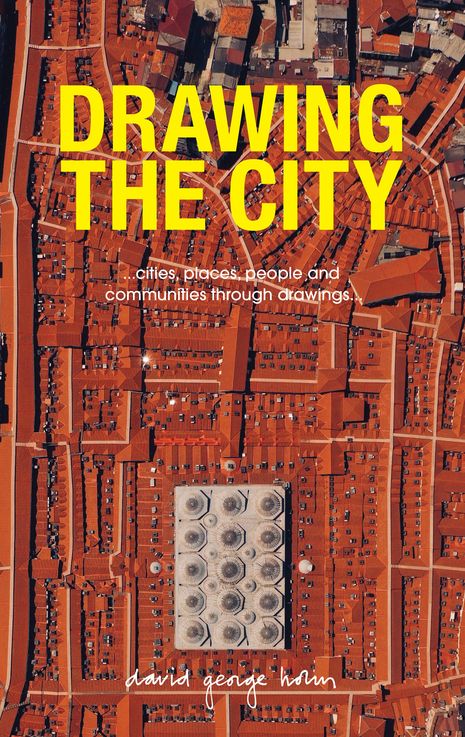
Drawing the City by David George Holm, an architect and principal at Cox Architecture, is an illustrated journey through the world’s cities, examining how urban environments have evolved from rural origins and diversified into the twenty-first century, with increasing densities.
As Holm explains, “Whether grown randomly, organically or via idealist master planning, the city, in its various iterations, is perhaps our greatest invention. As centres of cultural, social and economic memory, they tell us who we are and where we’ve come from. The city is an ancient form, yet one that persists at the very heart of modern civilisation.”
In his third book, Holm presents his drawings, done by hand, of more than 500 urban spaces, culminating four decades of fieldwork, travel and reflection. He captures not just the architecture, but the life between buildings – the stories, rituals and rhythms that give cities their unique identity – and identifies three core attributes that make great places thrive, with the aim to reconnect people to their built environment and explore the provision of public space, whether created through new private supply or the reinvention of traditionally private spaces.
Drawing the City by David George Holm is published by Ventura Press.
View gallery
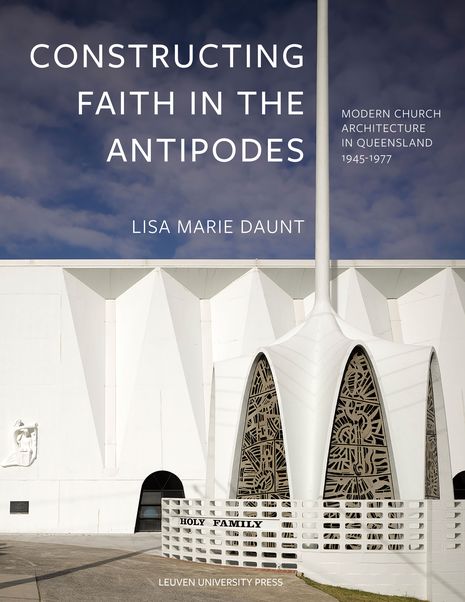
Constructing Faith in the Antipodes: Modern Church Architecture in Queensland 1945-1977
Constructing Faith in the Antipodes: Modern Church Architecture in Queensland 1945–1977 by Lisa Marie Daunt offers a particular perspective on modernist church architecture in Australia. The book reveals how this era of Queensland’s church architecture differs from that of the northern hemisphere, due to the region’s unique conditions as a young, sparsely populated and religiously diverse state spanning a vast territory in the antipodes.
More than 1,650 churches were built in Queensland between 1945 and 1977. They constitute some of the state’s most notable modern architecture and reveal tensions surrounding modernism’s role in cultural expression and regional identity. Modern architectural developments and emergent religious ideas did not simply transfer to Queensland; rather, architectural ideas were circulated globally. Richly illustrated, Constructing Faith in the Antipodes combines a chronological and a thematic approach to narrate the history of modern church architecture.
Constructing Faith in the Antipodes: Modern Church Architecture in Queensland 1945–1977 by Lisa Marie Daunt is published by Leuven University Press.
View gallery