
A new bill making its way through the state House Committee on Communications and Technology aims to address how artificial intelligence is being used in health care. House Bill 1925 would set standards for AI use in the doctor’s office and require safeguards for decision-making.The Pa. House Committee on Communications and Technology held a session for H.B. 1925 through numerous panels from health care professionals, insurance agencies, technology representatives and those who are impacted by AI in the doctor’s office.Prime sponsor The prime sponsor of “The AI and Healthcare Act,” Pennsylvania’s Dist. 30 Representative Arvind Venkat (D), is a practicing emergency physician and says he has used AI in his work.”We want to make sure that when artificial intelligence is used, that it’s used correctly and in a way that focuses on the patient and the public,” said Rep. Venkat. “Artificial intelligence in the here and now can be wrong up to 20% of the time,”The bill would ensure AI is used responsibly in decision-making and that diagnoses are not made solely from the technology. Rep. Venkat tells WGAL News 8 the margin for error could harm patients if systems are relied on without oversight.”It can actually lead to conclusions that reinforce inequities that exist in the health care system, such as racial inequities and biases,” said Rep. Venkat.Bill in limbo Attorney General Dave Sunday advocated for the benefits of artificial intelligence, but criticized how people can use it with malicious intent. In the health care sphere, Sunday says AI chatbots can give instructions to people on how to harm others or themselves.”There are brilliant, brilliant people out there that have come up with ways to utilize it, harness technology like AI to help people,” said AG Sunday. “That being said, we know there’s a mental health crisis that already exists in a lot of ways, and we want to make sure that, that people that are already in that position, that the bad positions they’re in aren’t exacerbated.”Last week, President Donald Trump signed an executive order that bars states from enacting their own AI regulations and leaves oversight to the federal government.”I think it’s very likely that executive order is unconstitutional,” said Rep. Venkat. “Health care, in particular, is well-regulated at the state level. So, I’m very confident that our effort is constitutional and is the right way to go for Pennsylvania.”The bill has bipartisan support with three Republicans and 23 Democrats listed as co-sponsors, but it remains in committee, and it could take time before any regulations are enacted or denied.
HARRISBURG, Pa. —
A new bill making its way through the state House Committee on Communications and Technology aims to address how artificial intelligence is being used in health care. House Bill 1925 would set standards for AI use in the doctor’s office and require safeguards for decision-making.
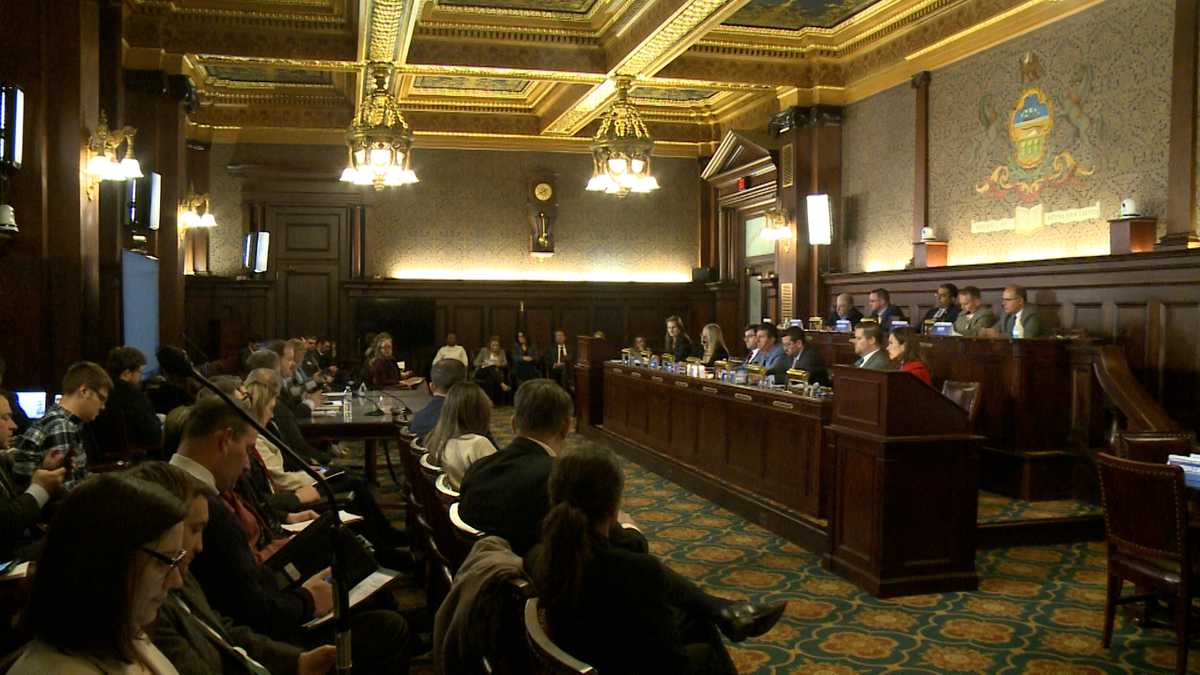
The Pa. House Committee on Communications and Technology held a session for H.B. 1925 through numerous panels from health care professionals, insurance agencies, technology representatives and those who are impacted by AI in the doctor’s office.
Prime sponsor
The prime sponsor of “The AI and Healthcare Act,” Pennsylvania’s Dist. 30 Representative Arvind Venkat (D), is a practicing emergency physician and says he has used AI in his work.
“We want to make sure that when artificial intelligence is used, that it’s used correctly and in a way that focuses on the patient and the public,” said Rep. Venkat. “Artificial intelligence in the here and now can be wrong up to 20% of the time,”
The bill would ensure AI is used responsibly in decision-making and that diagnoses are not made solely from the technology. Rep. Venkat tells WGAL News 8 the margin for error could harm patients if systems are relied on without oversight.
“It can actually lead to conclusions that reinforce inequities that exist in the health care system, such as racial inequities and biases,” said Rep. Venkat.
Bill in limbo
Attorney General Dave Sunday advocated for the benefits of artificial intelligence, but criticized how people can use it with malicious intent. In the health care sphere, Sunday says AI chatbots can give instructions to people on how to harm others or themselves.
“There are brilliant, brilliant people out there that have come up with ways to utilize it, harness technology like AI to help people,” said AG Sunday. “That being said, we know there’s a mental health crisis that already exists in a lot of ways, and we want to make sure that, that people that are already in that position, that the bad positions they’re in aren’t exacerbated.”
Last week, President Donald Trump signed an executive order that bars states from enacting their own AI regulations and leaves oversight to the federal government.
“I think it’s very likely that executive order is unconstitutional,” said Rep. Venkat. “Health care, in particular, is well-regulated at the state level. So, I’m very confident that our effort is constitutional and is the right way to go for Pennsylvania.”
The bill has bipartisan support with three Republicans and 23 Democrats listed as co-sponsors, but it remains in committee, and it could take time before any regulations are enacted or denied.