
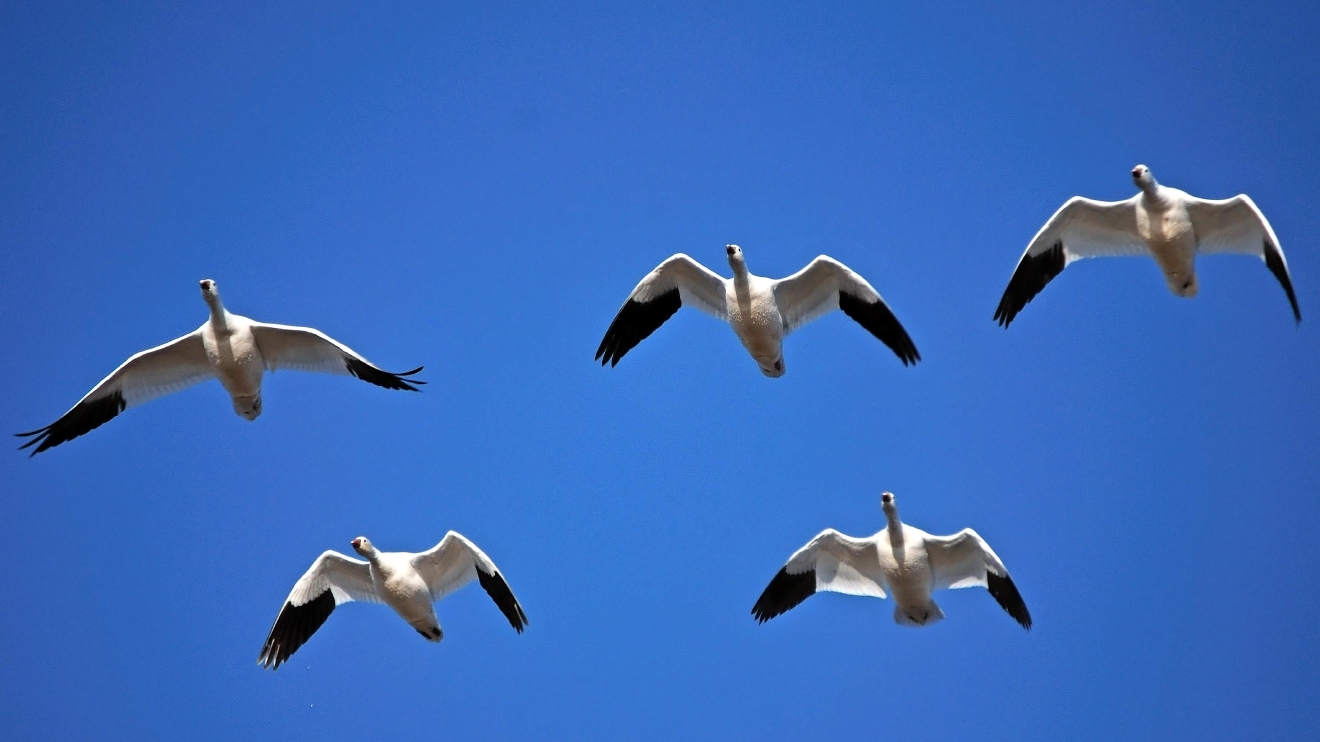
NORTHAMPTON CO. (WOLF) — State wildlife officials are investigating the deaths of hundreds of snow geese discovered at a quarry in Northampton County, where avian influenza is believed to be the cause.
The Pennsylvania Game Commission confirmed it is overseeing the response, which includes safely removing the birds, conducting laboratory testing and handling disposal. The agency said the scale of the die-off strongly suggests highly pathogenic avian influenza (HPAI), a virus that has affected wild and domestic bird populations nationwide since early 2022.
Residents who encounter sick or dead wild birds anywhere in the state are urged to report sightings to the Game Commission at 1-833-PGC-WILD (1-833-742-9453). Domestic bird owners who discover ill or deceased poultry should instead contact the Pennsylvania Department of Agriculture at 717-772-2852. Anyone who handled affected birds and later develops symptoms is advised to consult their doctor or call the Pennsylvania Department of Health at 877-PA-HEALTH (877-724-3258).
A Recurring Threat in Pennsylvania
HPAI swept through bird populations nationwide beginning in 2022, eventually reaching every U.S. state. Pennsylvania saw a renewed spike in wild bird infections in late 2024 and early 2025. Although reports declined after several weeks, the virus continued circulating at low levels.
While waterfowl and shorebirds often carry avian influenza without showing symptoms, the disease can be lethal to raptors such as hawks and eagles, scavenging species like crows and gulls, as well as wild turkeys and grouse.
Backyard songbirds are generally less affected, but officials urge residents to maintain good hygiene when cleaning feeders and birdbaths—emptying them every couple of weeks and disinfecting with a mild bleach solution. If multiple dead or sick birds appear in one area, homeowners should temporarily remove feeders to avoid spreading illness.
Public Health Risk Considered Low
Though avian influenza can infect humans, the U.S. Centers for Disease Control and Prevention continues to classify the current outbreak as posing minimal risk to the general public. Still, officials emphasize avoiding direct contact with wild birds and their droppings.
Signs of infection in wildlife can be subtle, but may include stumbling, circling, head tilting, or difficulty flying.
Guidance for Hunters and Dog Owners
Waterfowl hunters are encouraged to continue participating in the season but should take precautions, including wearing gloves, eye protection and masks while handling game. After hunting, equipment and clothing should be thoroughly cleaned, and wild bird meat should be cooked to at least 160F.
Officials also warn that dogs can contract HPAI. Pet owners are advised to keep vaccinations current, prevent dogs from approaching wild birds or their feces, and avoid letting them drink from natural water sources where infected birds may have been present.
The Game Commission will release additional information as testing progresses.