
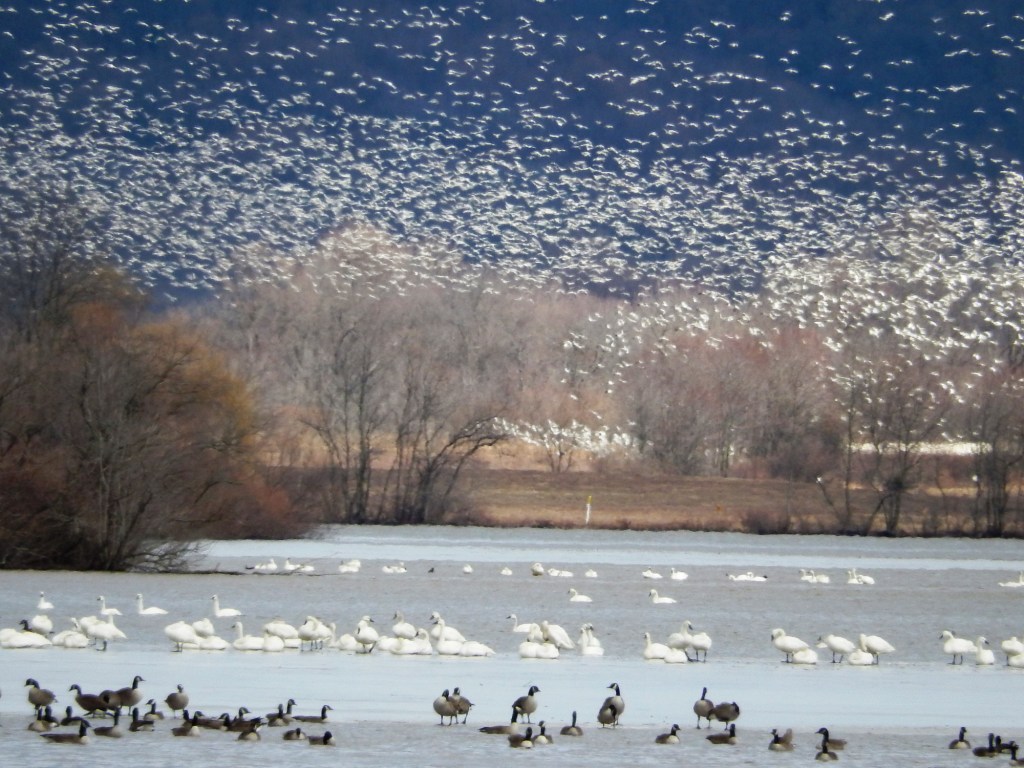
Hundreds of snow geese found dead at a Northampton County quarry are suspected to have died of bird flu, the Pennsylvania Game Commission said in a Tuesday news release.
The commission is facilitating removal, testing and disposal of the dead birds, the release states.
Lehigh Valley found itself at the center of last winter season’s bird flu resurgence, with thousands of snow geese deaths reported in Lower Nazareth Township and hundreds of additional snow geese deaths in Upper Macungie Township.
An outbreak of highly pathogenic avian influenza first hit the United States in 2022. Migrating waterfowl are a primary carrier of the disease. Because of its fast spread in commercial poultry flocks, affected flocks are culled — a fate that has so far befallen more than 7.1 million birds in Pennsylvania, spread across 41 commercial and 60 backyard flocks tracked by the U.S. Department of Agriculture.
HPAI is a virus that survives in cold temperatures, making the winter migratory season a particularly risky time in which snow geese and other migrating waterfowl can not only spread the virus within their populations, but also generate feces that allow the virus to spread in bodies of water and on the banks of rivers and lakes.
The public has a role to play in helping authorities track the outbreak.
Sick or dead wild birds should be reported to the Game Commission by calling 1-833-PGC-WILD (1-833-742-9453).
Sick or dead domestic birds should be reported to the Pennsylvania Department of Agriculture by calling 717-772-2852.
Anyone not feeling well after having contact with sick or dead birds should contact their primary care physician or call the Pennsylvania Department of Health at 877-PA-HEALTH (877-724-3258).
The Centers for Disease Control currently considers the public health risk to humans to be low. Since 2024, the United States has seen 71 confirmed cases of HPAI in humans, with the vast majority of those affected reporting exposure to dairy herds or poultry farms. There have been two confirmed deaths among those cases, according to CDC data.
“People can help safeguard themselves against HPAI by always viewing wildlife from a safe distance, avoiding contact with wild birds or their feces and not handling wildlife unless you’re hunting, trapping or otherwise authorized to do so,” the game commission news release states.
Waterfowl hunters should take precautions when dressing or handling birds, the commission said. Wearing gloves, protective eye wear and a mask is advised.
Dogs are also at risk of infection. Owners should make sure their dogs are up-to-date on vaccinations, avoid contact between their dogs and wild birds or bird feces and prevent dogs from drinking from water sources that may be contaminated by bird feces, the game commission advises.
The virus survives in moist places where organic matter is present, making leaf packs and other shoreline environments areas of high risk.