
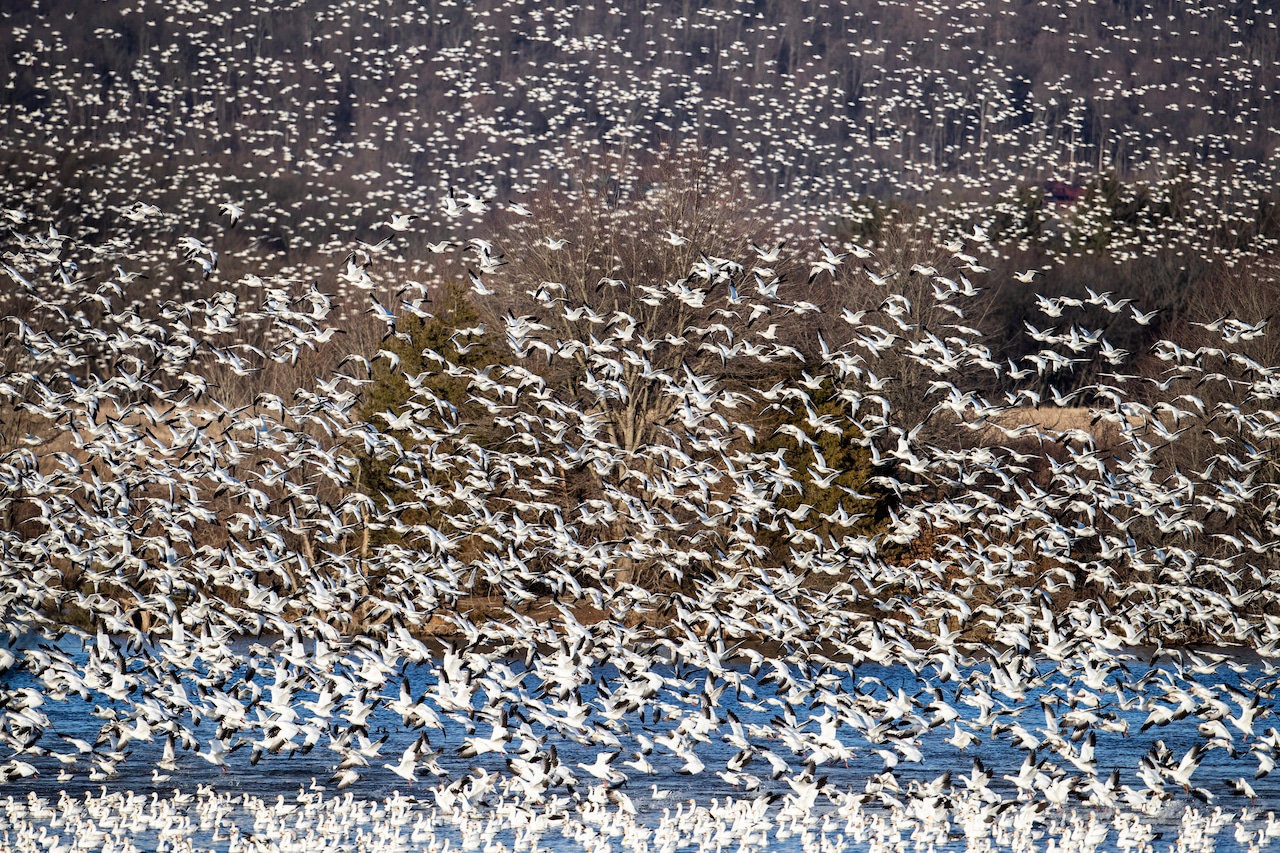
Avian influenza is suspected to have killed hundreds of snow geese found in a Pennsylvania quarry.
The Pennsylvania Game Commission said it is coordinating the removal, testing and disposal of the dead birds found in a Northampton County quarry.
The U.S. outbreak of avian influenza began in January 2022 and has impacted wild and domestic birds in every state, the Game Commission said.
In Pennsylvania, cases in wild birds surged sharply in late 2024 and early 2025. While cases dropped off after several weeks, the virus continues to be detected at lower levels.
Anyone who encounters sick or dead wild birds anywhere in Pennsylvania can report them to the Game Commission at 833-742-9453. Sick or dead domestic birds should be reported to the Pennsylvania Department of Agriculture at 717-772-2852.
Anyone who has had contact with sick or dead birds and does not feel well should contact their primary care doctor or the Pennsylvania Department of Health at 877-724-3258.
“Wild waterfowl and shorebirds are considered natural carriers for avian influenza viruses and might shed the virus in their feces and saliva despite appearing healthy. [Highly pathogenic avian influenza] also can lead to sickness or death in raptors (hawks, eagles), avian scavengers (crows, gulls, ravens) and wild poultry (turkey, grouse),” the Game Commission said.
The virus usually does not affect birds that are attracted to backyard feeders. However, people should empty and disinfect feeders and baths every couple of weeks. Disinfection can be done with a 10% household bleach solution.
Signs of infection in wild birds are often non-specific, but might include neurologic dysfunction such as circling, head tilting and difficulty flying.
The virus can potentially infect humans, though the U.S. Centers for Disease Control and Prevention says that the current outbreak poses a low risk to the general public.
To protect yourself, always view wildlife from a distance, avoid contact with wild birds or their feces and don’t handle wildlife unless you’re hunting, trapping or otherwise authorized to do so.
Waterfowl hunters should take precautions including wearing gloves, protective eyewear and a mask. Afterward hunters should wash their hands, clothing and equipment. Wild bird meat should be cooked to 160 degrees Fahrenheit.
Dogs also can become infected. Dog owners should keep their dogs up to date on vaccinations and preventive medications, prevent their dogs from coming in contact with wild birds or their feces and should not allow dogs to drink from ponds, puddles or other standing water where wild birds may have been.