
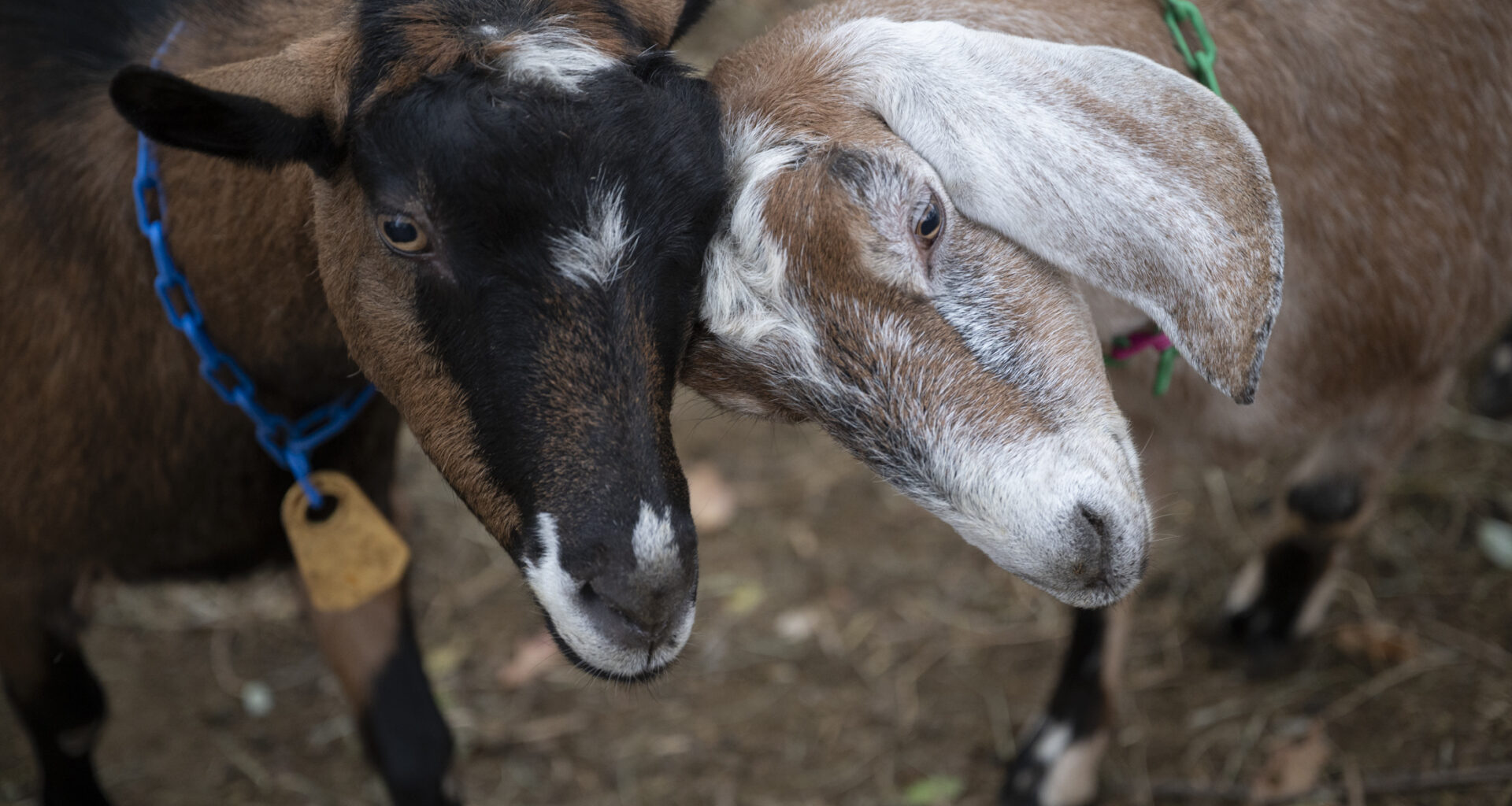
This winter, the 52 goats and donkeys of Allegheny GoatScape — a nonprofit with a mission to “clear unwanted vegetation” — are confronting elemental challenges. It’s cold aht, and most invasive species, including the Japanese knotweed the goats love to devour, have died back.
“We are feeding them hay because there are no invasive plants right now for them to eat,” Allegheny GoatScape’s operations manager Merle Rogers tells Pittsburgh City Paper.
Hay, like everything these days, costs more money than it used to. The animals and their human caretakers face another obstacle: time. In part due to feeding expenses and staff growth, Allegheny GoatScape faces a tight budget, and a few of the goats are getting older. As with humans, that comes with limited mobility, and healthcare needs that eventually take senior goats out of the organization’s ever-hungry workforce. It’s all adding up to a challenging season.
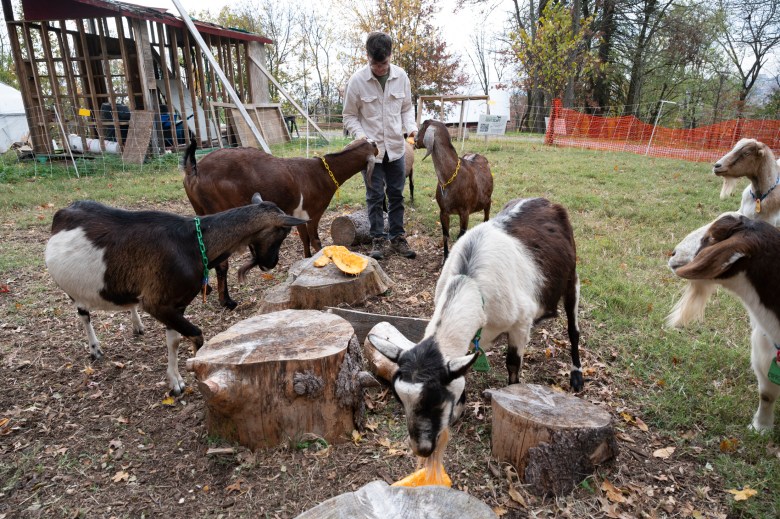
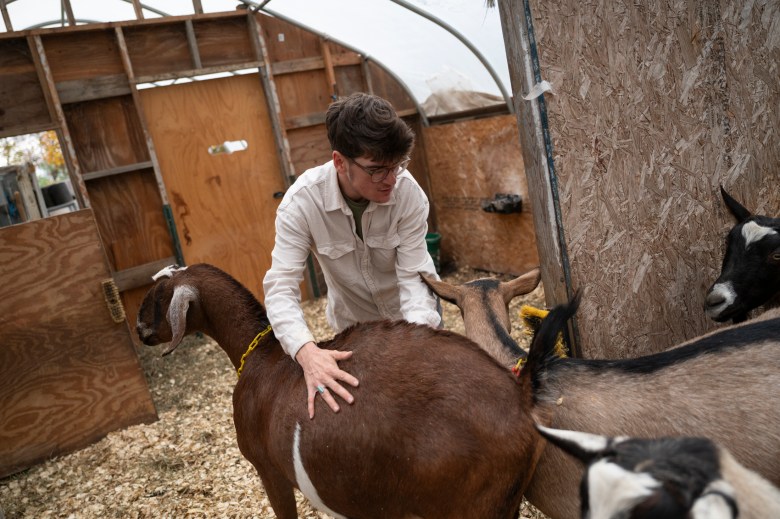 Merle Rogers, Allegheny GoatScape’s operations manager, checks on goats at Healcrest Urban Farm on Nov. 7, 2025. Credit: Mars Johnson
Allegheny GoatScape is hoping locals will step in this holiday season to help bridge the gap to another busy summer of tackling overgrown hillsides and riverbanks. Rogers says the GoatScape team is passionate about removing invasives and the animals who do much of the heavy lifting, but they note the work can be “physically demanding” for both two- and four-legged staff. Allegheny GoatScape has thus hired more human workers, Rogers says, who can tackle Pittsburgh’s topography when the goats work a difficult site, thereby taking pressure off of the nonprofit’s corps of volunteers and staff members, including Rogers and founder and executive director Gavin Deming.
“There has been this narrative in the past that we have the goats because they’re going where people can’t go, and what we have found is that people still need to go there in order to care for the goats,” Rogers says. “We’re essentially trying to build up our staff capacity so that it does not all fall on one or two people all the time.”
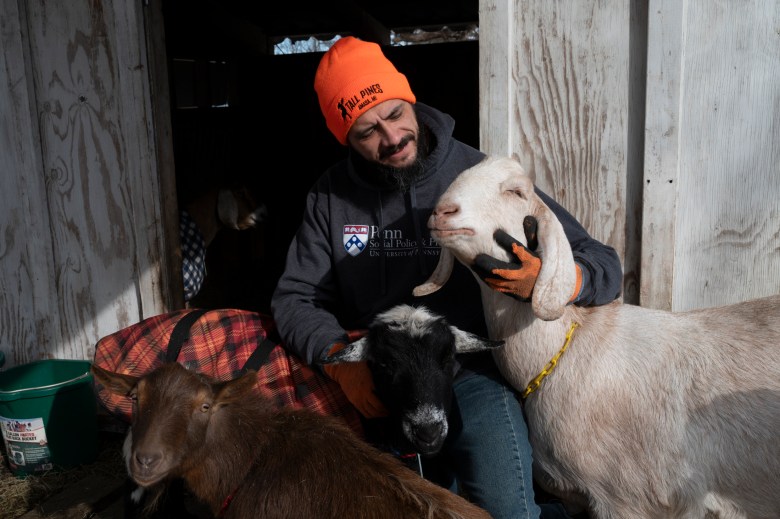 Gavin Deming, executive director of Allegheny GoatScape, poses for a portrait on Dec. 17, 2025. Credit: Mars Johnson
The organization also hopes to grow its educational programming, in part by using retired goats such as Legs, who has “tendon issues” and “a really big personality,” as teaching animals at Healcrest Farm in Garfield. Legs lives up to his name: “He needs a leg brace,” Rogers says.
Without more support — in Legs’ case, literally — he and the herd could face a challenging winter, Rogers says. The organization is therefore preparing for winter fundraising, where locals can chip in to buy Legs a special $900 brace, offset staffing costs, and even feed their Christmas trees to the goats once the holiday season starts to wind down.
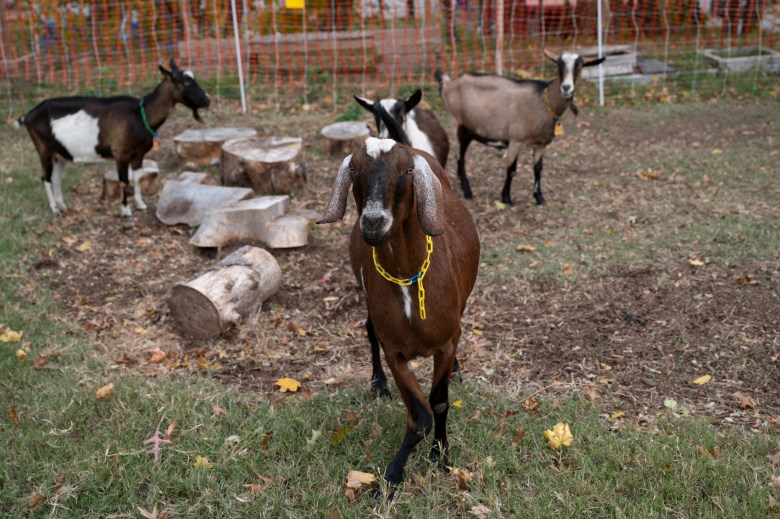 Legs the goat waits to eat pumpkins at Healcrest Urban Farm on Nov. 7, 2025. Credit: Mars Johnson
“Cleaning up their poop, that’s a large part of our operating costs in the winter,” Rogers tells City Paper. The donkeys Hobo, Diamond, Sunshine, and Pete, who each supervise and protect a team of goats, need their own special care offsite. “Essentially, these are like teeny, tiny horses that have their own needs, too. So that is another expense: in the winter, the donkeys don’t live with us.”
Allegheny Goatscape will host two Christmas-tree donation events on Sat., Jan. 3 from 11 a.m. to 1 p.m. at Healcrest Farm and another on Jan. 17 from 10:30 a.m. to 12:30 p.m. at 447 Marshall Ave. on the North Side. Visitors will be able to meet the goats, sip Commonplace coffee and hot cocoa, and explore volunteering opportunities while the goats enjoy their Yuletide buffet.
“They love to eat the Christmas trees,” Rogers says. “[It] really makes their breath so much better.”
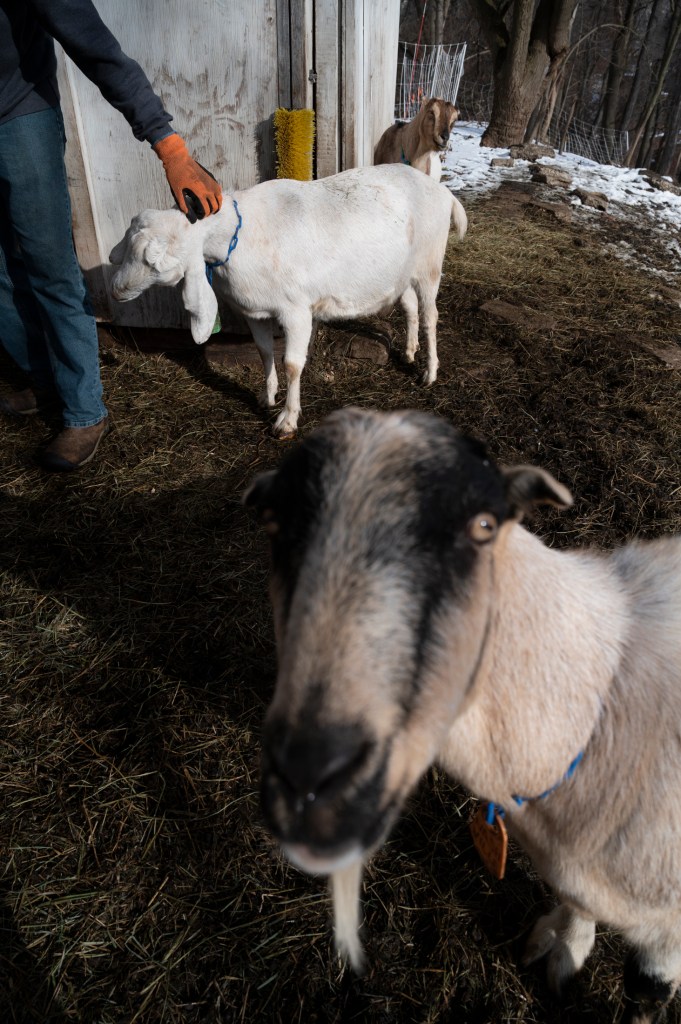
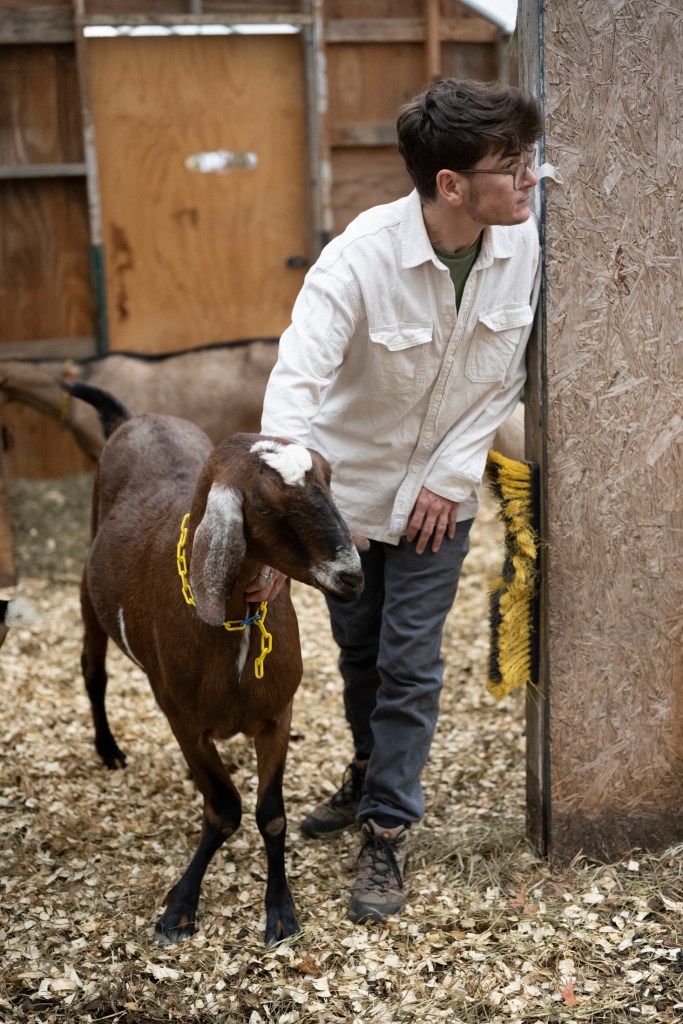 Credit: Mars Johnson
Rogers encourages tree donors to contribute what they can financially on a sliding scale — and to ensure their trees are free of tinsel, ornaments, or pigment so the goats can chow down. The nonprofit is also selling merch. Any proceeds will go to feeding and housing animals and paying Allegheny Goatscape staff for their work come 2026, Rogers says.
“I love these animals so much, and our staff are so dedicated and committed,” Rogers says. “We can’t do our work without the goats, but also we can’t have the goats without staff, so that’s really important to me — that we’re supported, too.”
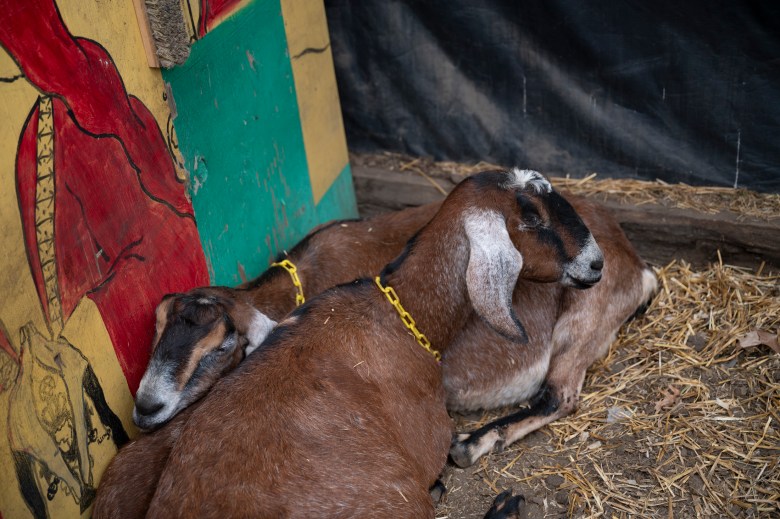 Goats take a nap at Healcrest Urban Farm on Nov. 7, 2025. Credit: Mars Johnson
This article appears in The Big Winter Issue: Winter Guide/People of the Year.
RELATED