
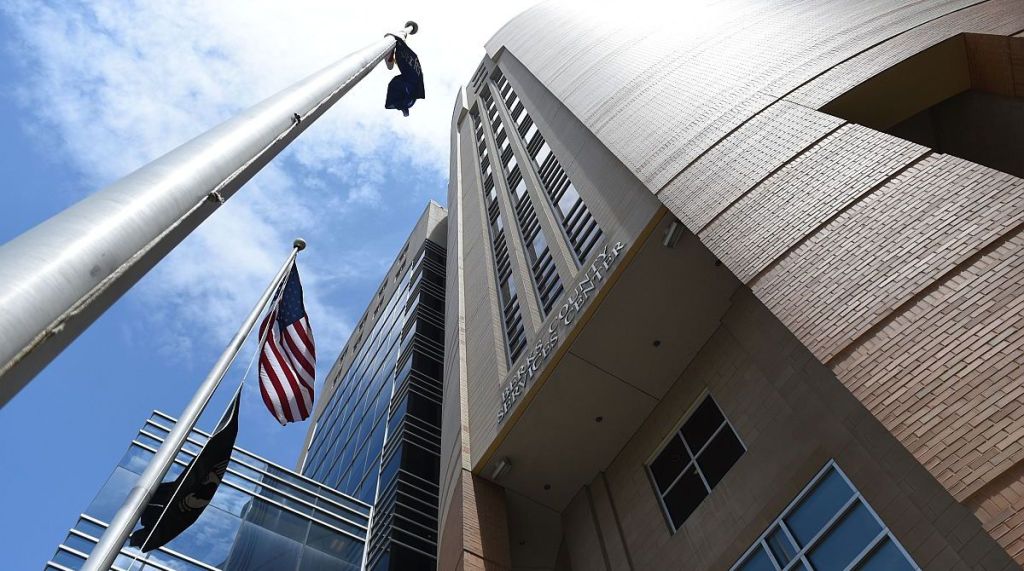
The Berks County commissioners unanimously passed a 2026 budget Thursday that holds the line on taxes.
Despite the effects of inflation as it relates to contracted services, wages, facility maintenance and benefit costs, the $690 million plan manages to avoid a property tax increase and program cuts.
The county raised taxes each of the past two years, hiking the rate 9% in 2024 and 8% in 2025.
Interim Chief Financial Officer Laura Jones outlined the final draft of the spending plan during the commissioners’ weekly board meeting, following the public review period. She said that since the proposed budget was unveiled last month there were some adjustments made that resulted in an overall revenue increase of $1.9 million.
The property tax rate will remain at 9.01 mills, meaning the owner of a property assessed at $100,000 will continue to pay $901.
The budget represents a nearly $16 million decrease from the $705.8 million 2025 plan. Jones said this is primarily attributed to a $19.2 million reduction in general fund expenditures and a $18.5 million cut in capital projects.
The budget includes a $2.9 million surplus, primarily due to the anticipated revenue from a planned $25 million bond issuance in 2026.
During the budget presentation last month, Jones highlighted that the plan supports core services; maintains future financial stability; limits the growth of new discretionary spending; and funds capital expenses with reserves.
She added that the county will continue to maintain certain commitments, including $3.9 million for the library system; $3.8 million for the county park system; $3.25 million for Reading Area Community College; $1.2 million for the Council on Chemical Abuse; and $1 million for economic development.
Jones pointed out that the county will spend most of its money on public safety and the court system. The county spends nearly $80 million on public safety and $59 million on the court system, a combined total that represents nearly 65% of all county department spending.
The commissioners commended the budget team for crafting a reasonable spending plan that highlights the priorities of the county. They also thanked Robert Patrizio, who had served as the longtime chief financial officer, for his insight and leadership as he prepares for retirement in a few short weeks.
Commissioners Chairman Christian Leinbach said the fact that the budget holds the line on taxes is particularly impressive given inflation has risen about 54% since he first took office in 2008 while county spending has only increased by about 27%.
“That really demonstrates how we have been fiscally responsible,” he said.
Commissioner Michael Rivera added that many residents may think being fiscally responsible means passing a budget with no tax increases. But, he noted, the reality is that local governments can only go without a tax increase for so long without beginning to see its structural stability start to crumble.
“We are in a strong, solid place right now,” he said. “But that doesn’t mean that at some point we won’t have to raise taxes as the cost of everything else — health benefits, salaries, utilities, pensions and services — continues to go up.”
Rivera pointed out that part of the reason the county has a strong financial foundation is due to the implementation of an initiative in which departments were tasked with cutting spending and reducing operational expenditures.
“This is something we have tried to keep top of mind — how we can be more efficient when it comes to providing services that use taxpayer money,” he said.
Commissioner Dante Santoni Jr. echoed those sentiments.
He acknowledged that while the initiative may have been challenging for department leaders, he believes they all did a tremendous job finding ways to lower costs without cutting services.