
By Jack Tomczuk
SEPTA officials acknowledged Wednesday that not enough testing was done before new parts – blamed for the prolonged closure of the Center City trolley tunnel – were installed this fall on the authority’s vehicles.
The T routes – formerly the 10, 34, 13, 11 and 36 – have been diverted to 40th and Market streets since the tunnel was shuttered Nov. 7, causing headaches for the 80,000 riders who use the trolleys to access University City and the downtown area.
Authority leaders have said the tunnel will remain closed through the end of December, and no firm reopening date has been set.
“We want to make sure that we don’t reopen before we feel that the risk has been reduced as low as possible,” Kate O’Connor, SEPTA’s assistant general manager, told reporters Wednesday prior to a test run along the underground tracks.
In October, SEPTA decided to replace the three-inch sliders atop trolley poles with four-inch pieces, on the belief that the switch would lead to lower maintenance costs. The thought, officials said, was that the carbon inserted into the slider would last longer.
Staff conducted “very limited tests,” O’Connor said, and “the results, from a maintenance perspective of the carbons, looked very good.”
The carbon pieces facilitate the connection between the slider and the overhead catenary wire system. They are meant to wear down over time, with crews replacing them when they hit a certain level.
“It was never done to the extreme, to the absolute limit because it’s not supposed to get there anyway,” added Jason Tarlecki, the authority’s acting deputy chief engineer of power. “But it ended up getting to that limit. And that’s the part that I think was missed in the prototype testing.”
In the tunnel, the carbon pieces disintegrated unexpectedly quickly, leading to the brass of the slider rubbing against the metal wires. The situation roughed up the wires and damaged clips, power insulators and other catenary attachments, SEPTA representatives said.
On Oct. 14, four trolleys lost power in the tunnel, forcing the evacuation of 150 passengers. Hundreds of passengers were stranded when the same thing occurred about a week later.
The Federal Transit Administration, in response to the two evacuations and a pair of unrelated trolley incidents in Delaware County, ordered SEPTA on Oct. 31 to inspect its entire overhead catenary system.
The directive came less than a month after federal regulators compelled the authority to inspect its Silverliner IV fleet of Regional Rail cars, following a series of fires. Both issues have caused significant disruptions for Philadelphia transit riders in recent weeks and come on the heels of a budget crisis that involved temporary service reductions.
SEPTA swapped the 3-inch sliders back in; however, the catenary wire had become so rough that the carbon inserts were wearing away too rapidly. The pieces typically need to be replaced every six days, officials said.
“We got through about 13 hours. We were here at the portal,” Tarlecki said outside the tunnel’s entrance at 40th Street and Woodland Avenue in West Philadelphia. “We could hear the rubbing on the brass. We could hear it, and we stopped the service.”
Trolleys have been allowed to continue to run at the street level, where the flexibility of the wire has prevented deterioration, according to Tarlecki. Underground, attachments are closer together – sometimes as little as 10 feet apart – and the overhead system is more rigid, he added.
Workers have been replacing components inside the tunnel, and a burnishing tool has been run through the passage in an attempt to smooth out the wires. Test runs are being held to measure the amount of carbon left after a trip, SEPTA representatives said.
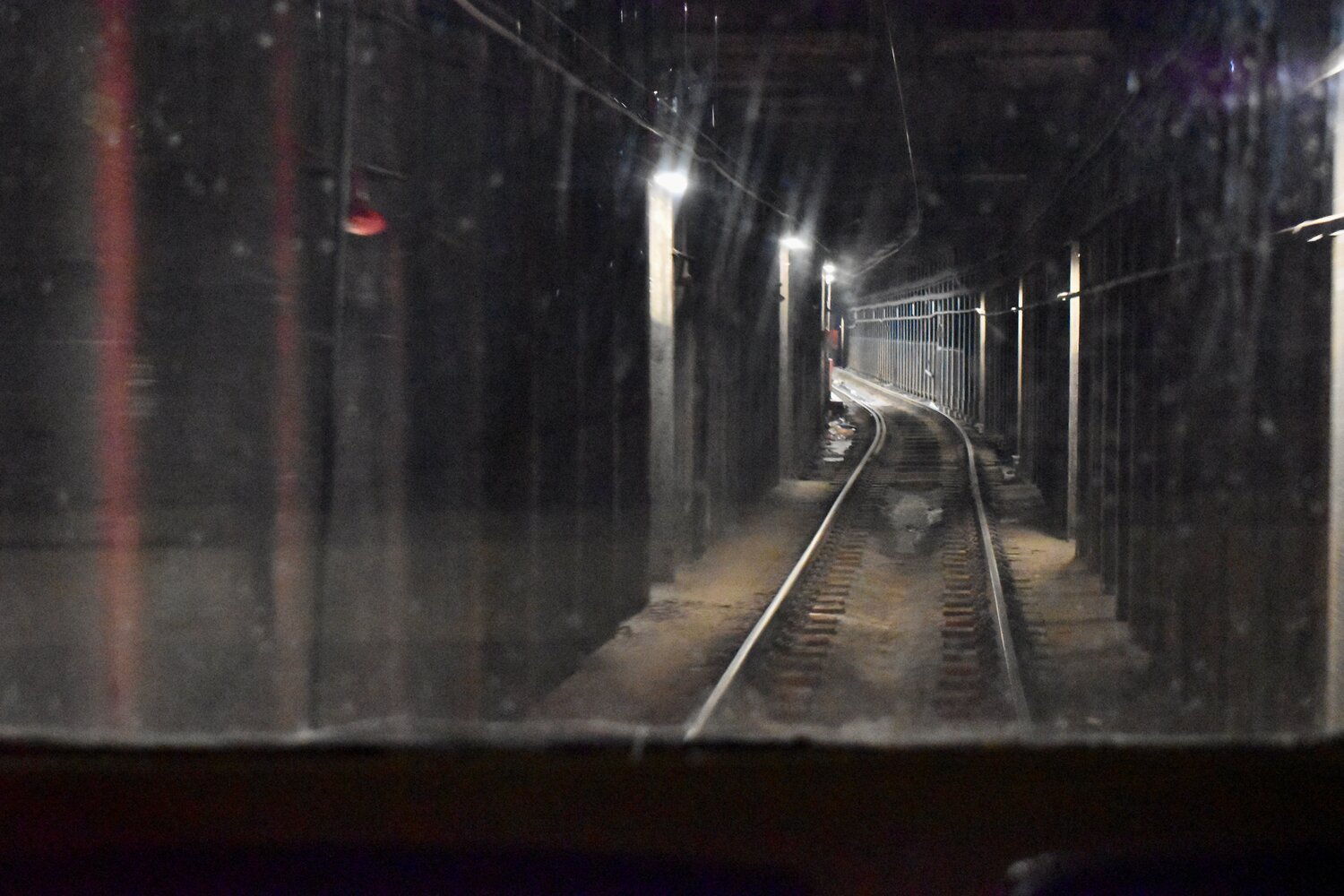
Eventually, the plan is to replace the entire five-mile underground catenary system, which takes a curving path from West Philadelphia to 13th and Market streets, in phases once the tunnel reopens.
Gov. Josh Shapiro’s administration in late November said it would be distributing nearly $220 million to SEPTA to address its emergency infrastructure needs, including more than $48 million for the trolley wires.
In the meantime, SEPTA has launched a shuttle bus from 40th and Market to City Hall in an attempt to provide some relief to riders impacted by the tunnel closure.
“We’re closed through the end of December, and then we will reevaluate some number of days before that and determine whether we’re at a safe place,” O’Connor said.