
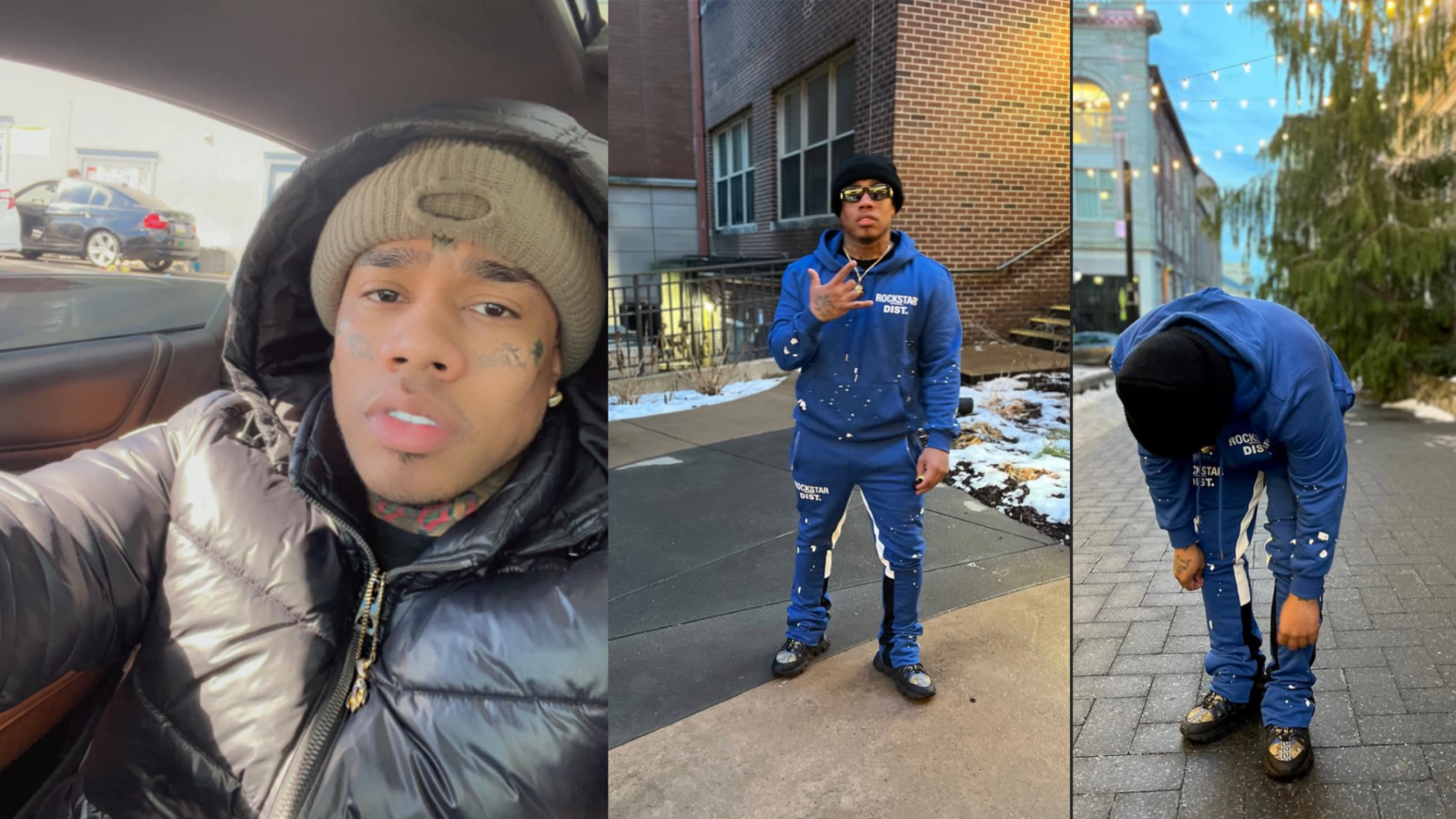
ALLENTOWN, Pa. — David J. Gibbs spent the hours before his death the way he had spent much of his life: connecting with his community. The 34-year-old Allentown father, known in local music circles as David True, posted photos on Facebook and received messages of love from friends and fans late Thursday night.
By early Friday morning, he was dead—killed in a shooting at Big Woody’s Restaurant and Bar that left two others injured and added another name to the growing list of Lehigh Valley artists lost to gun violence.
Lehigh County Coroner Daniel Buglio identified Gibbs as the victim and ruled his death a homicide due to gunshot injuries. He was pronounced dead at 2:40 a.m. at Lehigh Valley Hospital–Muhlenberg.
Officers responded to the bar at 1302 Hanover Ave. at approximately 1:28 a.m. for a reported shooting and found two victims suffering from gunshot wounds, according to the Allentown Police Department. A fight precipitated the shooting, police said. A third victim arrived at a nearby hospital a short time later. Both surviving victims were expected to recover.
A local artist with regional reach
Gibbs emerged on the Lehigh Valley music scene in 2016, a pivotal year for both his career and the local hip-hop community.
His debut single “LMK,” produced by Sumyunghai, accumulated 100,000 streams on SoundCloud and announced his arrival as an artist to watch. He followed it with “10 Toes Down Freestyle,” riding a wave of remixes popularized nationally by Kodak Black.
That same year, Gibbs shared a stage with Philadelphia rapper PNB Rock at Deja Vu Lounge in Allentown— a connection that now carries a grim weight.

PNB Rock, born Rakim Allen in Philadelphia’s Germantown neighborhood, was fatally shot on Sept. 12, 2022, during a robbery at Roscoe’s Chicken & Waffles in Los Angeles. He was 30. A man was later convicted and sentenced to 31 years to life in prison for ordering his teenage son to carry out the killing.
Gibbs worked with The Blackroom, an Allentown-based production company and label founded in 2015 by Sumyunghai and J Dinero. The label has served as a launchpad for Lehigh Valley talent and collaborated with artists including Justin Rarri and Love & Hip Hop Miami’s Chinese Kitty.
The Blackroom gained national attention in 2017 when it produced the music video for Chicago rapper 600 Breezy’s “Lou Rawls,” which accumulated more than 4 million views and coincided with his appearance on Drake’s More Life project.
Gibbs was among the label’s early signees, part of a wave of local artists trying to build careers from a region often overshadowed by nearby Philadelphia.
His most recent track, “Realest,” was uploaded to SoundCloud three years ago. His last music video was uploaded to YouTube four years ago.
A pattern of loss
Hip-hop arrived in the Lehigh Valley in the mid-1980s, part of a cultural migration from New York City through Philadelphia and into smaller Pennsylvania cities. For four decades, local artists have built a scene in clubs, studios and on street corners, nurturing talent while navigating the same violence that has claimed lives in hip-hop communities nationwide.
A National Institute of Health report found that homicide is the most commonly reported cause of death for hip-hop and rap recording artists in the United States. Between 1987 and 2014, at least 92 artists were killed. That number has since grown to exceed 100, with the median age of death at 29. Black males account for more than 90% of the casualties.
The losses have only accelerated since then. Since 2018, at least one prominent rapper has been fatally shot every year: XXXTentacion in Florida (2018), Nipsey Hussle in Los Angeles (2019), Pop Smoke and King Von (2020), Young Dolph in Memphis (2021), PnB Rock and Migos’ Takeoff (2022). An XXL investigation found that of 77 rapper deaths examined, more than 40 cases remain unsolved.
Gibbs’ death echoes the losses the Lehigh Valley has absorbed before. In October 2011, 19-year-old Devon Robinson, who performed as Daze Dysh, was shot and killed during a fight at a gas station at 12th and Hamilton streets in Allentown — just blocks from his home.
A Liberty High School graduate, Robinson had posted songs to YouTube and MySpace, dreaming of a music career. On his page, he had written with eerie prescience about his hometown: “This little town I’m in doesn’t have anything for me but a jail or death. And I’m not trying to see none of those two.”
His killer, Manuel Gonzalez, was later convicted of third-degree murder and sentenced to 20 to 40 years in prison.
The violence extends beyond the Lehigh Valley’s borders. In Philadelphia, rappers Phat Geez and LGP Qua—both artists who advocated against gun violence in their music—were killed in separate shootings in 2024 and 2025. Phat Geez had released a single called “No Gunzone” hours before his death.
For Gibbs, the final hours were marked not by music but by the ordinary routines of community. His Facebook activity Thursday night — his first posts since November — showed a man engaging with the people around him.
By dawn Friday, those same people were mourning him.

Jai Smith is a lifetime Lehigh Valley resident on a mission to empower local underserved communities and inform the public while providing journalists and storytellers a platform to develop the next generation of news media.