
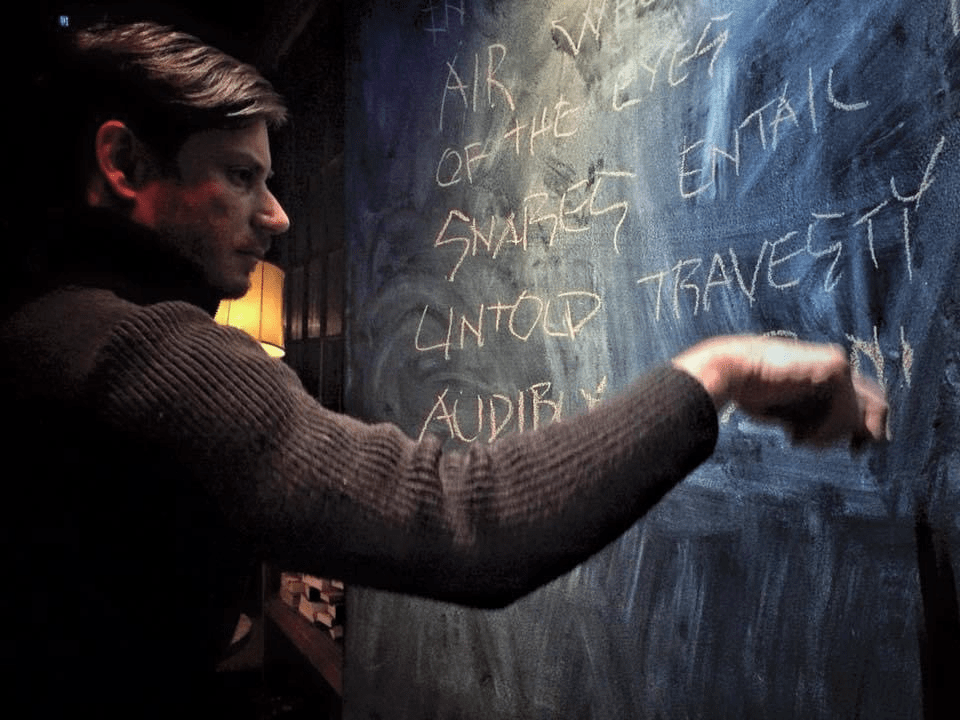
On the first Sunday of every month, a small upstairs space in Pittsburgh fills with couches, snacks and writers ready to share their work. A projector casts drafts onto the wall, and one by one, participants read aloud. Some voices are steady, others nervous, but the room always listens.
This is The Poetry Atelier, a monthly workshop hosted by Pittsburgh poet John Lambert at The Space Upstairs, a gallery/loft space above Construction Junction in the East End. It isn’t a typical open mic: There’s no competition, no pressure to be published and no ranking of experience. Instead, Lambert calls it a “democratized atelier,” where anyone can share writing and receive feedback in a supportive environment. At a time when much creative exchange happens online, the atelier has quietly endured since 2016, offering something harder to find: an in-person community built on trust and encouragement.
That impact is clear to attendees. Adrian Green, a poet and Point Park University alumnus from Fort Worth, Texas, credits the workshop with reviving his writing.
“The atelier is the reason I am a poet today,” Green said. “It is the welcoming, nurturing and safe environment of The Space Upstairs and the Poetry Atelier that turns people into artists.”
The crowd at the atelier changes month to month. Students, working professionals and longtime writers often share the circle, creating an uncommon mix of experience levels. That variety helps keep the feedback wide-ranging, from encouragement to detailed critique.
Lambert’s partner, Jaka Zakajinn, co-owner of The Space Upstairs, said his approach to poetry is inseparable from the space he created.
“John is a dancer on the page, he is jazz in his words, he is world travel and neighborhood roots,” they said. They see the atelier as an extension of that spirit, a place where discipline meets freedom and where writers at every level feel they belong.
Lambert said the atelier grew out of what he couldn’t find elsewhere.
“The atelier is my own enterprise in reverse benchmarking,” he said. “Having observed the field of what’s offered, you identify everything that fails to satisfy you or that you find incomplete, and then you innovate what suits.”
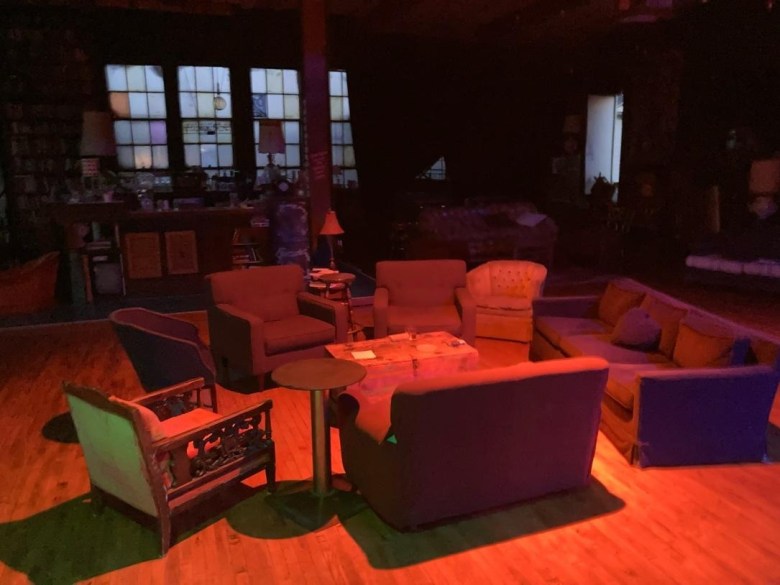 Photo by John Lambert.
That philosophy shapes the way the sessions run. There are no podiums or grades. Couches are pulled into a circle, snacks are passed around, and a shared Google Doc projects onto the wall so everyone can follow along. Writers can choose what kind of feedback they want; detailed notes, broad impressions or silence, and the group respects it. The atmosphere feels closer to a living room than a classroom, balancing honesty with comfort.
That approach also sets the workshop apart from how many writers share work online. Instead of comments limited to likes or quick reactions, participants say the in-person circle creates accountability. The exchange is slower and more deliberate, with feedback shaped by tone, body language and conversation rather than a screen.
Such spaces have taken on new significance in Pittsburgh’s arts scene. While larger institutions often dominate attention, smaller salons like the atelier give writers consistent, accessible support. Its longevity reflects both Lambert’s vision and the demand for connection in an era when much of writing happens in isolation.
Smaller workshops offer consistent access for writers who want regular practice and discussion. The atelier’s steady schedule has given it a place among the city’s independent creative spaces.
For Lambert, the value of the atelier is less about polishing poems than sustaining a community. He says professionalism doesn’t depend on publication but on “the bravery of being seen.” That spirit defines the workshop: first-time readers sharing shaky drafts, veterans offering careful critique and every voice contributing to the circle.
“The students are the teachers, and the host is just an older student moderating among younger peers,” Lambert said.
After nearly a decade, the Poetry Atelier has become more than a monthly event. It is a reminder that art thrives not only on talent but also on the willingness to gather, listen and respond.
Andrew Burgman is a student at Point Park University and staff film critic for the university’s THE GLOBE student newspaper. He shared this story with NEXT through our partnership with Point Park’s Center for Media Innovation.