
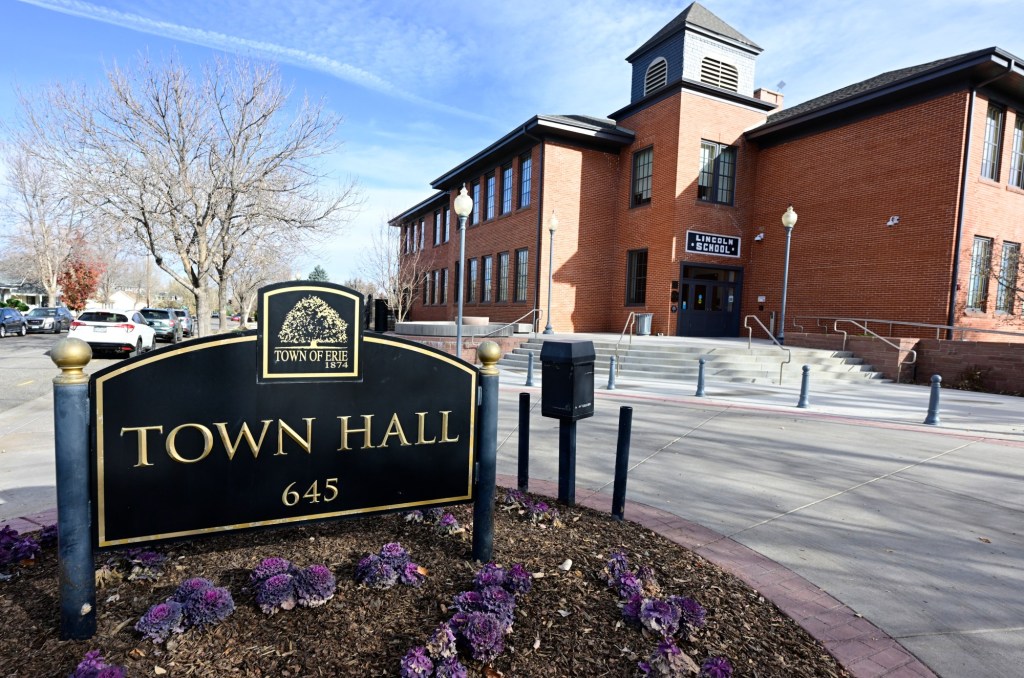
In a narrow 4-3 vote, the Erie Town Council has approved a settlement agreement to end a lawsuit filed by developer Stratus Redtail Ranch LLC.
The lawsuit was brought against the town in 2024 after a previous iteration of the council rejected the developer’s proposal for a residential neighborhood on the Redtail Ranch property, a site with a long history of oil and gas activity and nearby landfills. As part of approving the settlement agreement at its Dec. 16 meeting, the current council cleared the way for the project to move forward in Erie’s development review process, while also adopting several changes intended to address lingering concerns about environmental safety and infrastructure impacts.
The proposed development would sit northwest of the intersection of Weld County Road 4 and Weld County Road 5, just north of the Vista Ridge neighborhood. Dissenting council members said they remained uncomfortable approving housing on land they believe poses unresolved environmental risks, while supporters said the town faced significant legal exposure if the lawsuit proceeded and said professional environmental reviews supported approval.
Why the town was sued
Stratus sued Erie after the Town Council denied the company’s preliminary plat — the first formal step in securing approval for a residential subdivision — citing environmental hazards on the property. In its resolution denying the plat, the council said the site “contains active oil and gas operations that have been subject to numerous complaints and releases of toluene, methane and other toxic aerosols.”
The lawsuit argued that the town’s denial violated Erie’s own development code and the council acted arbitrarily after the company spent millions of dollars on environmental analysis and remediation. Part of the lawsuit is a takings claim, a legal claim arguing that a government has effectively taken private property — or destroyed its value — without paying compensation.
The lawsuit sought damages that would have been determined at trial.
Environmental review and landfill history
In addition to active oil and gas wells, the property is surrounded by several landfills.
North of Redtail Ranch are the Denver Regional Landfill and the Old Erie Landfill, both of which are closed. East of the property is the Front Range Landfill, which will remain active “for the next 20+ years,” a town spokesperson said in an email.
A tract of land on the Redtail Ranch parcel, which would sit north of the proposed residential area, contains another landfill sometimes referred to as the Neuhauser landfill, which dates back to the 1960s. That landfill was undisclosed before hundreds of drums leaking toxic waste were discovered — most of it the byproduct of magnetic tape and developer produced by IBM in Boulder — in 2016.
According to an environmental analysis Stratus presented from Geosyntec Consultants, the historic landfill underwent remediation overseen by the U.S. Environmental Protection Agency and the Colorado Department of Public Health and Environment. Those investigations included test pits, soil borings and geophysical surveys to define the extent of buried waste.
The environmental report says that the land was treated and capped through that process, with at least 30 inches of clean soil placed over the landfill areas as part of an approved closure plan. The capped landfill areas are separated from the proposed residential lots by “buffer zones,” the report adds, and are located more than 100 feet from the nearest planned homes.
Geosyntec said in a report the residential portion of the Redtail Ranch property had been investigated “more thoroughly than most, if not all, undeveloped properties in the area.”
Stratus also submitted a letter from the CDPHE stating that, based on review under Colorado’s Voluntary Cleanup and Redevelopment Act, the department determined no further action was required because no contamination exceeding state standards was found on the site.
What changed in the revised plan
The revised preliminary plat approved by the council includes several changes from the version rejected in 2024.
Under the settlement agreement, Stratus committed to plugging and abandoning six oil and gas wells that would have been within the proposed residential area. At least seven active oil wells would still be on the parcel, according to Erie’s map of oil and gas activity, though non-profit Colorado Rising recently estimated that there are over 20 active wells on or adjacent to the Redtail Ranch property.
The plugging and abandonment of those six oil and gas wells will allow the developer to add 49 additional homes due to the reduced 150-foot setback distance required by Erie’s Unified Development Code for plugged wells, as opposed to a 500-foot setback required for active wells, according to a town staff summary of the settlement agreement.
The settlement agreement with Stratus also adds groundwater monitoring wells, a new internal east-west street connection, and a $100,000 contribution to the town for future off-site traffic improvements or traffic-calming projects.
The development would include a mix of single-family homes, townhomes and duplexes, with primary access from Vista Ridge Parkway and two access points along Weld County Road 5, according to the staff memo.
Council vote and legal risk
Mayor Andrew Moore, Mayor Pro Tem Brandon Bell, and Councilmembers Brian O’Connor and John Mortellaro voted in favor of the settlement and preliminary plat. Councilmembers Emily Baer, Dan Hoback and Anil Pesaramelli voted against it.
During deliberations, Moore said the potential cost to the town if it lost the lawsuit had to be considered.
“That has to be a factor,” Moore said.
According to court filings, the amount the town would have been required to pay if it lost the case would have been determined at trial, but Bell said council members had been briefed on the risk of a large takings claim.
“The elephant in the room is that there is a potential $23 million takings claim,” Bell said. “This is a non-insurable claim.”
Town Manager Malcolm Fleming confirmed that any damages awarded in the case would have been paid from the town’s general fund.
During deliberations, Bell said the revised plat represented an improvement over the 2024 proposal and that council members should rely on the conclusions of environmental professionals and town staff.
“Does it have everything that we would like it to have? Probably not,” Bell said. “But there are significant improvements. And these agreements did not come out of thin air. These agreements were brought to us by staff, including our environmental staff. They signed off on this, they agreed to it.”
Dissenting votes cite lingering concerns
Council members who voted against the settlement said they remained unconvinced that the environmental risks had been adequately addressed, despite guidance from town staff to accept the settlement and allow the development plan to move forward.
“It’s our role to make difficult decisions. And sometimes that means overriding and disagreeing with town staff. And I’m making that stand, I am disagreeing with the applications of the criteria made by town staff. That’s our role,” Hoback said.
Hoback cited a recent analysis by Colorado EnviroScreen that showed “Erie is burdened with several environmental indicators, namely air toxic emissions, fine particle pollution, environmental exposures, and floodplain in certain areas, all of which rank in the 90th percentile or above,” which he said underpins concerns over the impact of oil and gas operations in the town.
Baer said she believes there’s “potential, but there is more to be done” to remediate the Redtail Ranch land, and agreed with Hoback that the council should consider broader moral and ethical concerns beyond legal compliance.
“I don’t think we can guarantee there won’t be significant negative impacts from this development, should the soil be disturbed,” Baer said, adding that “we have seen in our adjacent neighborhoods, our residents, our families have suffered negative health impacts.”
David Frank, director of environmental services for the town of Erie, in 2024 told the Daily Camera that the oil and gas sites on the property show more complaints against them than any other sites in Colorado.
Several Erie residents made public comments at the Dec. 16 meeting urging the council not to approve housing on the land.
What happens next
With the lawsuit settled and the preliminary plat approved, Stratus may now submit final plat and site plan applications for the Redtail Ranch development. Those applications will undergo Erie’s standard development review process, including additional public hearings, before construction can begin.
Moore said the council could continue to scrutinize the project as it moves forward and might request additional conditions at later stages, including more traffic improvements and potential disclosure requirements to inform future homeowners about the site’s history.