
For more than a third of 2025, the conversation at boards of education across the commonwealth was consumed by one thing — the state budget impasse and its effects on local schools.
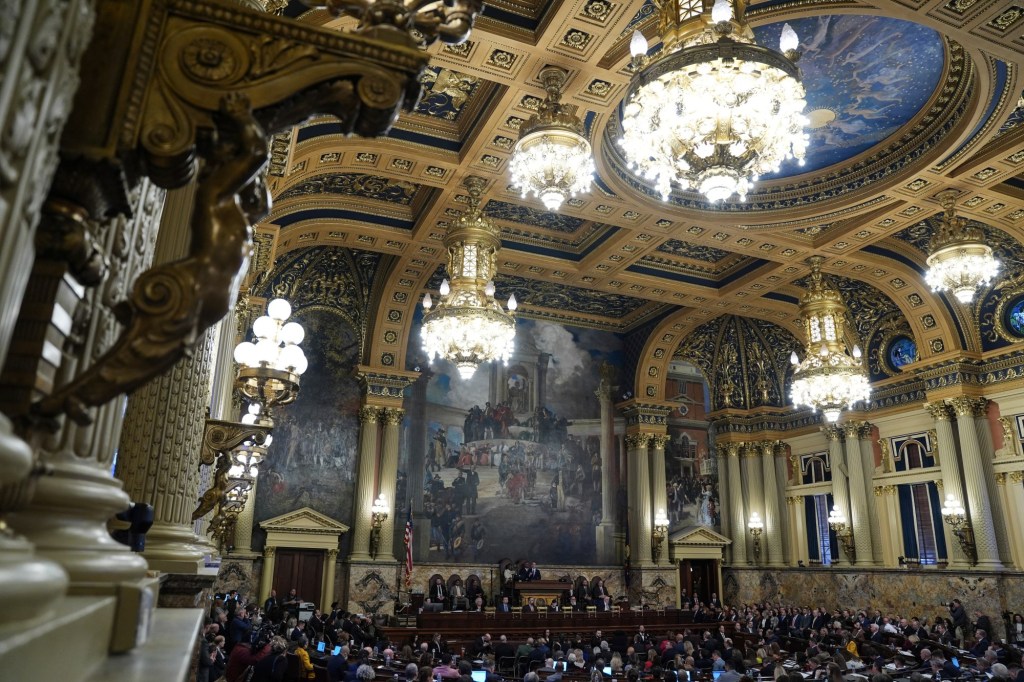
The 4½-month stalemate in Harrisburg finally gave way in November and a $50.09 billion budget was adopted that delivered significant increases in state education funding.
Below is a summary of funding increases in the major state education categories — i.e. basic education funding, special education funding, Ready to Learn block grant foundation funding, and adequacy funding – in school districts throughout Luzerne County, according to statistics from the Department of Education. (School districts do receive funding from other state education categories, so their total state funding is higher than these figures. The figures listed below are also estimates, with certain categories of funding affected by forecasted student-based allocations.)
Berwick Area
Berwick is set to receive $18.11 million in basic education funding, $2.80 million in special education, $.122 million in Ready to Learn funding, and $848,114.24 in adequacy funding for a total of $22.98 million, which amounts to a 4.99% increase over what it received in those categories in 2024-25.
Crestwood
Crestwood received $8.76 million in basic education, $1.95 million in special education, $1.18 million in Ready to Learn foundation funding, and $1.18 million in adequacy funding. This totals across those four categories to $13.08 million, or a 15.72% increase.
Dallas
Dallas is set to receive $7.28 million in basic education, $1.63 million in special education, $522,864.87 in Ready to Learn foundation grant funding, and $482,274.71 in adequacy funding for a total of $9.91 million, which is a 6.49% increase over what the General Assembly allocated it last year in those categories.
Dallas Superintendent Thomas Duffy said in the December school board meeting that he was optimistic about the budget being adopted and particularly the new school code that was adopted alongside. The latter contained a number of reforms to state regulations governing cyber charter school that are expected to save school districts collectively as much as $178 million.
Greater Nanticoke Area
The General Assembly awarded Greater Nanticoke Area $16.02 million in basic education, $2.44 million in special education, $2.96 million in Ready to Learn foundation funding, and $2.56 million in adequacy funding. The total across those four categories was $23.98 million, which is 13.5% more than it received in those categories last year.
Hanover Area
Hanover Area received $12.69 million in basic education funding, $2.44 million in special education funding, $2.26 million in Ready to Learn foundation funding, and $1.89 million in adequacy funding for a total $19.29 million, or 13.19% more than last year.
Over the last several years, Hanover Area has managed to recover from a financial situation sufficiently dire so as to attract the attention of then Auditor General Eugene DePasquale who, in 2019, described the district’s finances as being “in free-fall.”
The district has since been restored to a position of financial health, with a positive fund balance of $8.1 million and an A+ bond rating, with the school board able to afford a now six-year tax freeze. Then Board of Education President Vic Kopko credited the reform efforts and processes implemented by then Superintendent Nathan Barrett with righting the district’s condition.
Hazleton Area
The General Assembly allocated Hazleton Area $71.09 million in basic education, $7.93 million in special education, $14.03 million in Ready to Learn grant funding, and $12.36 million in adequacy funding for a total across those categories of $105.41 million. This amounts to a 16.04% increase over what Harrisburg gave Hazleton Area last year in those categories.
Lake-Lehman
Lake-Lehman is set to receive $7.68 million in basic education, $1.44 million in special education, $278,523 in Ready to Learn foundation funding, and $120,819.98 in adequacy funding for a total of $9.52 million, or 1.96% more than it was budgeted in those categories last year.
Northwest Area
The Northwest Area School District is set to receive $7.76 million in basic education funding, $1.11 million in special education funding, $213,617 in Ready to Learn foundation funding, and $50,000 in adequacy funding. This totals $9.14 million across those four categories and amounts to a 1.12% increase over what it received in those categories last year.
Northwest Area has recently found itself in a precarious financial state. The state-budget impasse nearly forced the school district a total shutdown in January. The school district is also moving to close its intermediate school as part of a cost-saving consolidation plan. At a town hall meeting held at Northwest Area earlier this year featuring Secretary of Education Carrie Rowe, several rural school districts in Northeastern Pennsylvania said the commonwealth needed to support for rural students.
“While it doesn’t completely resolve all our challenges, we are actively working on more permanent solutions,” Northwest Area Superintendent Joseph Long said after the budget’s adoption in a statement to The Citizens’ Voice. “We are grateful that the legislators have heard our voices and the voices of our community and are making efforts to support our district and other rural districts.”
Pittston Area
Pittston Area is set to receive $14.02 million in basic education, $2.50 million in special education, $1.74 million in Ready to Learn foundation funding, and $1.24 million in adequacy funding for a total of $19.5 million, or 8.94% more than it received in those categories for the 2024-25 school year.
Wilkes-Barre Area
Wilkes-Barre Area received $52.90 million in basic education, $8.00 million in special education, $9.55 million in Ready to Learn foundation funding, and $8.39 million in adequacy funding. Across these four categories, Wilkes-Barre Area received $78.84 million in state funding, or a 14.58% increase over last year.
Wilkes-Barre Area has taken a particular interest in the preservation of adequacy funding. Joining with five other school districts, students, and several civil rights organizations, Wilkes-Barre Area was among the co-plaintiffs that sued the state Department of Education and several other state entities in the Fair Funding case. A Commonwealth Court ruling in that case ordered the creation of adequacy funding in 2023.
“This year’s outcome reinforces the progress made through the Fair Funding decision and the shared belief that every child, regardless of zip code, deserves a world-class education,” Wilkes-Barre Area Superintendent Brian Costello said in an email after the adoption of the state budget in November.
During the state-budget impasse, Wilkes-Barre Area was forced to enact a general hiring freeze for non-essential positions and also suspend field trips due to the lack of state funding — something school officials said did direct harm to students.
“While we welcome this renewed investment, future budgets must be passed on time so districts can plan responsibly and deliver the stability our students deserve,” Costello said.
Wyoming Area
The General Assembly allocated Wyoming Area an estimated $9.48 million in basic education, $2.26 million in special education, $897,915.68 in Ready to Learn foundation funding, and $627,728.87 in adequacy funding for a four-category total of $13.26 million or a 12.12% increase over its funding in those categories last year.
Additional help could be sorely needed at Wyoming Area. School officials have warned that what has historically been Wyoming Area’s stagnant tax base has left the district in a difficult financial position. It has had to raise property taxes on its Luzerne County homeowners for at least 16 consecutive years, according to school records; and it has had to raise taxes in Wyoming County 13 of the last 16 years.
Wyoming Valley West
Wyoming Valley West is set to take in an estimated $30.82 million in basic education, $5.93 million in special education, $5.52 million in Ready to Learn foundation funding, and $4.62 million in adequacy funding for a total of $46.89 million in those categories, amounting to a 34.6% increase over what it received in those categories last year.
“This decision brings much needed stability and relief and we’re incredibly grateful for our legislators coming together to make education a priority.” Wyoming Valley West Superintendent Charles Suppon Jr said in a November meeting after the budget was passed.
Statewide Education Funding Increase
These increases in funding for Luzerne County schools reflect an overall increase in state education funding.
The state budget the General Assembly adopted in November includes $18.46 billion in preschool, primary, and secondary education funding. This amounts to an annual increase of $872.02 million, or 5.0%. It also contained a 1.3% increase in Basic Education funding to $8.26 billion, a 2.7% increase in Special Education funding to $1.53 billion, and 68.4% increase in Ready to Learn block grant funding to $1.38 billion. The $1.38 billion Ready to Learn total includes $565.08 million in adequacy funding, which are funds meant to help poorer, disadvantaged, or underfunded school districts.
Over the course of negotiations, the state House of Representatives, which is controlled by Democrats, adopted various budgets around the size of Shapiro’s proposal that kept education funding increases intact. The Senate, which is under Republican control, adopted several budgets that kept funding about level from last year and included few proposed spending increases.
While total budget appropriations were slightly less than what Shapiro had laid out in his $51.4 billion budget proposal in February, total pre-k-12 education funding increase in the adopted budget ultimately exceeded what the governor had proposed.