
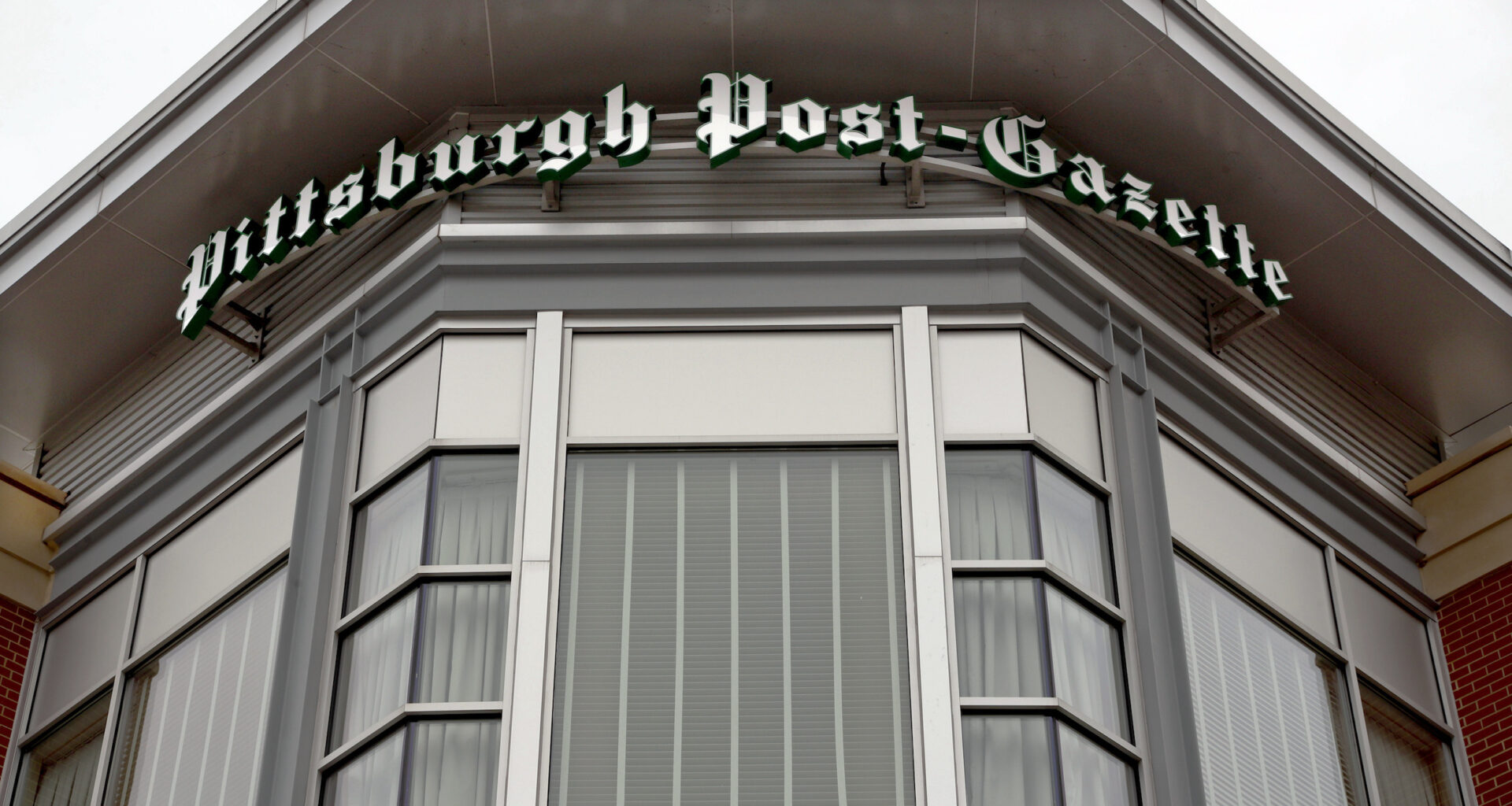
Pittsburgh’s largest daily, The Post-Gazette, will shut down on May 3 after nearly 240 years of operation, the company announced Wednesday.
The Post-Gazette’s owner, Block Communications, blamed steep cash losses amounting to more than $350 million over the past 20 years. It also cited recent losses in court to the paper’s union, the Newspaper Guild of Pittsburgh, which had recently ended a three-year strike.
“(T)he realities facing local journalism make continued cash losses at this scale no longer sustainable,” the announcement reads. “Recent court decisions would require the Post-Gazette to operate under a 2014 labor contract that imposes on the Post-Gazette outdated and inflexible operational practices unsuited for today’s local journalism.”
The announcement came just hours after the Supreme Court denied the company’s request to pause a lower court order requiring the company to reinstate an old health care plan for its union employees. In March, the U.S. 3rd Circuit Court of Appeals ordered the Post-Gazette to restore the plan from its old 2014-17 union contract, which the company had suspended in 2020 after declaring an impasse in contract negotiations.
“Instead of simply following the law, the owners chose to punish local journalists and the city of Pittsburgh,” guild president Andrew Goldstein said in a union press release. “Post-Gazette journalists have done award-winning work for decades and we’re going to pursue all options to make sure that Pittsburgh continues to have the caliber of journalism it deserves.”
Post-Gazette spokesperson Allison Latcheran said the company would not comment beyond its official announcement.
The Post-Gazette is Pittsburgh’s largest newspaper. Smaller outlets exist, like the online nonprofit Public Source and an Axios Pittsburgh newsletter, but the Post-Gazette is the city’s last remaining print daily (though it only prints twice a week). The city’s other daily, the Tribune-Review, eliminated its print edition in 2016 and only publishes online. Its editorial staff is less than half the size of the Post-Gazette’s roughly 150-person newsroom.
Block Communications, which also owns The Toledo Blade in Ohio, has held the Post-Gazette for nearly a century. Its last few years of ownership, however, have been marred by scandals and labor disputes at the two papers. (The Blade will not be affected by the closure, The New York Times reported.) Block Communications’ relationship with the Post-Gazette’s union has been particularly contentious.
In October 2022, roughly 60 unionized journalists went on strike. (An additional 80 design, production, distribution and advertising staff had walked off the job a few weeks earlier.) One of the journalists’ demands was the restoration of its old 2014-17 contract.
At the time, it was the first open-ended newspaper strike in the United States in more than 20 years. By its end three years later, it would become the longest-running strike in the country.
While the other unions representing the design, production, distribution and advertising staff eventually settled with the Post-Gazette, the journalists kept striking. The Post-Gazette, however, was able to continue producing a daily news report, thanks to replacement workers and a substantial contingent of journalists who opposed the strike and continued working.
The newspaper guild eventually ended its strike in November, when the 3rd Circuit Court of Appeals ordered the full restoration of the 2014-17 contract. That order included daily multiplying fines if the Post-Gazette did not comply, according to the union. The fewer than 30 journalists still on strike returned to work.
On Wednesday afternoon, employees were notified that there would be a mandatory staff meeting in less than an hour, said web editor and newsletter writer Natalie Duleba. Just a week prior, Block Communications had shut down the alt-weekly Pittsburgh City Paper. The company also had a history of threatening to close the Post-Gazette. With that in mind, the “optimistic” part of Duleba thought the staff meeting might be about layoffs.
During the meeting, Block Communications announced it was shutting down the Post-Gazette via a “prerecorded corporate video,” Duleba said. No one from the paper’s management spoke, and the meeting ended abruptly afterward.
The decision to shut down the paper and not even try to sell it feels “extreme,” Duleba said, especially after the three-year strike and the legal fees the company must have incurred then.
“They had money to fight the union, but they’re saying they don’t have money to keep the paper open,” said Duleba, who also serves as the guild’s secretary. “That doesn’t compute to me.”
The Post-Gazette will still be on the hook for the “legal liabilities” it incurred even if it shuts down, the union said.
“The Nov. 10 U.S. 3rd Circuit Court ruling requires the company to pay back all bargaining unit employees for the costs the paper illegally passed onto them. That liability continues to accrue, and will not go away with the closure of the paper.”
For Duleba, who endured a three-year strike only to be told that her job will no longer exist in five months, the closure is a “gut punch.” The November court ruling had been a “sigh of relief” since it meant the strike would end, and she would receive a regular paycheck doing work she was excited about in a city she had built a life in for the past five years.
“It’s a big rug pull to know that come May, there’s no job for me or anyone.”