
The most important thing to grasp about data centers right now isn’t the sheer amount of them that want to set up shop throughout Northeast Pennsylvania.
It isn’t their potential to spur economic development and the local job market, nor is it the fears over negative impacts they could have on our area’s precious natural resources. It isn’t the debate over how much of our land they might take, or how many of our homes they might raze. It isn’t the hows or the whys or the what-ifs that always seem to come along with something new.
It’s the fact that, even a year ago at this point, all of this seemed rather harmless. Somewhat of an oddity, in fact. While some proposals date back to 2024 — namely an Amazon data center campus proposed for Salem Township, Luzerne County — an overwhelming majority of the current proposals weren’t on the public radar at this point a year ago. The flurry of activity has left everyone who could be affected by these facilities wondering what the future might look like, and how best to protect themselves and their communities in the face of such change.
In other words, we’re learning as we go, and our area officials sure could use some help to govern on a subject they can’t possibly be expected to know everything about.
With that in mind, it is time for officials in Pennsylvania’s General Assembly to aggressively and thoroughly advance data-center-specific legislation that will help guide local governments as they scrape together plans to provide some sort of restrictions on what data center developers can do inside the borders of their communities. Data centers present different benefits and drawbacks than more traditional forms of business, and as such, a review of whether they should be allowed to abide by the same land use and zoning ordinances other businesses currently do should be in order.
Several bills well worth consideration have been proposed and find themselves at various points in the Assembly’s discussion stage. Among them are House Bill 1834, which would place data centers under the regulation of the state’s Public Utilities Commission, and also call for facilities needing higher amounts of power for operation to use a minimum percentage of renewable energy and provide annual payments to help fund the Low-Income Home Energy Assistance Program Enhancement Fund. Senate Bill 991, which proposes a streamlined permitting process through sites preapproved by the Department of Environmental Protection, is also an idea worth consideration.
As of right now though, the influx of data center proposals throughout the region persists with no specific regulatory framework for the issues they present.
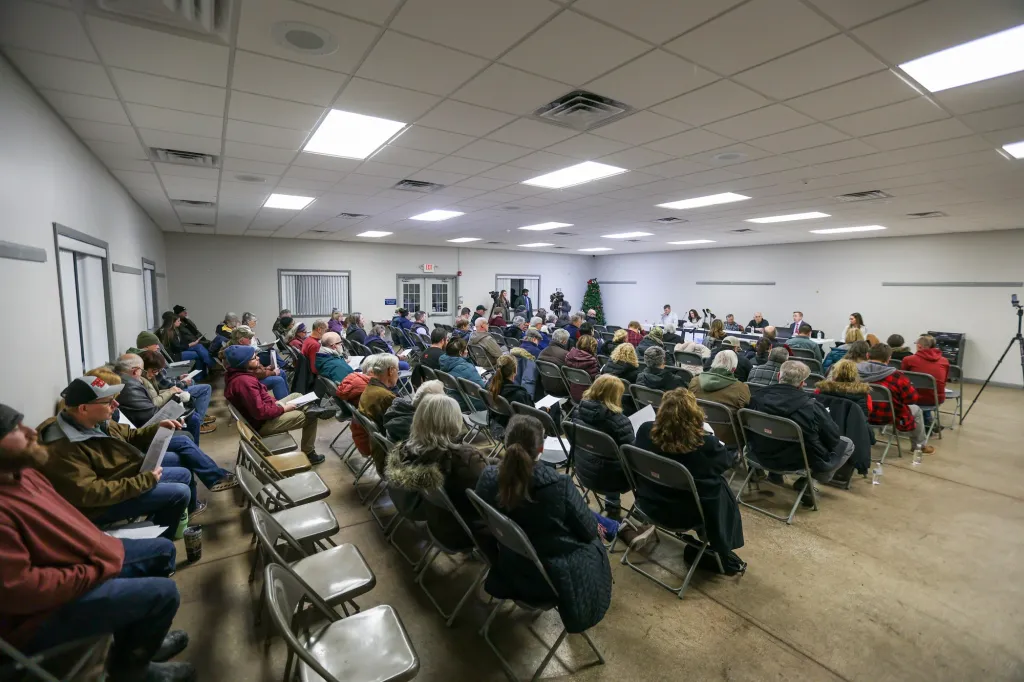
The realization that this issue needed to be addressed became more stark last Tuesday, when representatives of the developer for Project Gravity met with Archbald residents to discuss a proposed campus of seven data centers planned across more than 180 acres of land between Eynon Jermyn Road and Business Route 6 in Lackawanna County. When pressed by a resident concerned about how much water would be required to cool computer hardware that will fill the nearly 2 million square feet of data centers at the proposed facility, Archbald 25 Developer LLC attorney Raymond Rinaldi said developers requested — and received — a will-serve letter from Pennsylvania American Water for 360,000 gallons of water daily, pumped from Lake Scranton.
Lake Scranton is the source of water for residents of the city of Scranton. The proposed data center is in Archbald, under the auspices of an Archbald Borough Council ordinance passed in November that will allow them to be constructed within borough limits. But it is inarguable that because of its unique needs for water and power, it will have an effect on the resources of other communities.
It is for that reason that data center regulation best falls under the auspices of policy specifically crafted for their circumstances at the state level.
Keep in mind, this is just one proposal, in one community, in a region now teeming with proposals and issues even the most well-meaning elected officials in our cities and smaller towns can’t be expected to foresee with any measure of expertise. There are more coming, and developing a blanket plan covering the commonwealth seems a more prudent way to approach them than hoping to tackle each issue as they present themselves, municipality by municipality.