
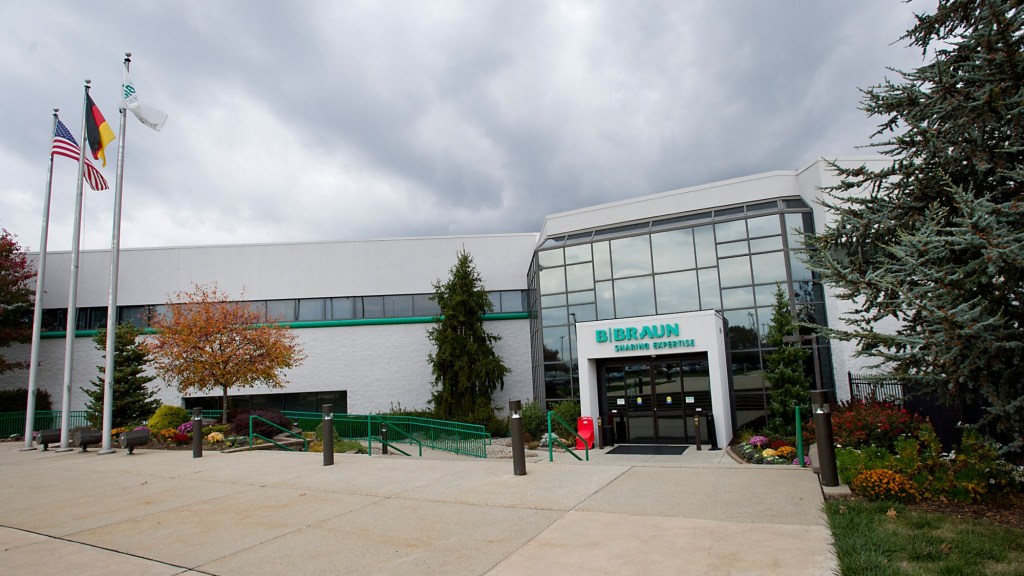
An ambitious lawsuit that sought to force a Lehigh Valley medical equipment company to pay for medical monitoring for thousands of people that lawyers argued faced an increased risk of cancer was denied class action status by a Lehigh County judge.
In a memorandum filed Dec. 31, Lehigh County Judge Michele Varricchio determined that the lawsuit against B. Braun, brought forward by plaintiff Mourad Abdelaziz and attorneys from prominent firms Grant & Eisenhofer and Morgan & Morgan, failed to meet class action lawsuit requirements.
Adbelaziz’s lawyers originally filed a lawsuit against B. Braun in 2019 in the Philadelphia Court of Common Pleas. The case was transferred to Lehigh County in 2020, and in 2024, lawyers filed a motion for class action certification.
Class action status allows multiple people who have faced similar alleged harm to join one single lawsuit and share the same verdict, saving time and resources as opposed to multiple individual suits. In this case, class action status could have included thousands of people who live near B. Braun’s commercial sterilizer facility on Marcon Boulevard in Hanover Township, Lehigh County.
In a memorandum, Abdelaziz’s lawyers argued that he and other proposed members of the class are entitled to damages related to B. Braun’s “dangerous and reckless” emission of the carcinogen ethylene oxide from the plant.
According to the EPA, B. Braun’s facility, which sanitizes medical equipment using ethylene oxide, emitted 1,900 to 7,600 pounds of the harmful chemical per year between 2008 and 2018. B. Braun has since cut its emissions by around 90%, emitting 485 pounds in 2022.
However, Abdelaziz’s proposed class action lawsuit would include anybody who lived in one of 12 census tracks near the facility for over a year, but who had not been diagnosed with cancer. According to the lawsuit, Abdelaziz, who does not have a cancer diagnosis, lived in the vicinity of the B. Braun plant for about 17 years.
Abdelaziz’s lawyers sought to compel B. Braun to establish a medical monitoring system, which would allow people living in the area to receive free screenings for cancers associated with ethylene oxide, or EtO.
Lawyers argued that “diagnostic testing is reasonably medically necessary” for those at high risk, to ensure that precursors for those diseases can be identified and treated.
According to court filings, the cost of medical monitoring would exceed “tens of thousands” for each person eligible to join the lawsuit. Lawyers estimated that the class covered by the lawsuit, had it gone forward, would include around 22,000 people.
However, B. Braun’s lawyers argued that a class action lawsuit is inappropriate and that the proposed class is not entitled to any damages. Specifically, B. Braun’s lawyers argued that the plaintiff had failed to establish clear guidelines for who is eligible to join the class action, and that the company follows state and federal guidelines on EtO emissions.
Varricchio sided with B. Braun, and found that the plaintiff failed to meet four of five requirements that would grant class action status. Specifically, the judge found that a legal expert who testified on behalf of the plaintiff was not credible because he failed to properly identify a proposed class of people eligible to join the lawsuit.
The judge also criticized Abdelaziz for allegedly making false statements during deposition and being uninformed about the facts of the case; and his lawyers for both failing to inform the court when an expert witness was out of town and failing to ensure lawyers had the necessary authorization to practice law in Lehigh County.
According to court records, the case is still considered active but will not be eligible for class action status.
Reporter Lindsay Weber can be reached at Liweber@mcall.com.