
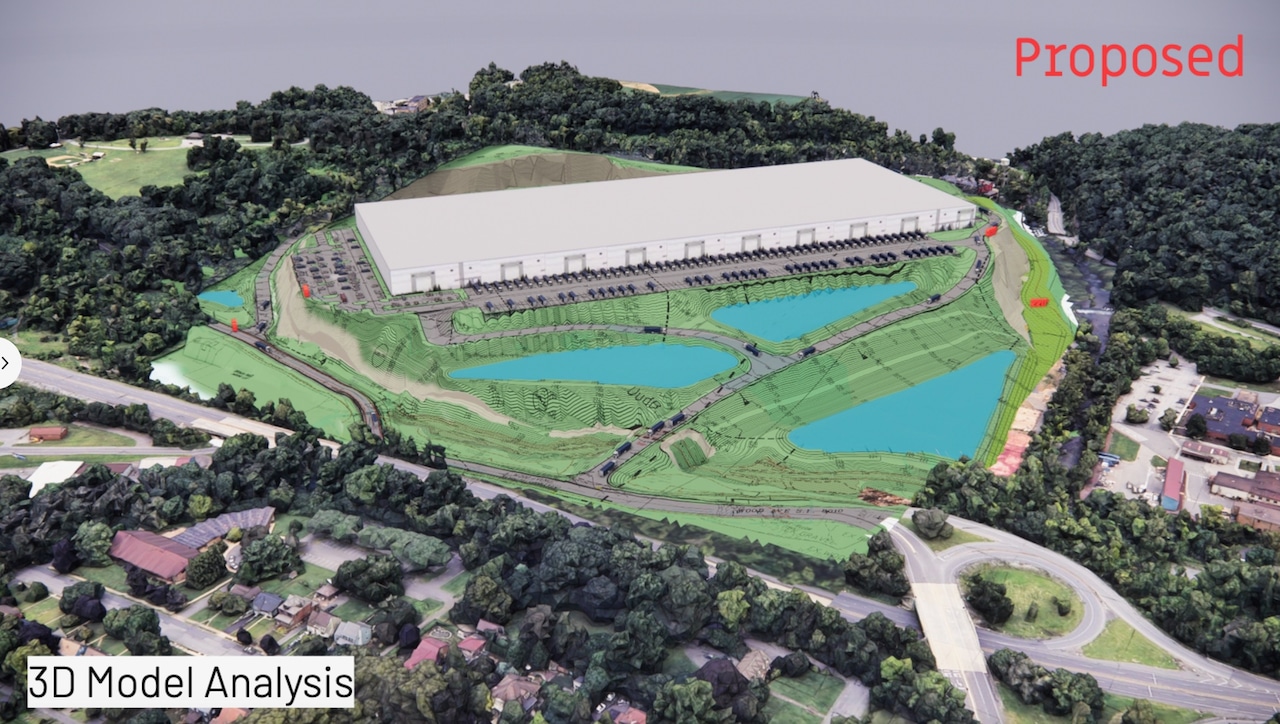
Last month, the Easton Planning Commission denied the development of a million-square-foot warehouse, to the relief of Easton community members opposed to the project.
However, the developers are not done yet, as made clear by a new lawsuit.
Easton Wood Ave PropCo LLC and Wilson Borough have filed a lawsuit against the City of Easton, the Easton Planning Commission, and each individual member of the commission following the denial of the proposed warehouse at 1525 Wood Ave.
The lawsuit challenges the Easton Planning Commission’s Dec. 3 decision to deny Scannell Properties’ land development application for the warehouse. Ninety percent of the project site lies in Wilson Borough while 10% falls within Easton, requiring approvals from both municipalities.
Wilson Borough approved the project, but Easton’s denial stopped it from moving forward.
Developers first presented the plan to the Easton Planning Commission in September 2024, but the application was tabled. After months of delay, it returned in May 2025, prompting organized opposition from the Stop the Wood Ave Warehouse Coalition. The coalition, formed in late 2024, submitted extensive materials raising concerns about traffic, environmental impacts, noise and neighborhood compatibility during this meeting.
As the review continued, the process evolved into a courtroom-style proceeding, with expert witnesses presented by both sides and testimony challenged over multiple late-night hearings. The commission ultimately voted to deny the application in December.
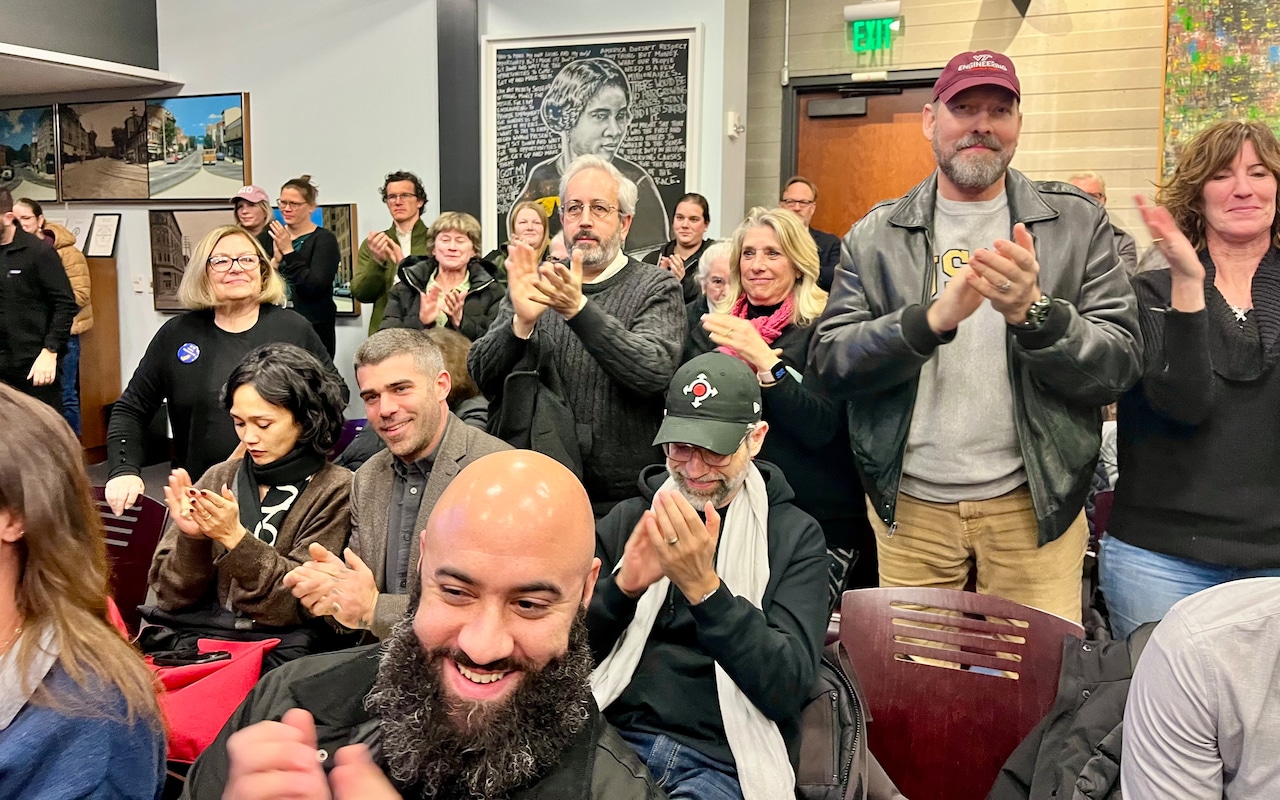 Residents celebrate at an Easton Planning Commission meeting on Dec. 3 after the commission denied developers’ request to build a million-square-foot warehouse.Chelsea McClure | For Lehighvalleylive.com
The lawsuit asks the court to overturn the planning commission’s decision and order approval of the land development plan. It also claims both EWAP and Wilson are carrying significant costs and have incurred damages due to the denial.
It states Wilson will be “severely hindered in its ability to provide industrial development in an appropriate location and will be denied a necessary and essential tax base that will support its overall economy.”
They ask the court to not only order the commission to grant final approval, but grant any “further relief” as deemed fit.
The two parties argue that the planning commission acted outside its legal authority by denying a land development plan. They say it met all applicable zoning and subdivision requirements.
The developers contend that the commission was required to approve the project because it complied with the city’s technical rules, regardless of opposition to the warehouse itself.
EWAP and Wilson allege the project was treated differently from other land development applications reviewed by the Easton Planning Commission, particularly through heightened scrutiny, expanded evidentiary requirements and cross-examination of expert witnesses.
The lawsuit names each planning commission member individually, arguing that they acted in bad faith and participated in an unlawful denial of the application while acting in their official capacities.
For example, the parties allege Commissioner Ron Shipman advised opposing residents to seek legal counsel to cross-examine EWAP’s expert witnesses.
During the Dec. 3 meeting where commissioners reached a decision, the document states Hubert Etchison “expressed his relief at being able to state ‘how he feels’ in lieu of ‘trying to remain objective’ during the application process.”
It also outlines the “conduct” of Commissioner Kim Wagner, stating it is “most egregious of all.”
The case claims she “clearly opposed the proposed redevelopment, had a personal prejudice and bias against the project and took an advocacy role as a private citizen to oppose EWAP’s special exception application for the proposed relocation [of a watercourse, retention basin and access road within a designated floodplain] before Easton’s Zoning Hearing Board.”
The lawsuit also lists the reasons given by the planning commission for denial. This includes an inadequate impact assessment report, failure to obtain zoning approval, failure to comply with several submission requirements, and more.
EWAP and Wilson argue these reasons in the lawsuit and claim they are invalid and illegal.
Ken Greene, chair of the Easton Planning Commission, declined to comment because it is an ongoing legal matter. Other planning commission members, and Easton’s Solicitor Joel Scheer, had not responded to a request for comment as of late Tuesday afternoon.
Though the project as a whole was denied by the planning commission, a hearing is still underway for the Easton Zoning Hearing Board regarding one piece of the project. Developers are requesting to relocate a watercourse, retention basin and access road within a designated floodplain in relation to the project.
That hearing will continue at 6 p.m. on Thursday, Jan. 15 in Easton City Hall.