
Why should Philadelphians care about Greenland, an icebound territory of the Kingdom of Denmark, 2,500 miles away?
For starters, our U.S. Senator John Fetterman, the one we elected to focus on the needs and rights of Philadelphians (and all Pennsylvanians) decided to split with his party and join President Trump in this unconscionable land grab. Whatever Greenland might cost the U.S. treasury, those funds would be better spent on the health, welfare, education, and quality of life of Philadelphians — funds that have been already reduced by DOGE, the Big “Ugly” Bill, executive orders, and cuts in university research. We also elected Fetterman to keep us safe from war, to fight autocracy, and to defend democracy — all of which are threatened by the pursuit of Greenland. Senator Fetterman likes to think of himself as bipartisan, someone who reaches across the aisle and that’s a positive trait. But Greenland should not be the issue.
We are supposed to be comforted that Fetterman does not support taking Greenland by force. He says that “ideally, we purchase it — similar to our purchases of Alaska or the Louisiana Purchase.”
That comment underlined my worry about the way history is taught in the Commonwealth of Pennsylvania, where Fetterman studied K-12 and at Albright College. Maybe his teachers tried to convey that history is not a list of facts and dates, but he may have been absent. It’s true that the United States was the buyer in the Louisiana Purchase of 1803 and the Purchase of Alaska in 1867, but in both cases, the seller — France in 1803, and Russia in 1867 — were selling to gain funds for the wars they were about to fight (Napoleon in Europe) or had fought (Russia in Crimea). How different were these 19th century circumstances from Trump’s bullying of Denmark, a NATO ally, to sell Greenland!
Under a 1951 agreement, the U. S. already has full access to Greenland, with an open invitation to increase the number of military bases to whatever number thought necessary to protect the territory from any threat from Russian and Chinese ships. You might counter that Greenland is also rich in minerals, so what would be wrong in making a deal and negotiating a sale?
What’s wrong is that the people and governments of Denmark and Greenland do not want to sell. They should not be subjected to Tony Soprano-like pressure.
Whatever Greenland might cost the U.S. treasury, those funds would be better spent on the health, welfare, education, and quality of life of Philadelphians — funds that have been already reduced by DOGE, the Big “Ugly” Bill, executive orders, and cuts in university research.
Denmark, like the U. S., is a member of NATO, and that means we have ironclad agreements to protect the sovereignty of Denmark’s territory — all of it. Since 1949, NATO (the North American Treaty Alliance) has kept the world safe. This intergovernmental treaty now including 32 member states — 30 in Europe and two in North America — was established for mutual protection against the looming threat of the USSR. And now in 2026, we have a U.S. President blustering and openly threatening this essential alliance.
Readers of my age may remember the seriousness of our fear of attack throughout the 1950s. People were actually building bomb shelters.
I’ll never forget the warning sounds at Southwest Philly’s Longstreth Elementary School alerting teachers to get us kids lined up to leave the classroom and sit in the hallway, away from windows, with our heads buried in our laps. That was the best precaution the School District of Philadelphia could think of to protect children from nuclear attack. It’s laughable now. We were really scared then, with nightmarish thoughts going through our little heads as we sat, heads bowed, in the hallway.
Those air aid drills did not defend us. NATO did. And now I appeal to Philadelphians to connect the current undermining of this alliance with our safety and well-being.
Please write or call Senator Fetterman — and all our Congressional delegation — to stop this intimidation of a NATO ally. And while we are at it, it wouldn’t hurt to take a closer look at how history is taught in our local schools. A reasonable study of history should help citizens understand why Greenland is important to Philadelphians.
Elaine Maimon, Ph.D., is the author of Leading Academic Change: Vision, Strategy, Transformation. Her long career in higher education has encompassed top executive positions at public universities as well as distinction as a scholar in rhetoric/composition. Her co-authored book, Writing in the Arts and Sciences, has been designated as a landmark text. She is a Distinguished Fellow of the Association for Writing Across the Curriculum.
 MORE FROM ELAINE MAIMON
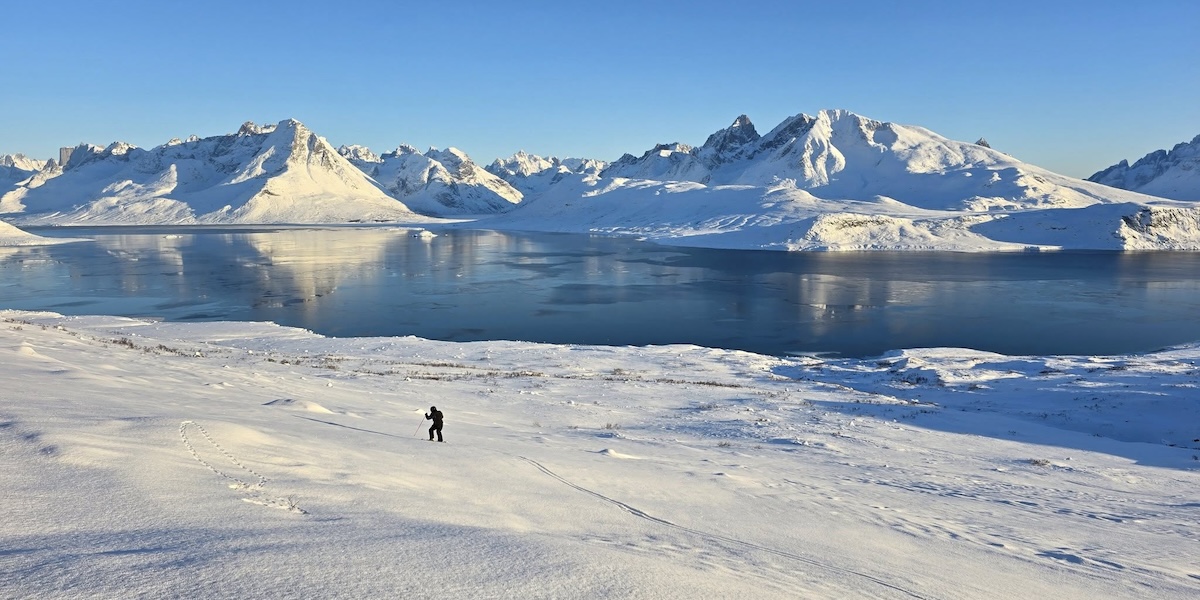
Photo courtesy of Visit Greenland.