
A few days in the middle of this past week it almost felt like spring. The sun was shining, it was warm, there wasn’t much wind, and birds were singing. But those few days were only a tease followed by the return of much colder weather, although I oddly found a 4-inch fresh daylily shoot in one of my gardens.
On those few warm days, flocks of blackbirds — red-winged blackbirds, cowbirds, and grackles — were constantly in the yard eating whatever birdseed they could find. One flock of about 100 brown-headed cowbirds kept coming back, and some of them even began eating suet cakes.
On the subject of birds, a few weeks ago I said that American robins seemed to be everywhere on the Bethlehem/Easton Bird Count held at the end of December. The final count of them for that area was over 1,300.
Robins are often found atop trees at this time of the year when bare tree trunks and branches stand out and often look very different than they do in the warm months. It is, as an arborist once told me, a good time to look closely at trees near your house to see if any of them need pruning. It’s also the time when it’s apparent that some evergreen trees show one side thinner than the other due to nearby branches of deciduous trees.
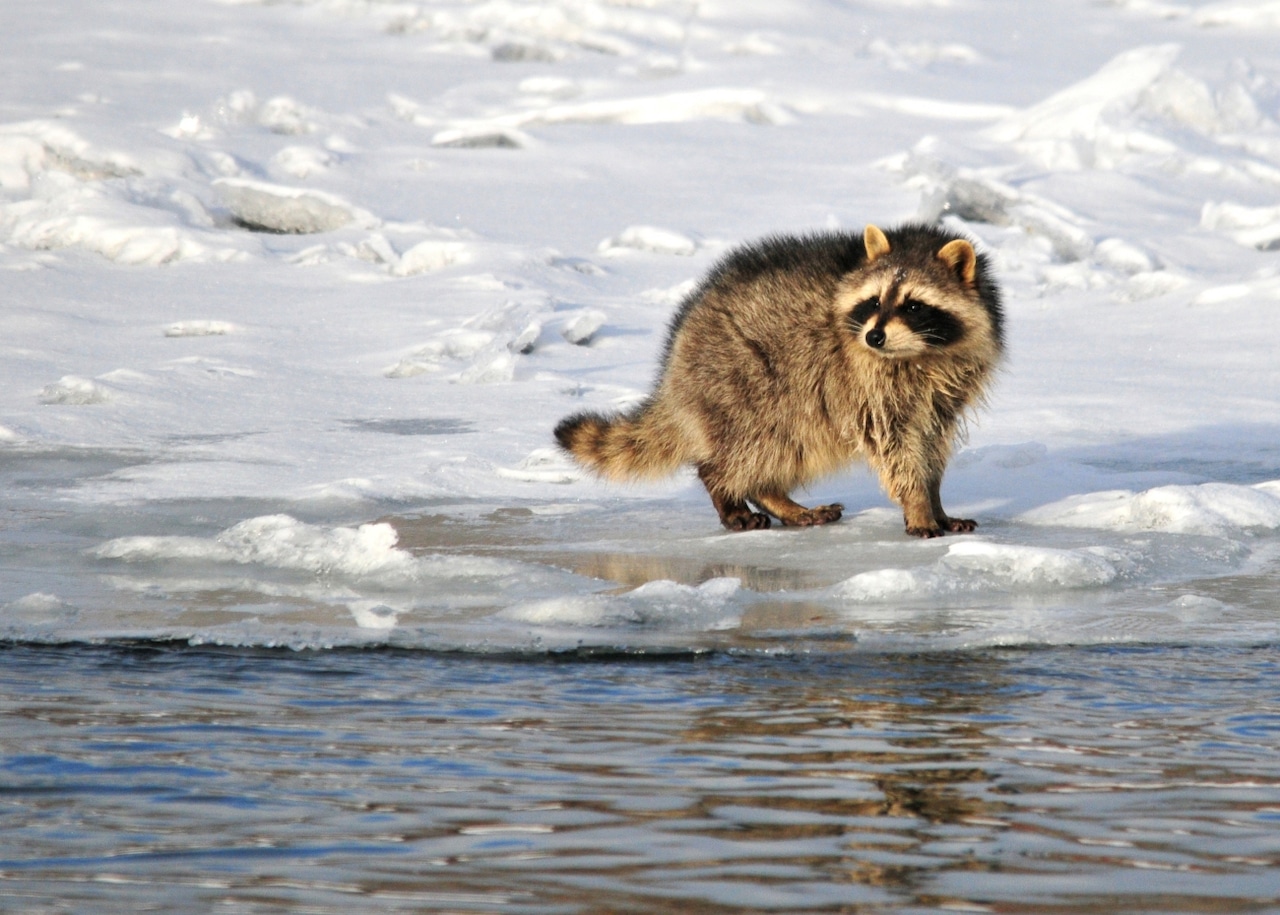
Last week, I wrote about smelling a skunk in our yard but we haven’t smelled it since. But there is a raccoon that comes onto the deck at night looking for scraps of fallen birdseed. One night it was right outside the deck door and it looked up at David when he turned the light on, but it just put its head down and kept eating.
A lot of people, especially those who live in the suburbs, dislike raccoons because they frequently get into garbage cans. But you have to admire the tenacity of this animal that sleeps a lot in the winter but doesn’t actually hibernate.
The genus for raccoon is Procyon, which literally means “before dog,” evolutionarily implying that raccoons are more primitive than dogs. And they also, like crows, take or wash their food in water before they eat it.
Recently, as is always the case in the winter when there’s not much to see or do outside, I’ve spent a lot of time looking at nursery catalogs, most of which are crammed full of tomato and pepper plants or seeds. But I always find myself looking more at flowers than vegetables because I like them more.
Many of these catalogs offer a lot of zinnias, most likely because just about anyone can successfully grow them. Zinnias are native to Mexico, but back in the 18th century they were taken to Europe and studied by a German professor named Johann Gottfried Zinn. Eventually botanist Carl Linnaeus named zinnias for him.
And it was another German, a naturalist named Johann Friedrich Gmelin, who was responsible for the funny name of a bird that a friend found at her feeder a few days ago. It was a dickcissel, reportedly named for its “dick, dick, cissell”-like call. I’ve heard this call several times, but I never would have said it sounded like that.