
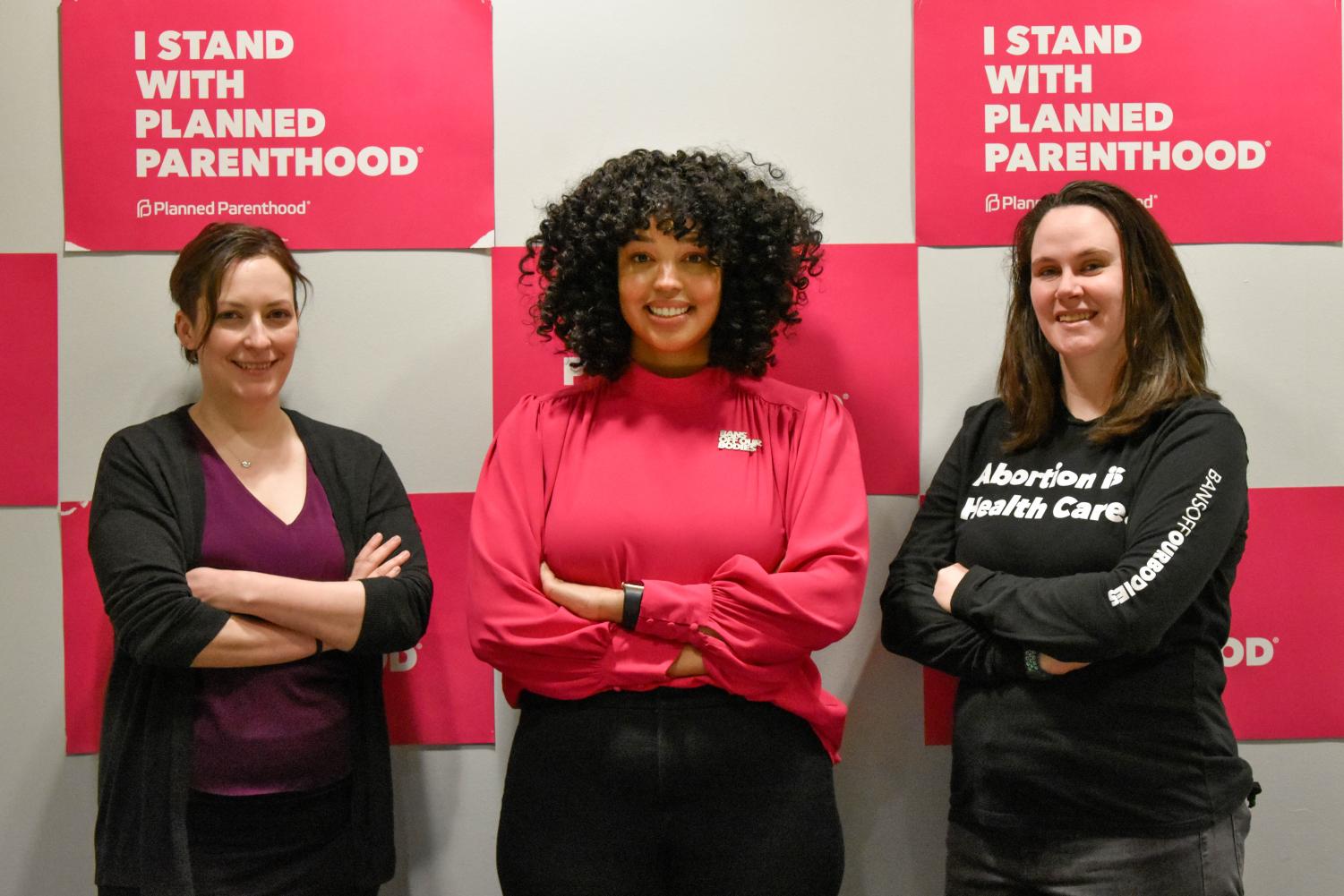
Planned Parenthood of Western Pennsylvania will temporarily close three of its locations due to nursing shortages and political changes towards reproductive health.
PPWP’s Pittsburgh Family Planning Center in Downtown Pittsburgh will temporarily reduce services starting Jan. 16. The Bridgeville and Greensburg centers have put in-person services on hold for an estimated three to six months as of Dec. 2 and Jan. 16, respectively, while the Johnstown location remains open. According to PPWP leadership, the closures are partially due to both a shortage of clinical employees and governmental actions limiting the operations of reproductive health care networks.
Telehealth services are still available, including gender-affirming hormone therapy, STI testing, UTI treatment and appointment scheduling, according to the organization. Additionally, abortion care will still be available at the Downtown Pittsburgh location. Darah Boucher, CEO and co-interim president of PPWP, emphasized the organization’s high care standards during this period.
“Our patients deserve timely access to high-quality, judgment-free care, and we will not stop fighting to deliver it,” Boucher said. “We will inform patients as soon as updated schedules are available.”
According to Sonya Borrero, professor of medicine and director of CONVERGE at Pitt, the temporary closures will be impactful for marginalized community members. Combined with preexisting legislative actions against reproductive health, such as a lawsuit excluding Planned Parenthood-affiliated clinics from Medicaid participation, patients with the most economic constraints will feel the largest impacts.
“Many people who use these clinics are receiving their preventative health care services there, so the impact is most devastating for those who are most marginalized in this community,” Borrero said.
Students may also feel the effects of PPWP’s closures, according to Alexa Pierce, co-director of the Vanbassador program for the Autonomous Body Shop and graduate student in the School of Public Health. Pierce said she has already noticed increased demand among individuals for the sexual health supplies her organization provides.
“There’s more of an urgency to have these supplies readily available to people when they can use them, immediately if needed, like emergency contraception, condoms [and] pregnancy tests in the bathroom,” Pierce said.
Borrero is also concerned for students whose care may be disrupted due to the temporary closure and scheduling issues at the Downtown PP location. Other reproductive and sexual health services for students, such as the Student Health Services, do not provide the same treatment.
“Students from out of the city or even out of state, who may have continuity of care back home with their pediatrician, [may heavily rely on] Student Health Services and Planned Parenthood,” Borrero said.
The closures are due in part to a nationwide nursing shortage affecting Pennsylvania, according to a PPWP press release, with some projections showing a shortage of 20,000 nurses. PPWP is actively recruiting registered nurses and certified nurse practitioners to rebuild staffing numbers.
Borrero stated that the closures will increase demand for clinics working at their full capacity. The increase in need could cause a range of impacts, such as longer waits and patients abandoning care options.
“You will see delays in care, lack of timeliness, which could potentially turn into people foregoing care entirely,” Borrero said. “This disproportionately impacts our patients, who are economically the most vulnerable and who may not have other avenues of care.”
According to Boucher, PPWP also attributes the temporary closures to the Trump administration targeting large treatment systems that supply reproductive, sexual and gender-affirming health care.
“Ongoing political attacks make our work harder, but we have faced government interference before, and we will make it through this, too,” Boucher said.
Borrero attributes the divided Pennsylvania legislature as an obstacle for passing “proactive and progressive legislation” on issues like abortion and contraception, but appreciates Governor Josh Shapiro’s advocacy for reproductive rights.
“The legislative angle is a little bit tricky, given the divided legislature,” Borrero said. “But I think we’re fortunate that we have a really great governor and his administration.”