
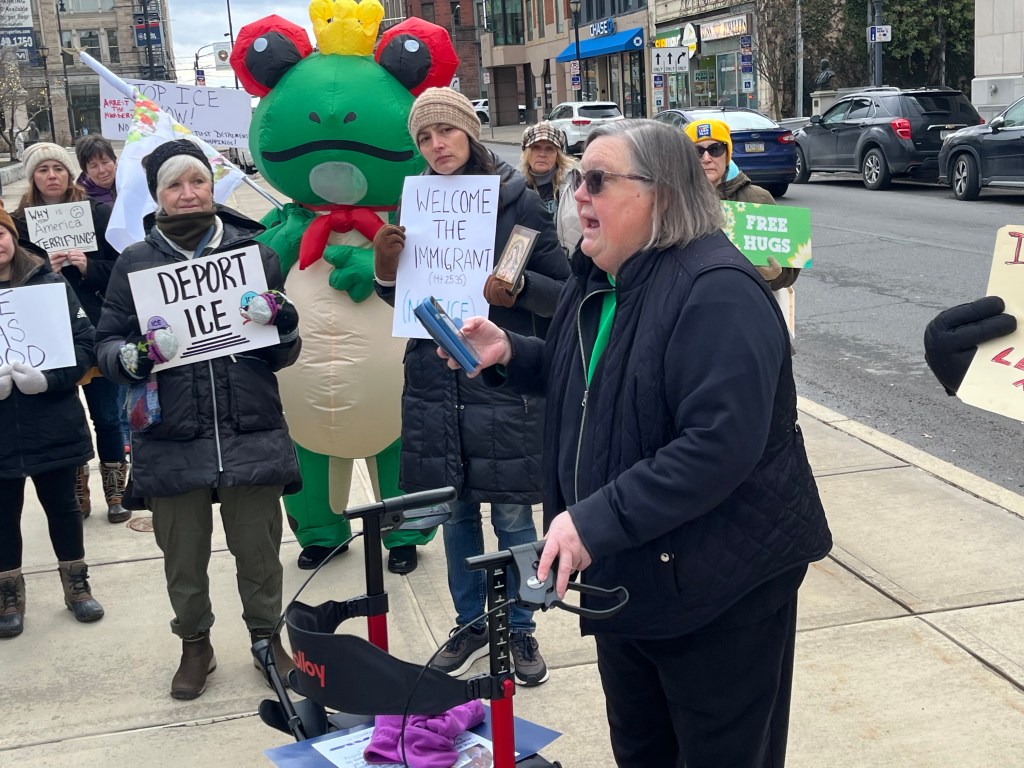
As part of his plan to make good on a campaign promise, President Donald Trump has given broad authority to a heavily armed, masked, federal police force to do what is necessary to find immigrants in the country illegally and begin the process of removing them from American soil. In the wake of action by some officers enforcing Trump’s immigration policy, people are being killed, wounded, allegedly injured, and apparently pulled from their homes and arrested without warrants.
Some among us may be perfectly OK with any or all of that happening; just a few painful but necessary steps on the path to ridding the streets of noncitizens. Many obviously see it as inhumane and un-American, an attack on a culture built for centuries by immigrants and a scourge against all we should stand for in the United States.
What can’t be disputed is that it is happening, and some states are taking measures to limit the federal government’s power to send a police force into any street, in any town, in any state for any reason they want. Pretty soon, Pennsylvania’s General Assembly will need to address this itself — and doing so certainly will prove a delicate process in a divided government representing communities with concerns on both sides of the debate.
Two bills dealing with enforcement of federal immigration laws have been introduced in the state’s upper chamber:
Senate Bill 1071 would require agents on the job to wear clearly visible identification — a badge with an officer’s name, badge number and agency, for example — while also prohibiting those officers from wearing masks, facial coverings or other types of garments that “obscure their identity.” Senate Bill 1021 calls for more strict penalties for criminal offenses against officers enforcing federal immigration law within the commonwealth.
“These brave men and women risk their safety daily to enforce immigration laws and protect our communities from criminal elements,” according to the latter bill, sponsored by Sen. Chris Gebhard, R-48. “Recent incidents across the nation demonstrate an alarming escalation in violence directed at immigration enforcement personnel, making enhanced protective measures both necessary and urgent.”
At least seven blue states enacted laws in the wake of recent activity by ICE limiting when, where and how it can operate. They include a bordering state, New York, and another within the Northeast, Connecticut. On Tuesday, outgoing New Jersey Gov. Phil Murphy signed a bill limiting immigration enforcement at hospitals and schools and requiring the state to construct policy to keep ICE away from places of worship. However, Murphy also vetoed two bills that limited how and when local authorities within the state could cooperate with ICE operations.
Back in Pennsylvania, state Sen. Amanda Cappelletti, D-17, is the prime sponsor of S.B. 1017 and also is planning to introduce similar legislation to prevent federal authorities from making civil immigration arrests without a warrant or judicial order within 1,000 feet of facilities owned or leased by the commonwealth.
Obviously, these are all very different bills and proposals, born of conflicting ideological differences, written by senators in competing political parties in a decidedly purple state. Perhaps, though, there’s a bipartisan approach both sides could take that would ensure the electorate’s desires and the citizens’ needs get met.
For instance, requiring federal authorities working in the state to operate unmasked and with proper identification seems a logical ask of anybody representing the government, in any capacity. That’s especially true in law enforcement, where a demand for transparency is a fair and important ask. In that regard, we believe S.B. 1071 is worthy of passage and a benefit to all Pennsylvanians.
A law making schools and hospitals “safe spaces” also makes good sense. The benefit of citizens using these facilities without being forced into concern of being raided by masked, armed authorities far outweighs the benefits of immigration officers hoping to pick up a few easy arrests in areas Americans use for learning and healing.
However, perhaps enacting laws that limit immigration enforcement in facilities like these might also make S.B. 1021 a more palatable addition. Voters in Pennsylvania, after all, played no small part in sending Trump back to the presidency during the 2024 election, and did so knowing his vow to crack down on illegal immigration.
The point of any change in the laws should be to force those policing immigration issues to do so on the terms — and up to the standards — citizens have always expected and should demand. Those changes should not make enforcing law difficult or dangerous, any more than immigration officers should be able to enforce outside their scope.